

The United States and Iran traded heavy fire on Thursday. This clash tested a fragile ceasefire that started exactly 1 month ago on April 7. Despite the sudden violence, leaders in Tehran told the public that the situation quickly went back to normal. American military leaders also stated they do not want to start a larger conflict right now. Both countries seem willing to step back from the edge of all-out war.
The fighting began around the critical shipping lanes of the Middle East. Iran’s military commanders accused the United States of breaking the truce first. They claim American forces attacked 2 Iranian ships heading into the Strait of Hormuz. Iranian officials also say the United States dropped bombs on civilian neighborhoods. They listed Qeshm Island and the mainland coastal towns of Bandar Khamir and Sirik as the American targets.
After those alleged strikes, Iran fought back. The Iranian military says it launched weapons at American military vessels located east of the strait and south of Chabahar port. A spokesperson for Iran’s Khatam al-Anbiya Central Headquarters claimed their counterattack caused massive damage to the American fleet.
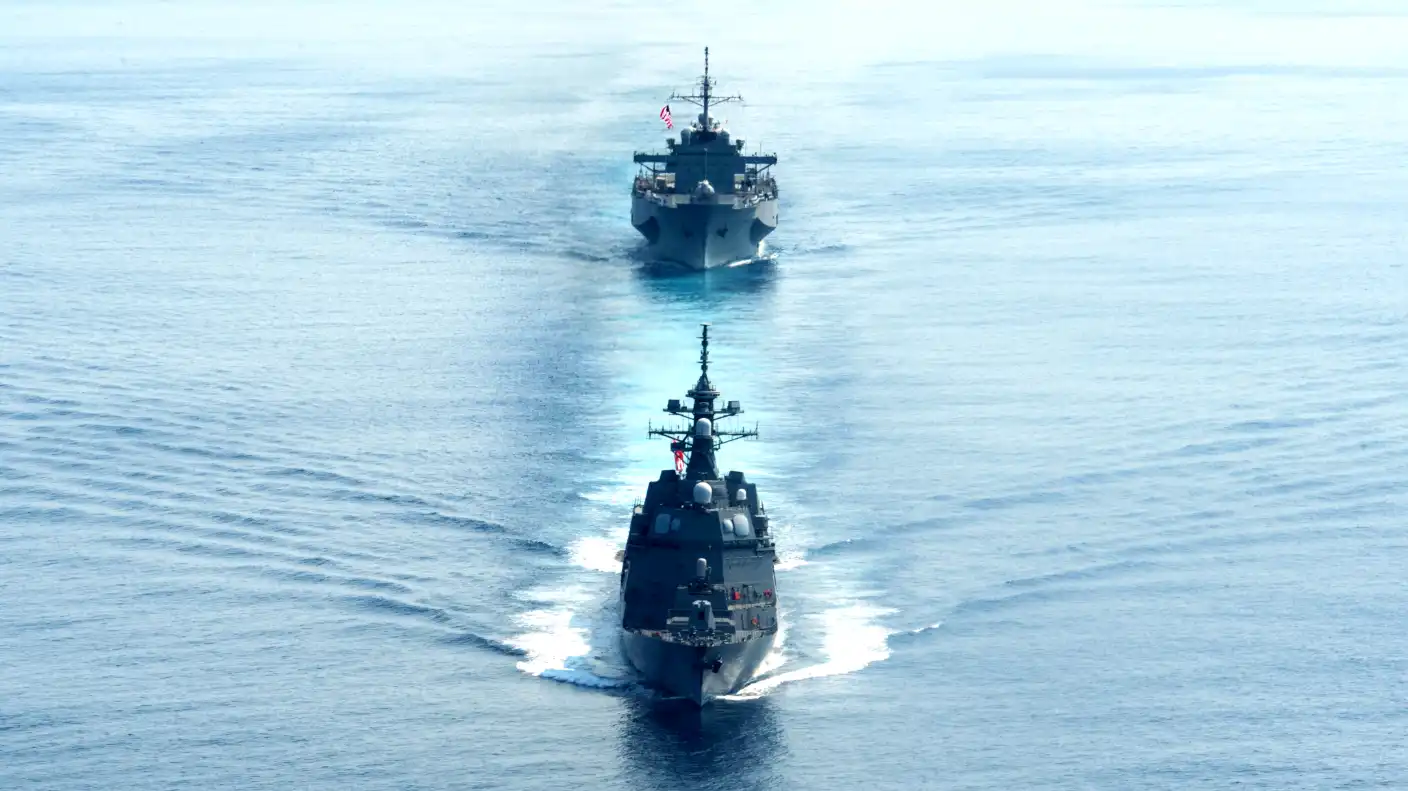
The United States Central Command completely denied the Iranian story. American officials say none of their ships took a single hit. According to the United States military, Iran started the fight by launching missiles, flying drones, and sending small attack boats at 3 Navy destroyers. The American ships fired back to defend themselves. The Navy targeted the exact sites where Iran launched its missiles and drones. Central Command stated they stay ready to protect American troops but do not seek a wider war.
Thursday’s battle did not happen in a vacuum. The 2 sides have exchanged fire a few times since the April 7 truce. Just this past Monday, the United States military destroyed 6 small Iranian speedboats. The Navy also shot down Iranian cruise missiles and drones during that Monday fight. Iran launched those weapons to stop American ships from reopening the shipping lanes in the strait.
President Trump downplayed the danger of the new clashes. He spoke to a news reporter on Thursday and called the exchange of fire a simple love tap. Later, Trump posted his thoughts online. He confirmed that 3 American destroyers sailed out of the strait and took fire. He proudly noted the ships took zero damage. Trump wrote that the Navy sent the Iranian boats to the bottom of the sea very quickly. He added that the Navy easily knocked down the missiles and burned up the drones in the air.
Along with boasting about the military success, Trump sent a harsh warning to Iranian leaders. He demanded that Iran accept an American peace proposal right away. He warned that American forces will hit them much harder and much more violently if they refuse to sign the deal fast. Washington recently offered a plan that stops the daily shooting. However, the plan ignores the most significant points of contention between the 2 countries. It lets Iran keep its nuclear program running for now. It also fails to force the reopening of the strait.
Iran says it needs more time to review the American offer. The negotiations face major roadblocks because of other conflicts in the region. Israel recently fought a war against the Iran-backed Hezbollah group in Lebanon. On Wednesday, Israel dropped a bomb on Beirut and killed a Hezbollah commander. This airstrike broke a separate ceasefire in Lebanon. Iran demands that Israel stop all attacks in Lebanon before Tehran will sign any deal with the United States.
The ongoing war creates massive problems for the global economy. Before the fighting started, the Strait of Hormuz handled exactly 20 percent of the world’s total oil and natural gas supply. The blocked shipping lanes caused fuel prices to explode across the United States. Gas prices at the pump have climbed a staggering 40 percent since late February. Most American drivers now pay about $1.20 more per gallon. This pushed the national average well past $4.00 a gallon at most gas stations.
The sudden surge in fighting on Thursday once again panicked financial markets. United States crude oil futures instantly jumped 3 percent on Friday morning in Asia. Investors buy and sell wildly whenever hopes of peace rise or fall. All of this creates political trouble for Trump. He built his campaign on promises to keep the United States out of endless foreign wars. He also promised his voters he would drive fuel prices down. Right now, the conflict forces him to handle a war he did not want while watching high gas prices frustrate his supporters.















