

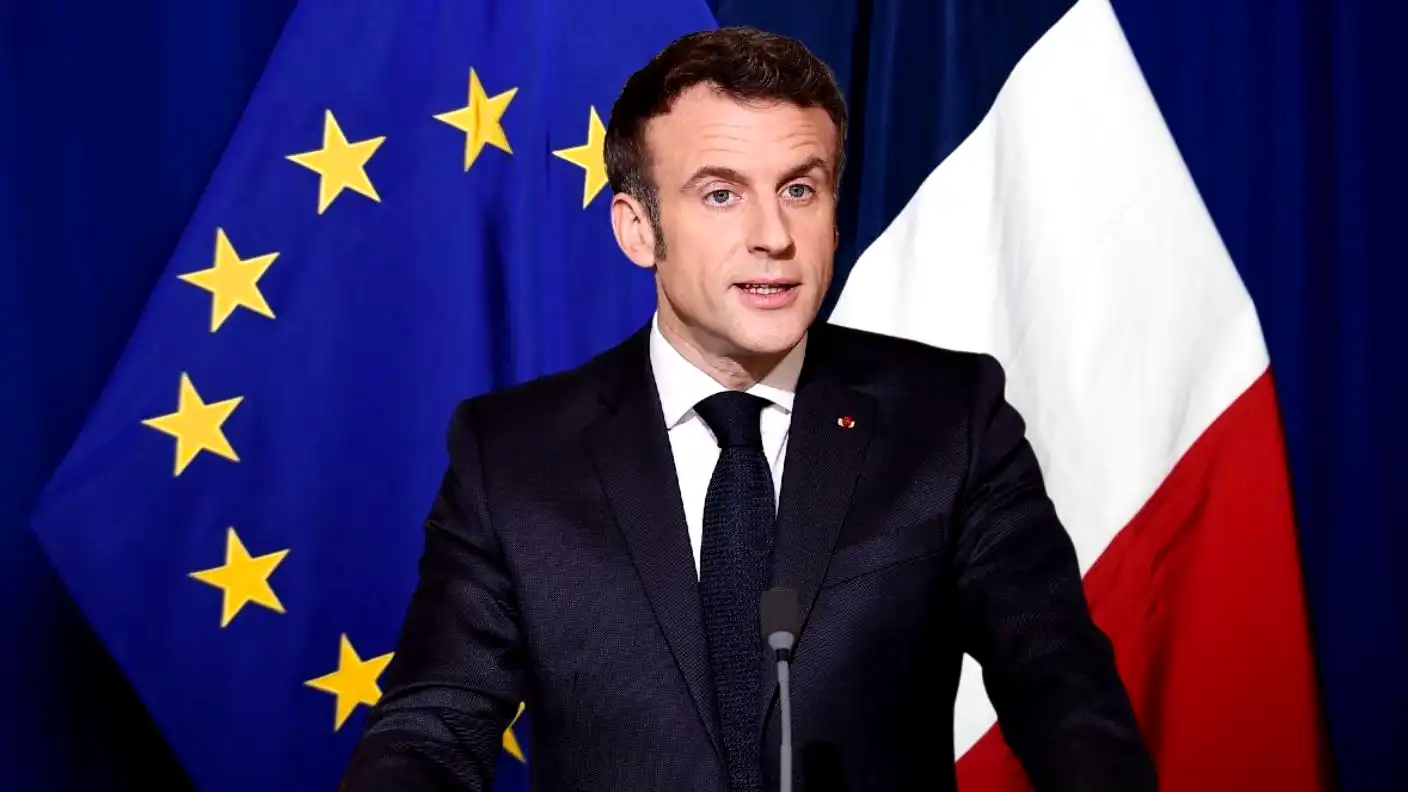
French President Emmanuel Macron spoke out on Sunday to calm rising military tensions in the Middle East. He stated clearly that Paris never planned to send its warships directly into the narrow Strait of Hormuz. Macron delivered this message during an official trip to Nairobi, Kenya. He wanted to respond directly to severe threats made earlier in the day by Iranian military and diplomatic officials.
Macron explained that France and Britain recently built a special maritime coalition. Nearly 50 different countries and international organizations currently back this massive naval effort. The French leader said the coalition simply wants to protect commercial shipping routes and help resume normal maritime traffic. He stressed that European navies plan to coordinate their movements with Iran, rather than fight them.
The French president emphasized that his military leaders want to de-escalate the tense situation. He noted that European commanders will constantly communicate with regional nations and the United States Navy to prevent accidental battles. Macron stated forcefully that his defense chiefs had never envisaged pushing the French fleet into the strait itself. This quick clarification was intended to prevent a potential shooting war from starting.
Macron spoke just hours after Iran issued a terrifying public warning. Kazem Gharibabadi, who serves as Iran’s deputy foreign minister for legal and international affairs, posted a direct threat on the social media platform X. He promised that the Iranian armed forces would launch a decisive and immediate response if French or British warships entered the strait alongside American forces.
This diplomatic shouting match highlights the incredible importance of the Strait of Hormuz. At its narrowest point, the waterway spans just 21 miles across. Yet roughly 20% of the global oil trade flows through this tiny geographic bottleneck. Every day, massive commercial tankers carry about 21 million barrels of crude oil past the Iranian coastline to reach international buyers.
Before the shouting started, France had announced a major shift in its naval posture. Paris ordered the Charles de Gaulle aircraft carrier to sail toward the Red Sea and the Gulf of Aden. This nuclear-powered vessel carries up to 40 advanced fighter jets and thousands of sailors. British defense officials quickly agreed to send one of their own advanced warships to join the French carrier group.
Gharibabadi viewed this European naval buildup with deep suspicion. He called the Franco-British mission a sneaky cover story for illegal American military operations. The Iranian diplomat warned that his military would target any foreign warship that actively accompanied American forces near the Iranian border. However, he refused to outline exactly what weapons his forces would use to attack the ships.
Leaders in Tehran completely rejected the excuses provided by Western governments. Gharibabadi argued that foreign countries cannot create genuine maritime security just by showing off their massive ships and fighter jets. He blamed Western nations for causing the region’s problems in the first place. He stated that countries supporting aggression have no right to police Middle Eastern waters.
Iran pushed back hard against the French military’s specific goals. Gharibabadi declared that only Iran has the right to establish security in the narrow shipping lanes. He promised that Tehran would maintain strict control over the waters in times of peace and war. He made it clear that his government will not allow any foreign country to interfere with local maritime rules.
The Iranian official finished his argument by claiming ultimate ownership of the local waters. He stated that extra-regional powers do not own the Strait of Hormuz. Instead, he asserted Iran’s sovereign right, as a coastal state, to control the legal arrangements for the waterway. He expects foreign navies to respect Iranian borders and keep their warships out of the critical chokepoint.
A military clash in this region would devastate the global economy. Shipping experts estimate that a closed strait could trap over $1.2 trillion worth of annual energy trade. If a war breaks out, global gasoline prices could jump by 10% or more almost instantly. Macron knows these economic risks well, which is why he moved so quickly to reassure Iran about his actual naval strategy.















