

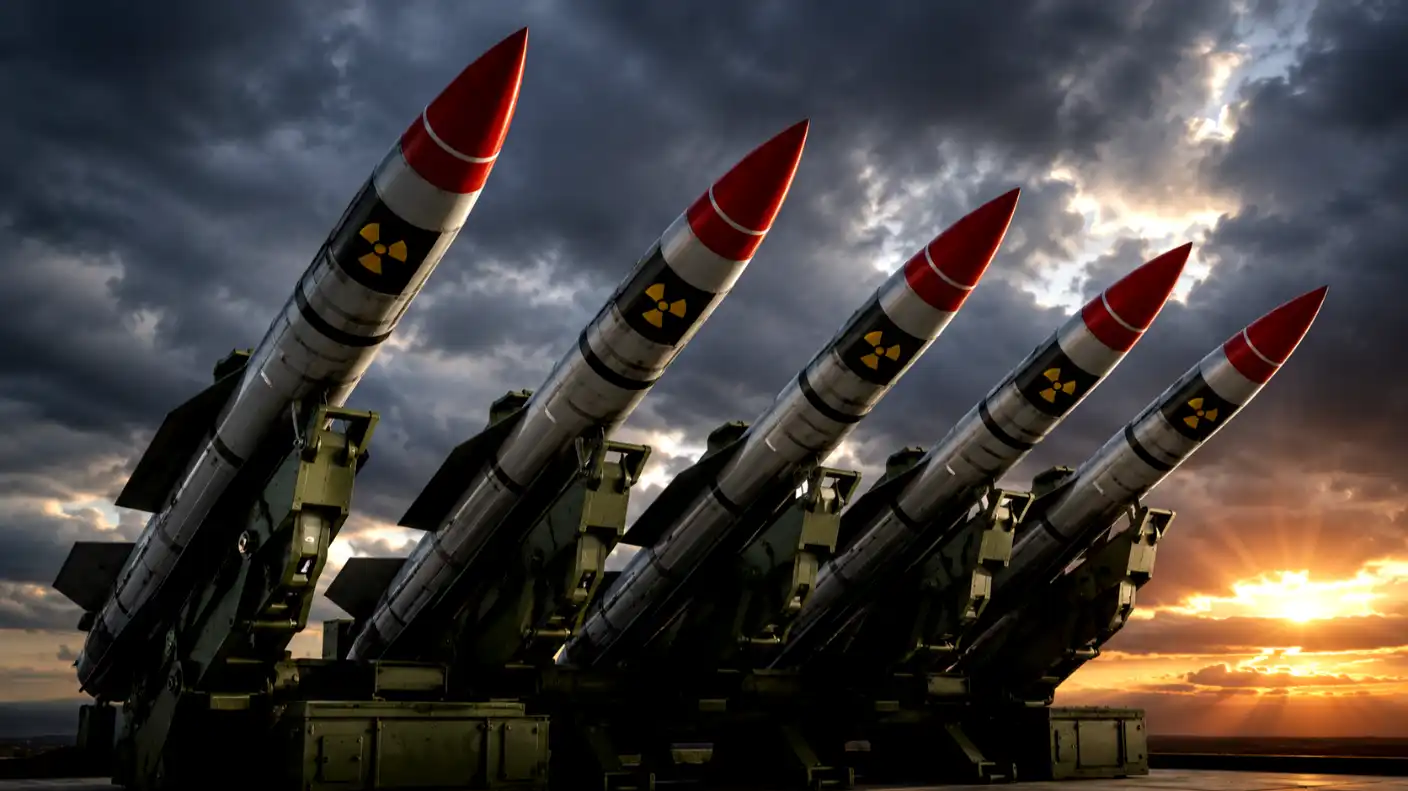
The Russian Defense Ministry announced on Thursday that military forces delivered live nuclear munitions to field storage facilities inside Belarus. This aggressive move forms the core of a major 3-day nuclear training exercise. The drills span across both Russian and Belarusian territory, raising alarm bells throughout neighboring European nations. Western leaders watch these movements closely, knowing that Belarus shares long borders with 3 different NATO member states.
Russian commanders started these intensive drills on Tuesday. The exercise forces missile units in Belarus to practice receiving and handling special nuclear payloads. Troops specifically train to load these deadly weapons onto mobile launch vehicles. After loading the warheads, the crews practice moving secretly through the countryside. They aim to reach designated launch areas without enemy surveillance planes detecting their movements.
To showcase the event, the Russian Defense Ministry released a dramatic video to the public. The short clip shows a heavy military transport truck driving through a dense, dark forest while lightning flashes in the sky. Soldiers then unload a large, unidentified item from the back of the truck. Military experts assume the cargo contains training components for the nuclear weapons system.
The Belarusian troops use the Iskander-M tactical missile system for these drills. NATO commanders refer to this specific mobile guided missile unit as the SS-26 Stone. The modern system officially replaced the old Soviet Scud missiles years ago. An Iskander-M launcher can accurately strike targets up to 500 kilometers, or roughly 300 miles, away. The military designs these rockets to carry either standard high-explosive conventional warheads or devastating nuclear payloads. The missile travels at hypersonic speeds, making it extremely difficult for standard air defense systems to track and destroy it.
This massive show of force arrives at a very tense moment in global politics. Leaders in Moscow constantly claim they face an existential struggle against Western nations over the ongoing war in Ukraine. Since Russian forces launched their full invasion of Ukraine, President Vladimir Putin has frequently reminded the world about his massive nuclear arsenal. He uses these terrifying reminders to warn Western politicians not to push too far when they supply weapons and cash to the government in Kyiv.
The Russian government spends heavily on these massive military displays. Defense experts estimate that simply mobilizing these nuclear-capable units for a 3-day drill costs the military over $1 billion. This represents roughly 1.5 percent of their entire quarterly operational budget. Moving heavy equipment across international borders requires massive logistical support. It drains fuel, manpower, and resources at a time when the Russian economy faces severe Western sanctions.
Tensions also flared up recently over a highly militarized piece of Russian land located right inside Europe. On Wednesday, the Kremlin angrily condemned statements by Lithuania’s top diplomat. Lithuanian Foreign Minister Kestutis Budrys suggested that NATO forces needed to show Moscow that they possess the capability to penetrate the Russian exclave of Kaliningrad.
Russian leaders did not take kindly to the threat from the Lithuanian minister. The Kremlin immediately slammed the remarks, telling reporters that the statements bordered on pure insanity. Russian officials view any threat to their sovereign territory as a massive red line that could trigger a severe military response.
Kaliningrad occupies a very strategic and unusual position on the map. The small slice of Russian territory sits completely separated from the mainland. It rests on the Baltic coast, firmly sandwiched between Lithuania and Poland. Both of those neighboring countries are active members of the NATO alliance.
Roughly 1 million people live inside the Kaliningrad exclave. Despite its small size, the territory holds massive military importance for Moscow. The Russian military heavily fortifies the area with advanced air defense systems and combat troops. The city also serves as the main headquarters for the Russian Baltic Fleet, allowing Putin to project naval power directly into the Baltic Sea.
As the nuclear drills wrap up in Belarus, the message from Moscow remains crystal clear. The Russian government wants to show the West that its nuclear forces remain ready for immediate action. By moving warheads right up to the borders of NATO countries, Putin keeps his adversaries guessing and ensures the nuclear threat stays at the forefront of the global conversation.















