
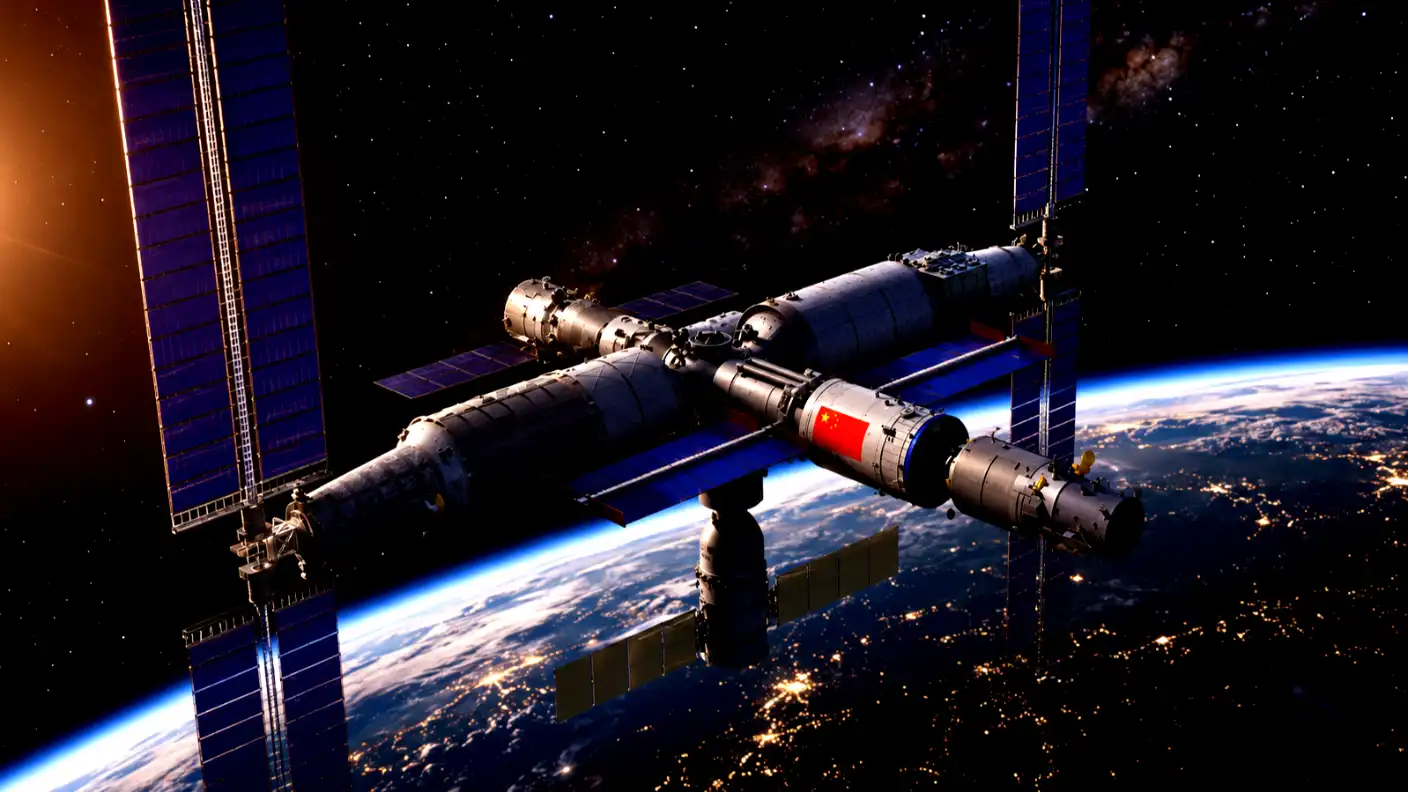
China’s space program celebrated a historic milestone on Monday as the three-person crew of the Shenzhou-23 spacecraft successfully boarded the Tiangong space station. This marked the eighth “space get-together” in China’s history, bringing the total number of humans in orbit to thirteen. The crew docked with the space station following a flawless launch on Sunday night, which took off from the Jiuquan Satellite Launch Center in northwestern China. The mission represents a major step forward in Beijing’s aggressive space campaign to establish a permanent presence in low Earth orbit and put astronauts on the moon.
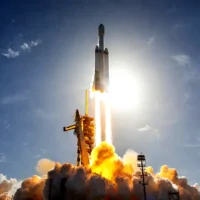
The Long March-2F carrier rocket lifted off at exactly 11:08 p.m. Beijing Time on Sunday, May 24, 2026. After entering orbit, the Shenzhou-23 spaceship used an advanced, automated fast rendezvous-and-docking method. Guided by an upgraded laser radar and China’s own BeiDou satellite system, the spacecraft successfully docked with the radial port of the Tianhe core module at 2:45 a.m. on Monday. The entire automated docking process lasted approximately 3.5 hours, proving the high reliability of China’s emergency launch and guidance systems.
At exactly 5:13 a.m. on Monday, the Shenzhou-21 crew members already living aboard Tiangong opened the hatch to welcome the new arrivals. The three new space travelers floated into the orbital module and met with the resident trio—Zhang Lu, Wu Fei, and Zhang Hongzhang. The six astronauts smiled and waved during a live video broadcast, taking a group picture to report their safe arrival to the Chinese public. This handover marks the beginning of an intensive, months-long transition period on the orbiting outpost.
The Shenzhou-23 crew features several remarkable firsts for China’s space program. Mission commander Zhu Yangzhu, a 39-year-old spaceflight engineer, is embarking on his second journey into space. He is also the first flight engineer from China’s third batch of astronauts to command a mission. He is joined by 39-year-old pilot Zhang Zhiyuan, who is making his very first spaceflight. The final crew member is 43-year-old payload specialist Lai Ka-ying, also known as Li Jiaying, who is making history as the very first astronaut from Hong Kong to enter the Tiangong space station.
Lai’s inclusion in the mission is a highly symbolic victory for Hong Kong and China’s efforts toward regional integration. She holds a doctoral degree in computer forensics and previously worked for the territory’s police department. Her selection as China’s first female payload specialist has ignited massive national pride in Hong Kong. Before boarding the spaceship, the crew sang patriotic songs, and Lai shouted in her native Cantonese, “Tiangong Space Station, here I come!”
While most Chinese space missions last exactly six months, the China Manned Space Agency announced an unusual plan for this mission. One of the three Shenzhou-23 crew members, who will be named at a later date, is scheduled to remain aboard Tiangong for an unprecedented full year. This twelve-month mission will be among the longest single stays in space in global history. The goal of this long-duration flight is to study how the human body adapts to microgravity and measure performance limits under extreme physical and psychological stress.
These long-duration studies are essential as China prepares for its first crewed lunar landing by the year 2030. China has invested over $10 billion in its space program to build a robust aerospace industry capable of competing directly with the United States. While NASA aims to land its own astronauts on the moon by 2028, China is rapidly closing the gap. The data gathered during this year-long spaceflight will directly support Beijing’s plans for future lunar bases and eventually manned missions to Mars.
The Shenzhou-23 crew faces a highly demanding work schedule during their time in orbit. They are set to conduct over 100 new scientific and application projects. These experiments cover space life sciences, materials science, and advanced aerospace medicine. The tech improvements have increased the docking success rate by over 1.5% compared to older systems. This launch marks the 40th flight of China’s manned spaceflight program and the seventh manned mission since the Tiangong space station entered its permanent application and development phase in late 2022.
The new arrivals will take control of Tiangong from the Shenzhou-21 crew, who have been living aboard the station for more than 200 days. That extended seven-month mission became necessary after suspected space debris struck a previous spacecraft last year. The remaining three Shenzhou-21 astronauts will now prepare to hand over their duties and return to Earth in late May, ending what has become China’s longest human spaceflight mission to date.