

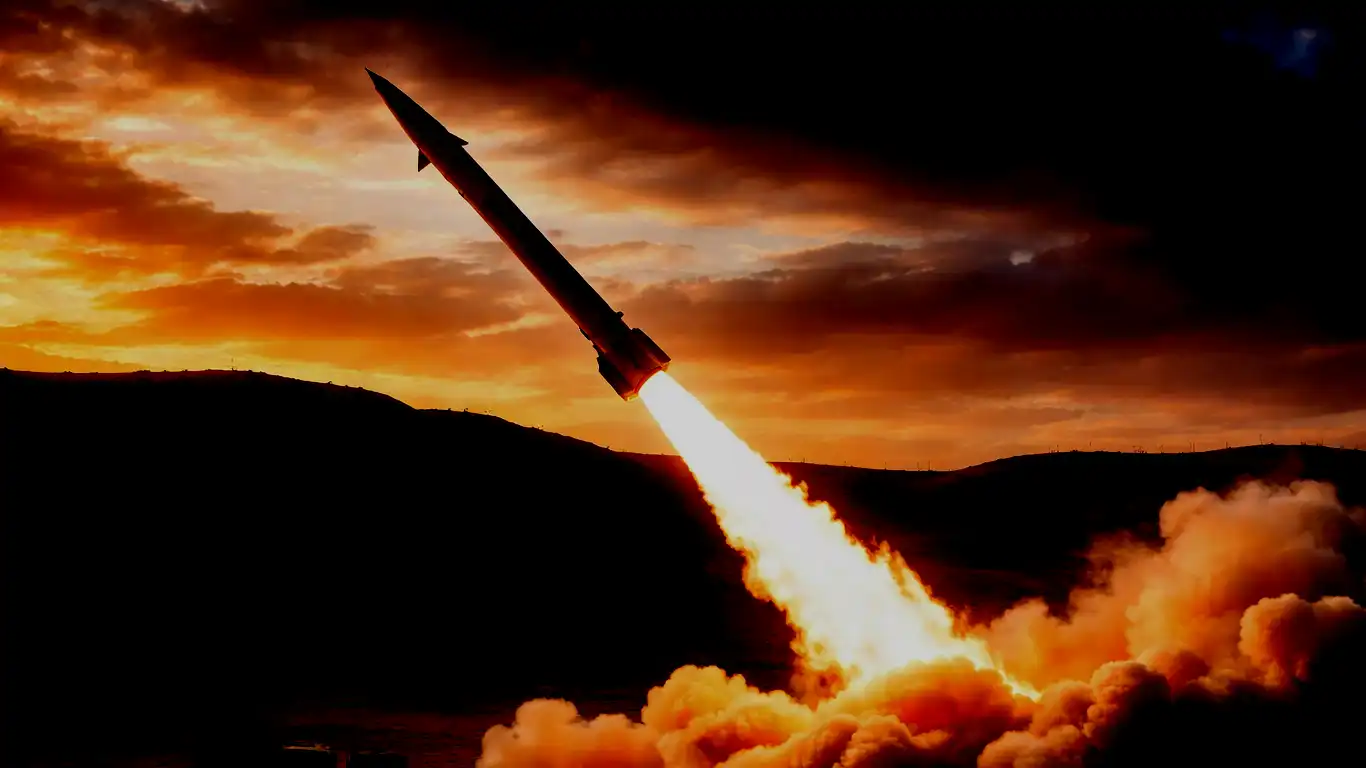
North Korea launched several military missiles off its west coast toward the Yellow Sea on Tuesday afternoon, ending a brief lull in its weapons testing program. South Korea’s Joint Chiefs of Staff confirmed the launches in an urgent press release, identifying at least one short-range ballistic missile among the projectiles. The military has immediately bolstered its surveillance posture, sharing critical radar data with both the United States and Japan to monitor any further aggressive movements from Pyongyang.
According to South Korean military trackers, the launches took place at approximately 1:00 p.m. local time on Tuesday, May 26, 2026. The flight crews fired the missiles from the city of Chongju, located in North Korea’s North Pyongan Province. This sudden launch marks North Korea’s very first weapons demonstration in exactly 37 days. The last major launch occurred on April 19, when the country test-fired several short-range ballistic missiles that state media described as being equipped with devastating cluster bomb warheads.
The country has spent the last few months aggressively showcasing its modern warfare capabilities. In early April, Pyongyang announced that its engineers successfully tested a brand new cluster-bomb warhead on a medium-range ballistic missile alongside a high-tech electromagnetic weapon. North Eastern Asian security analysts warn that these tests are part of a broader, well-funded effort by Kim Jong Un to prove that his military can fight and win a modern high-tech conflict.
The missile launches happened just hours after South Korean President Lee Jae-myung held a major Cabinet meeting to discuss the national defense budget. During the session, Lee proposed a massive $1 billion military upgrade package to purchase new equipment. He urged his government to make stronger efforts to advance the country’s defense technology, placing a huge focus on artificial intelligence, long-range aerial drones, and the potential acquisition of a nuclear-powered submarine.
While President Lee did not comment directly on the immediate threat posed by North Korea during the meeting, he stressed that South Korea must take full responsibility for its own national security. The liberal president, who usually supports improving diplomatic ties with Pyongyang, argued that demonstrating a strong resolve to protect the country actually strengthens South Korea’s military alliance with the United States. He believes that building a self-reliant military will deter foreign aggression far better than relying solely on foreign promises.
North Korean leader Kim Jong Un has completely rejected all recent diplomatic overtures from both Seoul and Washington. In March, Kim declared that North Korea’s status as a nuclear-armed state has become completely irreversible. He told his generals that expanding their self-defensive nuclear deterrent remains essential to preserving the country’s national security. He has since taken an increasingly hardline stance toward South Korea, officially declaring his southern neighbor as the permanent and most hostile enemy of his country.
This rising tension follows years of totally frozen diplomacy in the region. Kim has focused heavily on expanding his nuclear and missile arsenals ever since his highly anticipated nuclear diplomacy with U.S. President Donald Trump collapsed in 2019. While Trump has repeatedly expressed his personal desire to resume direct talks with Kim over the last few months, Pyongyang has completely ignored the White House’s overtures. Instead, North Korea demands that Washington drop all requirements for nuclear disarmament before any new talks can even begin.
To prove his anger, Kim took extreme steps earlier this year to terminate all remaining diplomatic and economic ties with South Korea. His government dismantled several cross-border communication lines and shut down joint administrative offices. This aggressive political separation makes it incredibly difficult for negotiators to defuse sudden military incidents on the water, raising the risk that a simple miscalculation near the maritime border could spark a full-scale shooting war.
Following the missile launch, South Korean defense stocks immediately surged by 1.5% on the Seoul market. Investors clearly believe the government will spend even more money on weapons and military technology in the coming months. As the United States and Japan help South Korea monitor the West Coast launch site, the entire region remains on high alert. The world now waits to see if Kim Jong Un will launch further missiles or if the diplomats can finally find a way to reopen the channels of communication.















