

The United States and Iran traded heavy military airstrikes on Thursday, shattering a fragile ceasefire and sending regional tensions to an all-time high. This violent escalation happened shortly after U.S. President Donald Trump publicly dismissed a major media report claiming the two countries were close to signing a peace deal. The sudden return to active combat has completely upended global energy markets and raised fears of a much larger, uncontrollable war in the Middle East.
The diplomatic fallout began when Trump took to his social media platform, Truth Social, to reject a report from the news site Axios. The report claimed that Washington and Tehran were close to a 60-day ceasefire extension that would reopen the Strait of Hormuz in exchange for lifting the U.S. port blockade. Trump flatly called the report “completely fake news,” asserting that his administration has not finalized any deal yet. He vowed that any future agreement he signs will be the exact opposite of the Obama-era nuclear deal, which he claimed gave Iran massive piles of cash for zero performance.
Just hours after Trump’s social media post, U.S. Central Command launched a new wave of targeted military strikes in southern Iran’s Hormozgan province. American military commanders described the operation as a necessary self-defense measure. They stated that the airstrikes successfully destroyed several Iranian mobile rocket launchers, fast-attack boats, and armed drone sites that were preparing to launch attacks against coalition forces and commercial shipping vessels in the region.
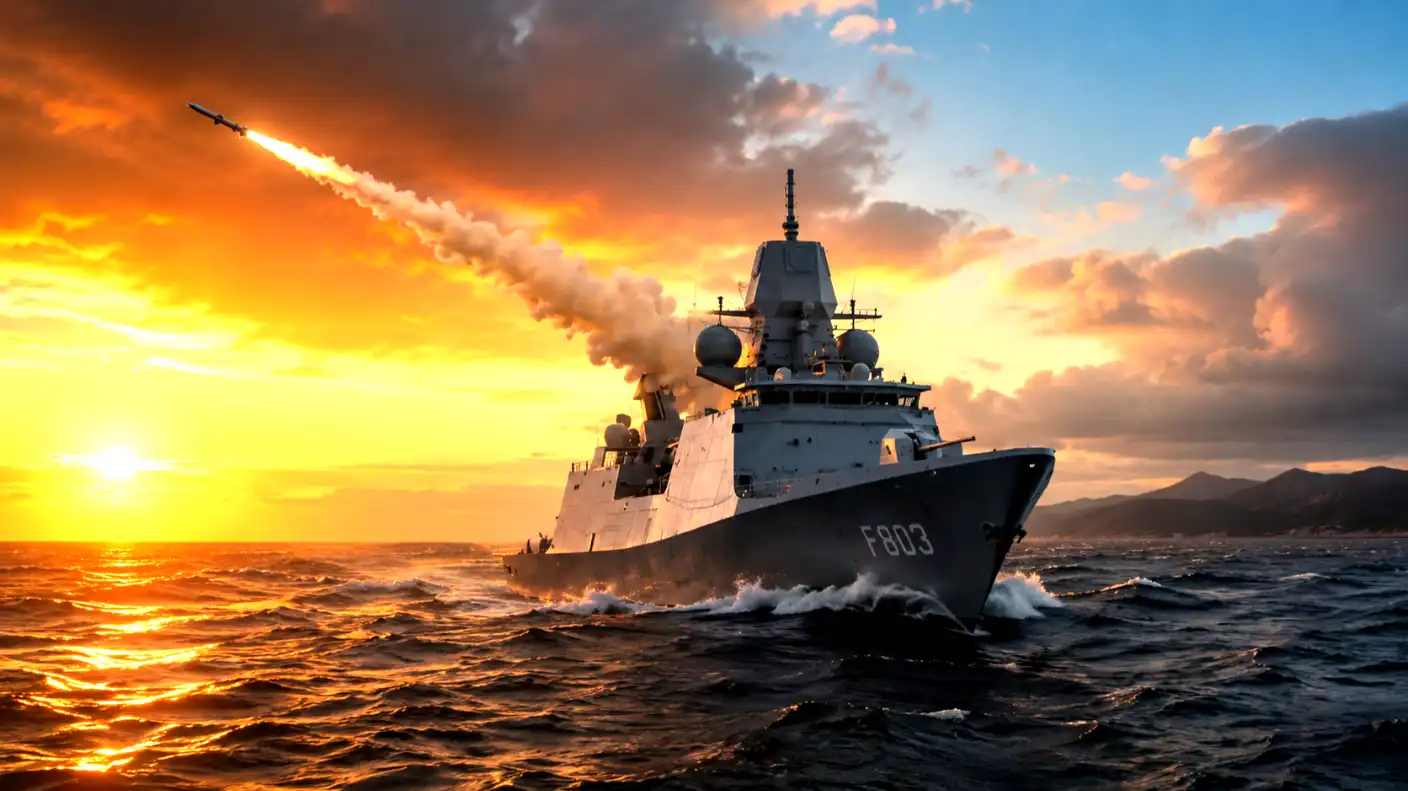
Iran responded to the American airstrikes by launching its own massive counterattack in the Gulf of Oman. The Iranian military fired multiple surface-to-air missiles and deployed armed drone swarms against U.S. Navy warships and commercial vessels. The semi-official Fars news agency claimed that Iranian missiles successfully struck an American guided-missile destroyer. However, U.S. Central Command quickly denied that claim, stating that no American ships suffered any damage during the battle.
This fresh round of fighting has completely ruined the fragile ceasefire that had largely held the line since April 8. The ongoing conflict has effectively closed the Strait of Hormuz to international trade since the war first erupted on February 28. This narrow channel off the southern coast of Iran serves as a critical global chokepoint, normally handling roughly 20 percent of the world’s daily oil and gas supply. Because of the blockade, only 7 ships passed through the strait over the last 24 hours, compared to 125 to 140 daily before the war.
The prolonged shipping blockade has cost the international logistics and cargo industries over $1.5 billion every single week as ships are forced to take long, expensive detours around Africa. This severe transport crisis has driven up fuel and manufacturing costs, raising global inflation by an extra 1.5% over the past two months. Following Thursday’s airstrikes, Brent crude oil prices quickly resumed their upward climb, surging back above the $101 per barrel mark as traders realized the shipping lanes would remain closed.
This economic pain continues to squeeze President Trump back home. The fuel shortages have pushed gasoline prices to a painful national average of $4.23 per gallon, driving up inflation. This cost-of-living crisis has dragged Trump’s public approval rating down to a record low of just 34 percent. With crucial congressional midterm elections just six months away, voters are preparing to punish the Republican Party at the ballot box.
To make matters worse, Trump is facing a growing, unprecedented rebellion from his own party in Washington. Earlier this week, the Senate defied the president in a tense 50-47 vote to advance legislation that would force the United States to withdraw from the unpopular war entirely. This open revolt shows that even conservative lawmakers are losing their patience as the conflict burns through billions of dollars. The Pentagon recently admitted that the war has already cost taxpayers at least $25 billion, equal to NASA’s entire annual budget.
Despite the political pressure, Trump refuses to soften his strict demands. The president insists that Iran must completely dismantle its nuclear program and hand over its entire 400-kilogram enriched uranium stockpile to the United States to be destroyed. Iran flatly refuses, demanding an immediate end to the naval blockade and the lifting of all economic sanctions first. With Iran’s supreme leader recently issuing a strict directive forbidding any nuclear fuel from leaving the country, the negotiations remain in a complete stalemate.
The next few days will determine the fate of the Middle East. While negotiators from Pakistan and Qatar continue to work in Tehran to fine-tune a final understanding, the ongoing airstrikes prove that the ceasefire has practically collapsed. If Trump and the Iranian leadership cannot find a way to compromise on the 14-point memorandum, the region faces a sudden return to full-scale combat. This would send oil prices skyrocketing past $120 a barrel, threatening to plunge the entire global economy into a devastating recession.















