

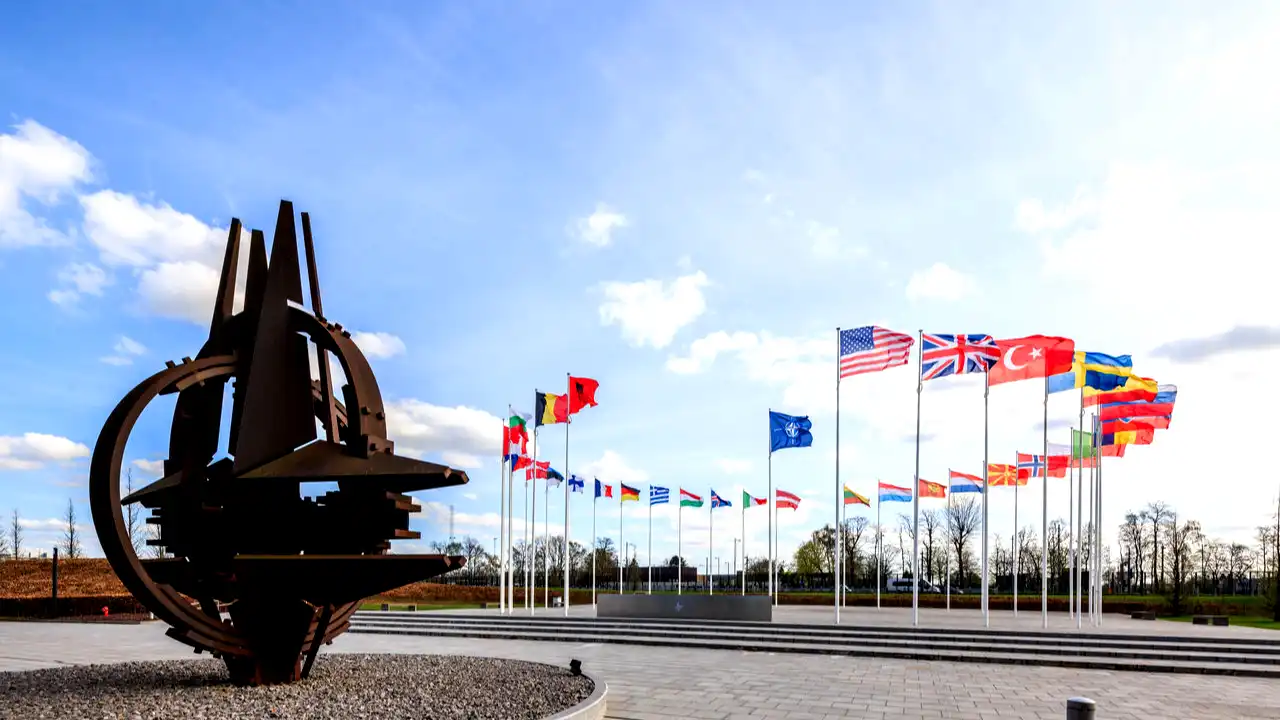
Admiral Rob Bauer, the Chair of the NATO Military Committee, announced on Saturday that the alliance is firmly on track to meet its ambitious defense spending goals. Speaking at the annual Shangri-La Dialogue security summit in Singapore, Bauer urged European countries to keep up their momentum. He warned that while progress has been steady, the current target of spending 2% of gross domestic product (GDP) on defense must act as a floor, not a ceiling, for future security.
This urgent call for increased defense spending comes amid historic pressure from the United States. President Donald Trump has spent months fiercely criticizing European allies, accusing them of failing to pay their fair share of the alliance’s costs. Trump recently escalated this dispute by ordering the withdrawal of 5,000 U.S. troops from Germany and threatening to pull out of the 32-member alliance completely if allies do not step up.
In response to Trump’s relentless demands, European nations have significantly boosted their military budgets. Of the 32 member countries, exactly 22 are expected to meet or exceed the 2% of GDP defense spending target this year. This represents a massive increase over previous years, when only a handful of nations met the target. European allies are on track to spend a combined $380 billion on defense this year alone, proving they heard Washington’s message loud and clear.
This massive financial shift has become a matter of survival for Europe. The Pentagon recently briefed NATO officials on plans to withdraw a significant portion of its conventional forces from the continent. The United States plans to pull all of its submarines from NATO assignments, cut its fighter-jet contributions by 33%, and halve its strategic-bomber pledges. This historic conventional fallback means that European allies must quickly build up their own militaries to defend the continent’s borders.
Bauer explained that this new strategic division of labor requires European nations to assume primary responsibility for conventional military defense. While the United States will continue to provide its powerful nuclear umbrella, Europeans must supply their own ground troops, tanks, and reconnaissance drones. Upgrading these national defense systems is an incredibly expensive undertaking. Experts estimate that smaller member states must spend over $1 billion each to rebuild their depleted weapons inventories.
This massive defense spending boom is placing a heavy strain on European economies. The ongoing war in the Middle East has blocked the vital Strait of Hormuz, driving global energy prices up and pushing European inflation up by an extra 1.5% over the past two months. This economic disruption has cost the global shipping and logistics industries over $1.5 billion every single week. Despite these difficult economic conditions, European governments must continue to prioritize their military budgets to ensure national survival.
The massive structural changes within NATO will dominate the upcoming summit in Ankara, Turkey, this July. The 32 national leaders will meet to officially finalize this new burden-sharing agreement and redefine the alliance’s division of labor. Leaders hope that presenting a highly unified and well-funded front in Ankara will appease Trump and secure America’s long-term commitment to the alliance.
To demonstrate their readiness, several European countries are already preparing to launch a major post-war naval mission to protect the Strait of Hormuz once a ceasefire takes effect. Nations like Britain, France, and Germany are preparing specialized minehunters and warships to secure the critical shipping channel. By taking on these dangerous global security missions, European allies hope to prove to the Trump administration that they are valuable and capable partners, rather than dependents.
Ultimately, the security landscape in Europe has changed forever. As Admiral Bauer noted, the days of relying blindly on American taxpayers to pay for Europe’s defense are officially over. The upcoming months will test whether the 32-member alliance can successfully transition to this new era of shared responsibility. If European nations can maintain their high level of spending and successfully build their own defenses, they will secure a safe and independent future. If they fail, they will find themselves completely vulnerable to regional aggression.















