

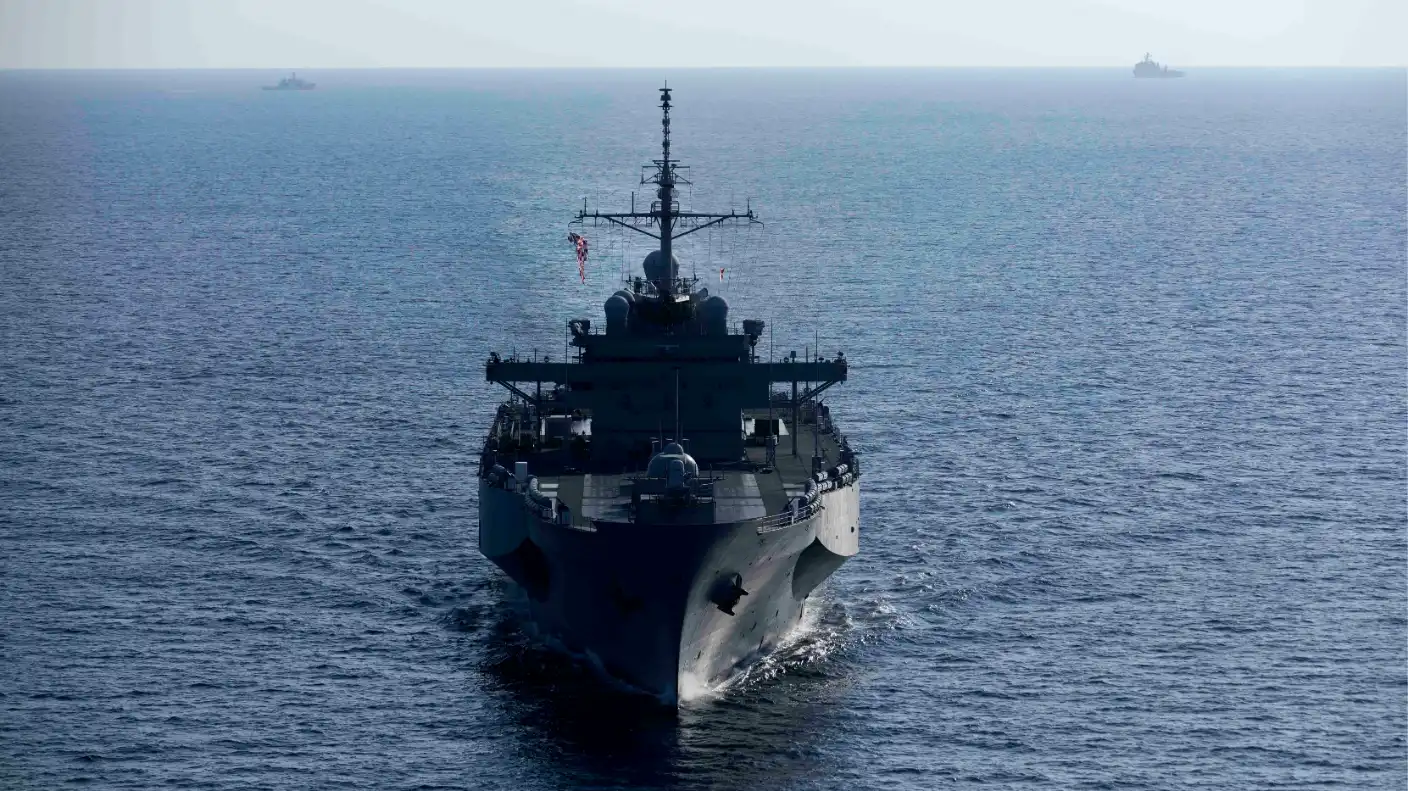
The United States military announced on Sunday that its naval forces successfully struck and disabled a commercial cargo ship that attempted to breach the strict, ongoing blockade of Iranian ports. A U.S. Navy guided-missile destroyer patrolling the Gulf of Oman intercepted the vessel after its captain ignored multiple warnings to halt, highlighting the extreme and volatile dangers still plaguing Middle Eastern shipping lanes.
U.S. Central Command released a detailed statement outlining the weekend operation. Naval commanders explained that their warships detected the container ship heading directly toward an Iranian port. When the captain refused to change course, a Navy destroyer fired live warning shots across the ship’s bow. When the vessel continued to push forward, the American warship fired directly at the ship’s steering and propulsion systems, disabling the vessel and forcing it to drift to a complete stop.
Fortunately, military officials confirmed that the targeted strike caused exactly zero injuries or fatalities among the ship’s crew. Emergency teams from the U.S. Navy subsequently boarded the disabled vessel to inspect the cargo and ensure the safety of the sailors. The incident marks the fifth time since April that the United States military has used physical force to disable a commercial vessel attempting to bypass its strict blockade of Iranian harbors.
The United States has significantly ramped up its naval blockade over the last month to choke off Iran’s remaining trade routes. According to the latest Pentagon records, American warships have successfully intercepted and redirected exactly 81 commercial vessels attempting to trade with the country. This aggressive maritime campaign aims to starve the Iranian government of foreign currency and pressure its hardline leaders to accept a permanent non-nuclear peace deal. The U.S. government has spent nearly $29 billion on the war since it first erupted, and they are determined to get results.
This naval clash happens at a highly sensitive time for the global economy. Ever since the war began with joint American and Israeli airstrikes on February 28, the shutdown of the Strait of Hormuz has created the worst global energy crisis in history. The narrow channel off the southern coast of Iran normally handles roughly 20 percent of the world’s daily oil and gas supply. Because ships cannot cross safely, global fuel prices have skyrocketed, with Brent crude oil currently trading near a painful $111 a barrel.
The prolonged shipping blockade has driven global inflation up by an extra 1.5% over the past two months. This transport crisis has cost international cargo companies over $1.5 billion every single week as ships are forced to take long, expensive detours around Africa. This economic pain has put immense pressure on U.S. President Donald Trump, whose public approval rating recently dropped to a record low of 34% ahead of the crucial November midterm elections.
The strike on the commercial vessel occurred just hours after U.S. Defense Secretary Pete Hegseth issued a stern warning to Iran during the Shangri-La Dialogue security summit in Singapore. Hegseth told global defense leaders that the United States has more than enough weapons stockpiled to resume full-scale attacks if negotiations fail. He made it clear that while Washington is currently observing a fragile ceasefire, its military remains fully prepared to resume the war at a moment’s notice. He told the audience that the United States has spent over $100 billion maintaining its global naval readiness and that it will not hesitate to protect international trade.
Diplomats from Pakistan and Qatar are currently working in Tehran to fine-tune a 14-point Memorandum of Understanding to extend the 60-day ceasefire. Under the proposed deal, the U.S. would lift its naval blockade and allow Iran to sell its oil, provided that Iran clears its sea mines from the Strait of Hormuz and agrees to negotiate over its nuclear program. However, Trump recently called Iran’s previous offer a piece of garbage and warned that his patience has run completely thin. He has demanded that Iran must completely turn over its 400-kilogram enriched uranium stockpile to be destroyed before any permanent sanctions are lifted.
Ultimately, the Sunday shootout in the Gulf of Oman proves that the temporary ceasefire is hanging by a tiny thread. Before this weekend’s actions, some cargo lines had hoped the ceasefire would allow them to resume normal operations, but this latest strike has shattered those hopes. While political leaders argue over the terms of the peace treaty, the active blockades keep the region on the brink of another massive explosion. Until the United States and Iran can successfully sign the 14-point memorandum and reopen the shipping lanes safely, the waters of the Middle East will remain a high-risk combat zone where even commercial ships face the direct threat of military strikes.















