

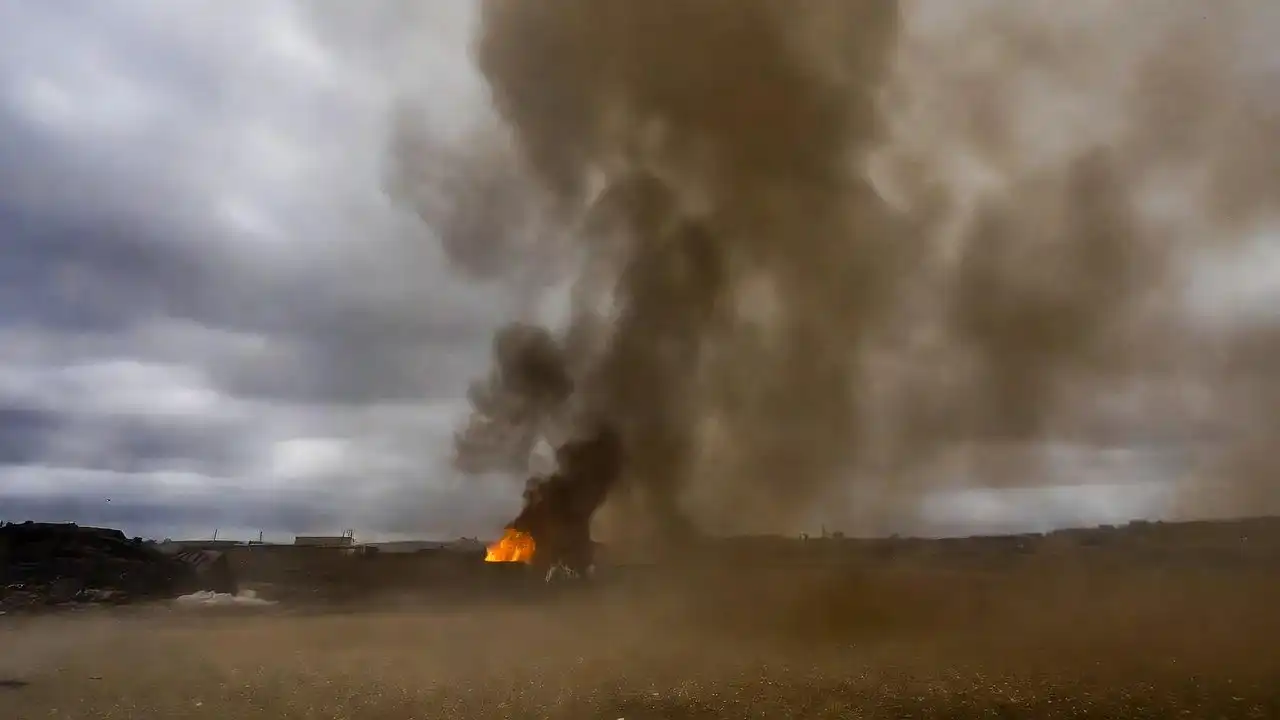
Tensions in the Middle East reached a dangerous new peak on Wednesday, May 27, 2026, when the United States military carried out fresh airstrikes against Iranian air defenses and a drone-control site near the strategic Strait of Hormuz. The military action followed an aggressive move by Iranian forces, who fired several explosive drones toward commercial shipping vessels and American warships in the region. This highly volatile exchange marks the second time in just three days that American forces have directly struck targets on Iranian soil, severely testing a fragile ceasefire that diplomats have spent months trying to preserve. The escalation highlights the extreme difficulty of maintaining stability in one of the world’s most critical maritime chokepoints.
The skirmish began earlier on Wednesday when Iranian forces launched four one-way attack drones at international commercial ships and U.S. naval vessels operating in the Strait of Hormuz. U.S. Central Command quickly scrambled a formidable air response, deploying F/A-18, F-16, and F-35 fighter jets to intercept the threat. The American pilots successfully shot down all four hostile drones before they could reach their targets. Shortly after, F/A-18 jets targeted and destroyed a ground-control unit near the coastal city of Bandar Abbas, striking the facility just as it prepared to launch a fifth drone. According to two U.S. officials, the preemptive strike successfully neutralized the immediate threat to maritime traffic in the strait.
In the aftermath of the strikes, Pentagon officials sought to frame the military action as a limited, defensive response. The White House emphasized that the operation did not represent a move to expand the broader conflict but was a necessary act of self-defense to protect naval assets and ensure freedom of navigation. The precision strikes directly targeted military infrastructure near Bandar Abbas, a bustling port city in southern Iran that serves as a primary base for the Islamic Revolutionary Guard Corps. Despite the high-stakes nature of striking targets inside Iranian territory, American military spokespersons confirmed that the operation resulted in zero U.S. or civilian casualties.
The violence did not remain contained to the immediate waters of the Strait of Hormuz. By Thursday morning, May 28, 2026, the conflict spilled over into neighboring Kuwait, shattering a long period of quiet that the country had enjoyed under the previous ceasefire. The Kuwaiti military quickly activated its air defense networks to intercept incoming hostile missiles and drones. Authorities in Kuwait City warned residents to seek immediate cover as air raid sirens echoed across the country. U.S. Central Command later described the launch of these weapons toward Kuwait as a major violation of regional security agreements, highlighting how quickly local skirmishes can trigger a wider regional fallout.
Tehran did not stay silent after the American air operations. The Islamic Revolutionary Guard Corps, which manages Iran’s naval operations and maintains a tight grip on the Strait of Hormuz, quickly issued a statement acknowledging the U.S. strikes. The group claimed that it retaliated by launching missile strikes of its own against an undisclosed American military base in the region. Guard commanders warned that any future U.S. operations on Iranian territory would face even harsher retaliatory measures, raising fears among international observers that both sides are locked in a dangerous cycle of back-and-forth violence.
This latest round of strikes is part of a rapid deterioration of security that began earlier in the week. On Monday, May 25, 2026, U.S. naval forces carried out a separate self-defense operation, targeting Iranian surface-to-air missile batteries and sinking two fast boats suspected of laying naval mines in the shipping lanes. The U.S. military ordered those strikes after identifying high-risk preparations near Bandar Abbas. The consecutive encounters within three days reveal that both militaries are operating on a hair-trigger, with the potential for miscalculation growing higher with every passing hour.
This surge in military conflict comes at an incredibly inconvenient time for international diplomats. Behind the scenes, representatives from Washington and Tehran have spent weeks working through intermediaries to extend a temporary truce. Just four days before this skirmish, U.S. President Donald Trump publicly stated that negotiators were close to finalizing a 60-day extension to the ceasefire. However, the diplomatic path remains highly complicated. The White House recently dismissed a claim by Iranian state media regarding a finalized draft agreement, calling the report a complete fabrication. These new battles on the water threaten to derail the delicate talks entirely.
The physical battleground of the Strait of Hormuz holds immense economic weight for the entire world. The narrow waterway serves as the primary route for approximately 21 million barrels of oil daily, representing roughly 20% of the world’s daily petroleum supply. This flow of energy, valued at over $1.5 billion at current market rates, keeps global industries and transportation networks running. Any prolonged disruption to shipping in this corridor immediately sends shockwaves through Wall Street and international energy markets. Security experts warn that a sustained military conflict could easily drive crude oil prices well past $100 per barrel, fueling global inflation and raising prices at fuel pumps worldwide.
As both nations assess the damage from this latest encounter, the international community is watching closely to see if diplomacy can survive the onslaught. While the Pentagon maintains that its strikes are purely defensive, Iran’s willingness to launch retaliatory strikes against U.S. partners like Kuwait suggests a broader willingness to escalate. The coming days will prove critical as negotiators try to salvage the 60-day ceasefire extension. Without a renewed commitment to the truce from both Washington and Tehran, the Strait of Hormuz could quickly transform from a tense maritime highway into the epicenter of a major regional war.















