

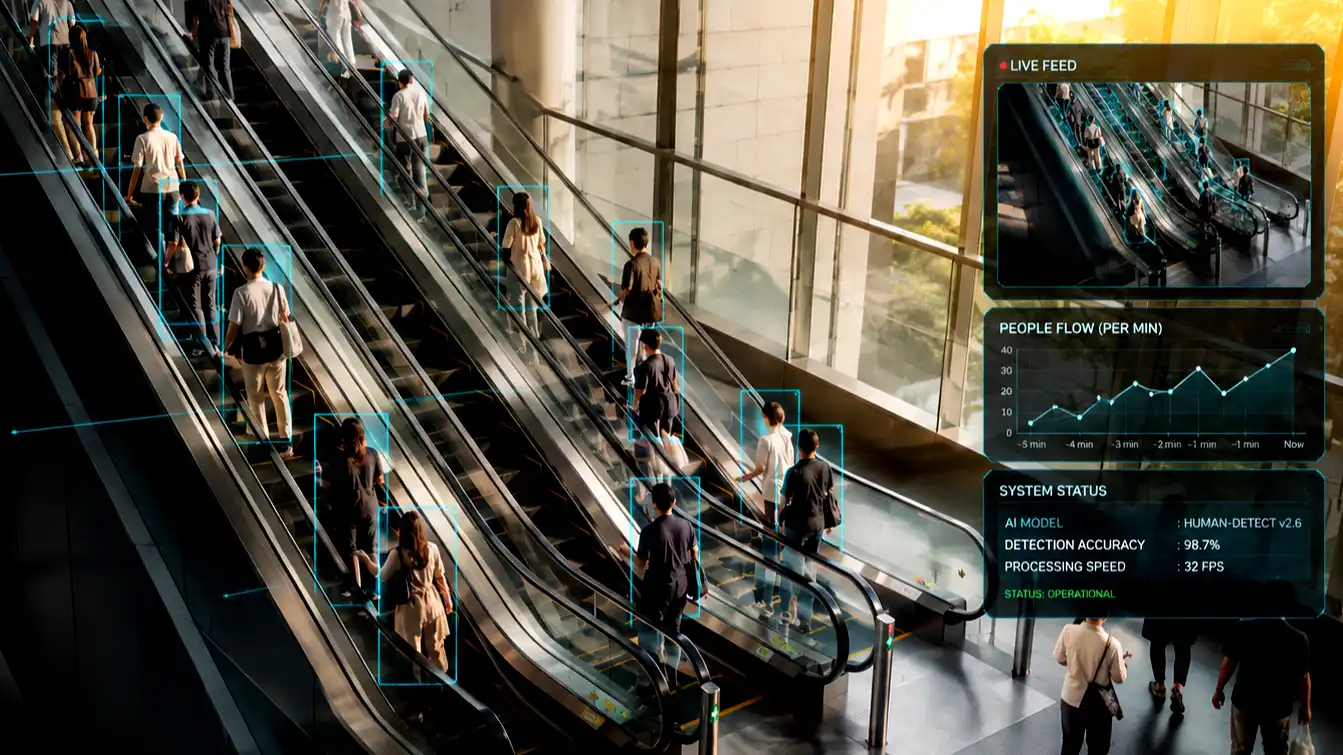
Public transport operators and property developers in Japan are turning to cutting-edge technology to address a long-standing public health crisis. Approximately 40 railway stations and commercial buildings across the country have successfully integrated a specialized artificial intelligence system designed to detect and prevent suicides. Developed by Tokyo-based start-up Asilla Inc., this innovative software monitors human movements to identify individuals in distress. The company reports that the system has already helped security teams save the lives of at least two people, highlighting the immense potential of utilizing computer vision for real-time mental health intervention and public safety.
Unlike traditional surveillance systems that rely heavily on human guards to watch dozens of monitors simultaneously, the Asilla system automates the process using advanced behavior recognition technology. The AI does not use facial recognition, which protects the privacy of daily commuters and visitors. Instead, it focuses entirely on analyzing body postures and skeletal movements. The system actively scans security camera feeds to identify specific abnormal patterns, such as a person pacing erratically, lingering for extended periods near the edges of train platforms, or loitering near rooftops and high-floor railings.
Once the software flags a potentially suicidal behavior, it immediately springs into action to coordinate a response. The system sends an automated alert to on-site security guards and station staff, providing them with critical information within 1 second. In some high-risk locations, the system can even trigger immediate pre-recorded warning messages through public loudspeakers to disrupt a person’s train of thought. This rapid communication allows human workers to reach the individual before they can take any irreversible actions, effectively transforming passive security cameras into active lifesavers.
The technology has already proven its worth in real-world emergencies, directly leading to the rescue of two individuals who were in extreme danger. In one instance, the AI detected a man entering a highly restricted zone at a commercial facility where customer entry is strictly prohibited. The system immediately alerted a security officer, who intercepted the man. The individual later admitted to the guard that he had entered the area with the sole intention of ending his life by jumping. His rescue is a powerful example of how early digital detection can buy crucial seconds for physical intervention.
In another deeply moving case, the system flagged a child who had been lingering excessively near a protective railing on the upper floor of a commercial building. Following the AI’s real-time notification, a security guard quickly arrived at the location to investigate. Upon approaching, the guard discovered that the child was actively writing a suicide note. Thanks to the automated warning, staff intervened in time to secure the child and coordinate appropriate psychiatric help, preventing what could have been a devastating tragedy for the family and the community.
Training an artificial intelligence model to interpret human intent and emotion accurately requires an enormous amount of data. To achieve this high level of precision, Asilla Inc. has worked closely with around 200 commercial facilities and other entities since 2022. The developers used roughly 7 million pieces of security camera footage to train the AI’s deep-learning algorithms. Through this extensive process, the system learned to distinguish normal activities—such as waiting for a train or tying a shoelace—from the subtle physical tells of someone suffering from a severe mental health crisis.
While suicide prevention remains a primary focus, the system’s training has also enabled it to identify several other critical situations. The AI can detect physical violence, sudden illnesses, slips, and prolonged immobility. For instance, if a passenger suddenly faints or experiences a stroke and collapses on a platform, the system immediately flags the medical emergency for station managers. This multi-purpose capability makes the technology highly appealing to property managers who want to improve overall public safety and streamline emergency responses in crowded environments.
The physical scale of the deployment is steadily expanding across Japan’s most populous regions. Currently, about 30 commercial facilities and around 10 major transit stations have fully implemented the system. Most of these installations are located in the bustling metropolitan area of Tokyo and the neighboring Kanagawa Prefecture. The company is actively working to expand its footprint to more public transport networks, where high passenger volumes make manual monitoring a massive operational challenge for transit staff.
This proactive approach is crucial in Japan, where over 21,000 tragedies occur each year due to suicide. Train platform incidents represent a major portion of urban transit fatalities, causing massive operational delays and psychological trauma for passengers and rail staff alike. While many operators have installed physical platform screen doors, retrofitting older stations is extremely expensive and can take years to complete. Software-based solutions like Asilla’s behavior-recognition AI provide an incredibly cost-effective alternative that works instantly with the thousands of security cameras already in place.
Looking ahead, the development team at Asilla is exploring new applications for its behavioral analysis technology to address other societal challenges. The company recently launched a modified version of its software designed specifically for nursing homes and welfare facilities. This new tool helps staff monitor elderly residents for falls, wandering, and sudden health changes, especially during night shifts when staffing levels are low. By combining human empathy with automated vigilance, these technological solutions represent a major step forward in creating safer, more supportive public spaces.















