

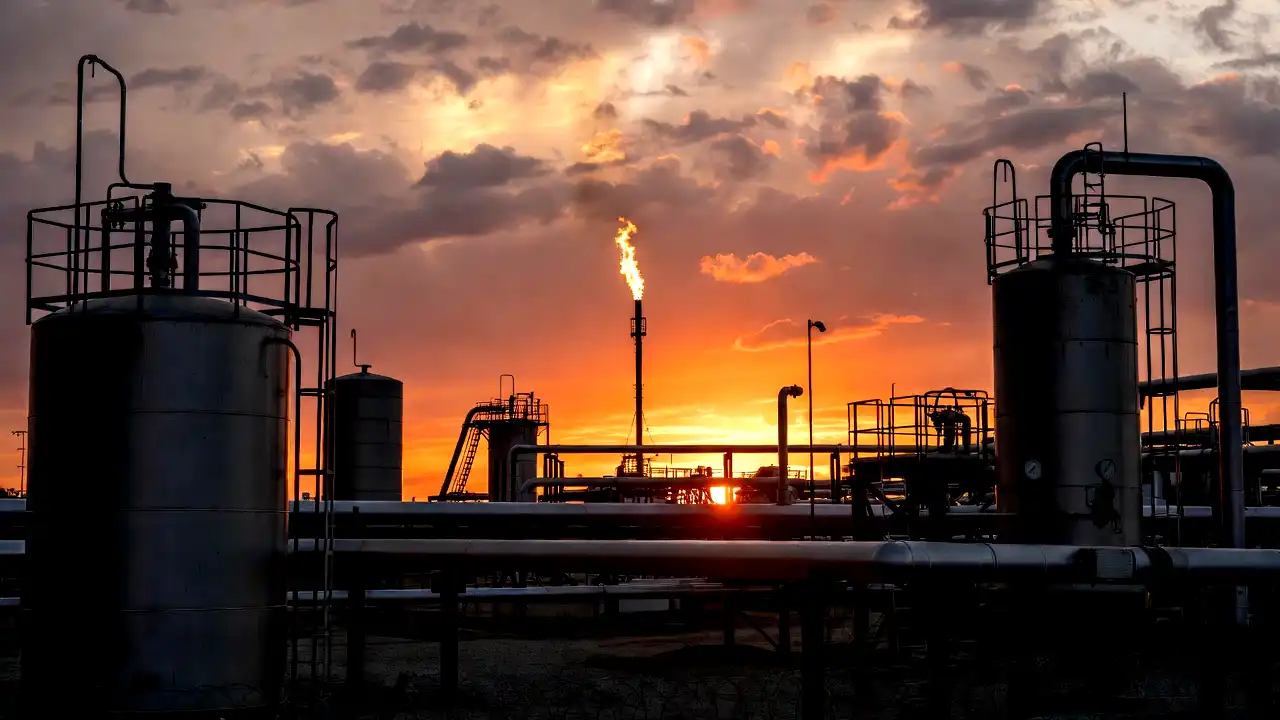
The Netherlands has taken a dramatic step to shield its economy from a worsening global energy crisis. On Monday, June 1, 2026, the Dutch government approved a massive subsidy of up to €993 million, equivalent to roughly $1.2 billion, to help refill the country’s severely depleted underground gas reservoirs ahead of the winter season. The funding will go directly to the state-owned energy company, Energie Beheer Nederland (EBN) Capital BV. This sudden intervention highlights growing fears across Europe that high market volatility and a lack of private sector initiative could leave millions of homes and businesses without sufficient heating fuel when temperatures plunge later this year.
The new subsidy authorizes EBN to buy and store up to 80 terawatt-hours of natural gas in the nation’s underground facilities. Under normal market conditions, private commercial energy companies handle the bulk of this seasonal stockpiling, buying gas during the cheaper summer months and selling it during winter when demand peaks. However, the ongoing war in the Middle East has completely broken this business model. In a letter to the Dutch parliament, Climate Minister Stientje van Veldhoven explained that private companies are currently refusing to purchase and store gas due to extreme financial risks. She described EBN’s state-backed intervention as a vital, supplementary safeguard to guarantee national energy security when the free market fails.
The physical state of the Dutch natural gas reserves makes this massive financial intervention urgent. According to the country’s national energy monitor, gas storage sites in the Netherlands are currently less than 16% full. This represents a dramatic decline compared to last year, when storage facilities stood at well over 36% capacity at the same point in the season. Earlier in the spring, the national grid operator Gasunie warned that Dutch underground storage levels had collapsed to a record low of 5.8% of capacity, the lowest in at least a decade. Without swift government action, the country faces a near-impossible task to rebuild its inventories before the winter heating season begins in November.
This unprecedented domestic storage crisis is directly tied to a massive surge in global commodity prices. Benchmark European natural gas prices have skyrocketed by 48% since the outbreak of the war in the Middle East on February 28, 2026. On Monday, Dutch TTF natural gas futures—the leading price benchmark for the entire European continent—jumped another 4% to trade between €47.27 and €47.86 per megawatt-hour. These soaring prices make it highly expensive for private traders to purchase gas now, especially since they cannot guarantee they will be able to sell it at a profit later in the year.
To understand why energy prices remain so stubbornly high, one must look at the supply bottlenecks in the Persian Gulf. The ongoing military conflict has effectively halted maritime traffic through the strategic Strait of Hormuz. This narrow waterway handles roughly one-fifth of the world’s liquefied natural gas and petroleum shipments. With this critical supply route closed, European nations cannot rely on a steady flow of cheap tanker shipments from major Middle Eastern producers like Qatar. Instead, they must compete aggressively with hungry buyers in Asian markets for a limited pool of alternative gas shipments, further driving up procurement costs for European utilities.
The decisive move by the Netherlands reflects a broader, highly fragmented approach to energy security across the European Union. Across the continent, total gas inventories are hovering at just over 40% full, which sits well below the five-year seasonal average of 54%. To combat this shortfall, nations are adopting wildly different strategies. While Italy and France have implemented aggressive state programs to subsidize gas injections and push their reserves above the EU average, Germany’s government has resolutely stated that it will not intervene in the private market. The Dutch cabinet’s massive $1.2 billion injection places the Netherlands firmly in the interventionist camp, prioritizing physical supply over free-market principles.
For Dutch citizens, the skyrocketing cost of securing natural gas is already hitting home. The Dutch environmental assessment agency PBL recently warned that some households in the Netherlands could face up to €70 a month in extra energy costs by the end of the decade due to new European Union carbon pricing mechanisms. When combined with the immediate price shocks from the war in the Middle East, these regulatory costs threaten to push thousands of families into energy poverty. By deploying €993 million of public money to fill underground storage sites, the Dutch state is trying to prevent even more extreme retail price spikes during the peak winter months.
Even as the Dutch government spends billions of euros to secure fossil fuels, it is trying to accelerate its transition to renewable energy to build long-term independence. Alongside the gas storage subsidy, the Netherlands Enterprise Agency recently committed a €149.8 million operating subsidy to EemsGas, a major green gas joint venture in Delfzijl. This facility will use advanced gasification technology to convert 18 million cubic meters of waste wood into biomethane annually. While such green initiatives represent the future of European energy independence, officials openly admit that these projects cannot scale fast enough to solve the immediate winter heating crisis, leaving the country dependent on massive gas storage fields.
As the summer refilling season progresses, the eyes of the energy trading world will remain fixed on the Netherlands and the broader European grid. The success of EBN’s state-funded buying program will determine whether the country can reach the European Union’s target of having gas storage sites filled to at least 80% or 90% of capacity by November. If the state-backed purchase program successfully refills the depleted caverns, the Netherlands may navigate the coming winter without catastrophic shortages. However, if global prices continue to climb and shipping lanes remain closed, even a $1.2 billion government subsidy might not be enough to prevent a severe winter energy crunch.















