

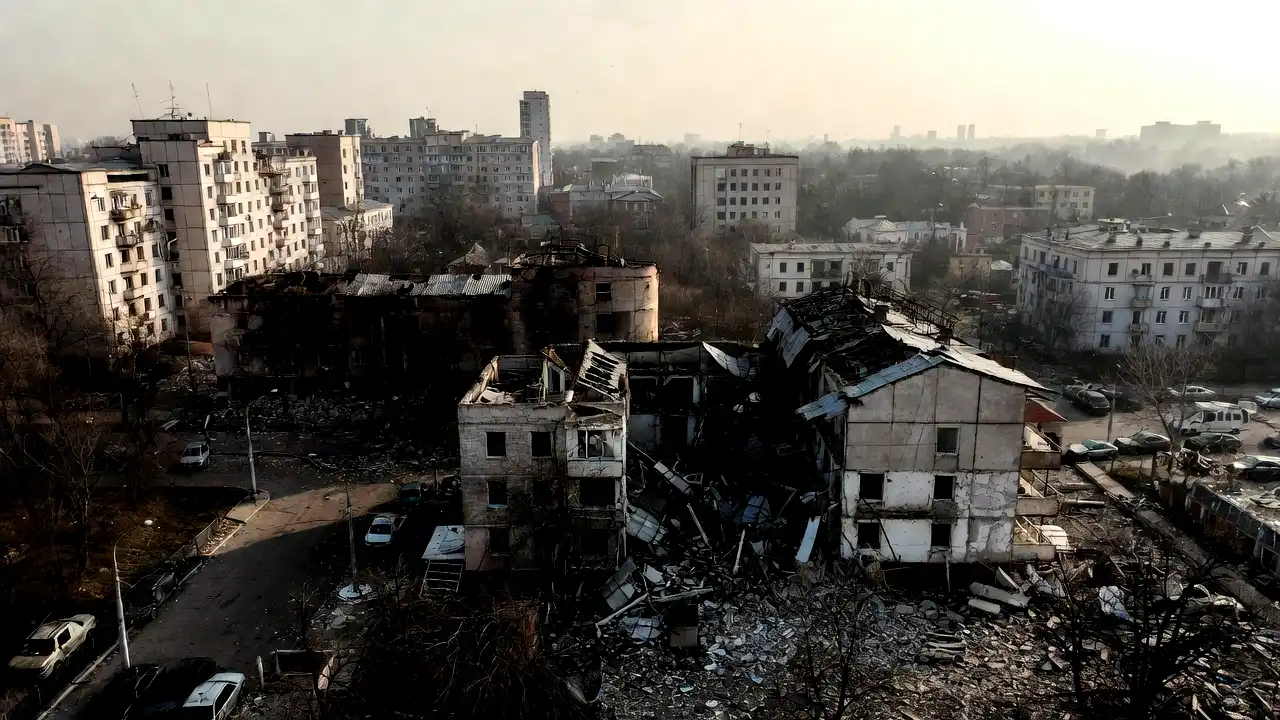
A devastating wave of Russian drone and missile strikes slammed into urban centers across Ukraine on Tuesday, June 2, 2026, putting the war-torn country’s civilian infrastructure under unprecedented strain. The massive aerial assault triggered a city-wide Kyiv air raid alert in the early morning hours, forcing thousands of terrified residents to flee into the capital’s subway system for safety. Witnesses in the city center reported a massive pillar of black smoke billowing high over residential neighborhoods as Ukraine’s air defense systems worked frantically to intercept incoming targets. The coordinated bombardment, which also struck the eastern city of Dnipro, killed at least 18 people across the country and wounded more than 100 others, marking one of the deadliest days of the four-year-old conflict.
In Kyiv alone, falling debris and suspected missile impacts caused widespread fires and structural collapses across multiple neighborhoods. Kyiv Mayor Vitali Klitschko confirmed that overnight strikes in the capital killed at least 4 people and wounded 58 others, including several children. In the Podil district, a massive fire broke out on the grounds of a non-residential property, while suspected missile debris set a nine-story apartment building ablaze. Meanwhile, in the Obolon district, falling metal fragments struck parked cars, setting them on fire near a local kindergarten. The persistent blasts transformed quiet residential streets into active disaster zones within minutes.
The sheer violence of the attack left residents in a state of profound shock and disbelief. Eyewitness Olha Mudra described the terrifying moments of the strike, which she experienced alongside her six-year-old daughter, Natalia. Standing in front of a destroyed residential building and rows of burning cars, Mudra described the scene as a complete apocalypse, explaining that debris and thick black smoke covered everything, rendering visibility absolutely zero. Emergency services workers faced dangerous conditions as they navigated through the smoke to search for survivors, with Mayor Klitschko warning that several residents remained trapped under the rubble of a collapsed 24-story apartment building.
The devastating scale of the overnight strikes did not catch Ukrainian defense planners completely by surprise. On Monday evening, June 1, Ukrainian President Volodymyr Zelenskiy issued a series of urgent warnings, urging citizens to pay close attention to air raid alerts. Zelenskiy revealed that military intelligence had identified detailed Russian preparations for a massive, coordinated strike. Following the attack, Zelenskiy announced that Russia had fired 73 missiles and deployed more than 600 drones in the single overnight campaign. He used the tragedy to issue an urgent appeal to Washington, pleading for the immediate delivery of additional Patriot missile interceptors to replenish Kyiv’s rapidly dwindling defensive supplies.
The Kremlin offered a highly controversial justification for the massive bombardment, framing the operation as a defensive reaction. Russian authorities claimed the attack responded to what they called “acts of terror” by Ukrainian forces, specifically pointing to a drone strike on a dormitory in the Russian-occupied Luhansk region last month that killed 21 people. Although Kyiv has consistently denied any involvement in that specific dormitory attack, Moscow warned last week that it intended to launch systematic strikes against military targets and decision-making centers in Kyiv. On Tuesday, Kremlin spokesman Dmitry Peskov told reporters that the conflict has officially entered a “different paradigm” due to these ongoing hostilities.
This latest round of strikes represents a severe escalation in Russia’s long-term strategy to disable Ukraine’s energy network systematically. For more than four years, Russian forces have repeatedly targeted power plants, electrical substations, and transmission lines, attempting to freeze the country’s economy and break civilian resolve. In response, Ukrainian forces have stepped up their own long-range drone strikes on oil refineries and energy infrastructure inside Russian territory. While both countries publicly deny deliberately targeting civilian populations, the persistent targeting of critical utilities continues to place millions of regular citizens in extreme danger.
As the sound of air defense systems and exploding missiles filled the air, thousands of panic-stricken residents rushed into Kyiv’s deep subway system to seek shelter. Witnesses described a chaotic scene in the early morning hours, with families carrying quickly packed belongings, mattresses, and pets down the long escalators to the safety of the underground stations. The subways, which have served as makeshift bomb shelters since the 2022 invasion, quickly became packed with civilians of all ages waiting for the all-clear signal. For many, the return of heavy bombing to the capital has revived the deepest traumas of the war’s early days.
The destruction was not confined to Kyiv, as Russian missiles and drones pounded other major cities across Ukraine. In the central city of Dnipro, local officials reported heavy civilian casualties and extensive damage to industrial sites. Emergency services confirmed that the strikes killed at least nine people and wounded dozens of others in the region. The widespread nature of the multi-pronged assault shows that Moscow is attempting to overwhelm Ukraine’s air defenses by launching simultaneous attacks from multiple directions, exposing the severe shortages of defensive interceptor missiles currently facing the Ukrainian military.
This latest escalation comes at a highly sensitive diplomatic moment, as international efforts to broker a ceasefire remain completely deadlocked. U.S.-brokered peace talks have stalled over the past few weeks, with both sides refusing to make territorial or security concessions on the battlefield. At the same time, the United States remains heavily focused on the ongoing conflict in the Middle East, raising concerns in Kyiv that Western political attention and military aid could begin to drift away. Zelenskiy warned that without a steady, guaranteed supply of Western air defense systems, Russia will continue to launch devastating attacks on Ukrainian cities with complete impunity.
Ultimately, the devastating June 2 strikes prove that the war in Ukraine has entered an incredibly dangerous and volatile phase. As both sides adopt more aggressive, high-risk military tactics, the civilian population continues to pay the highest price. The massive column of smoke that rose over Kyiv on Tuesday serves as a stark, physical reminder of the challenges facing the country as it enters its fifth year of conflict. Until Ukraine’s international partners provide the necessary air defense shields to protect its skies fully or both nations find a viable path toward diplomatic negotiation, the cycle of urban destruction and tragic loss of life will likely continue to dominate the region.















