

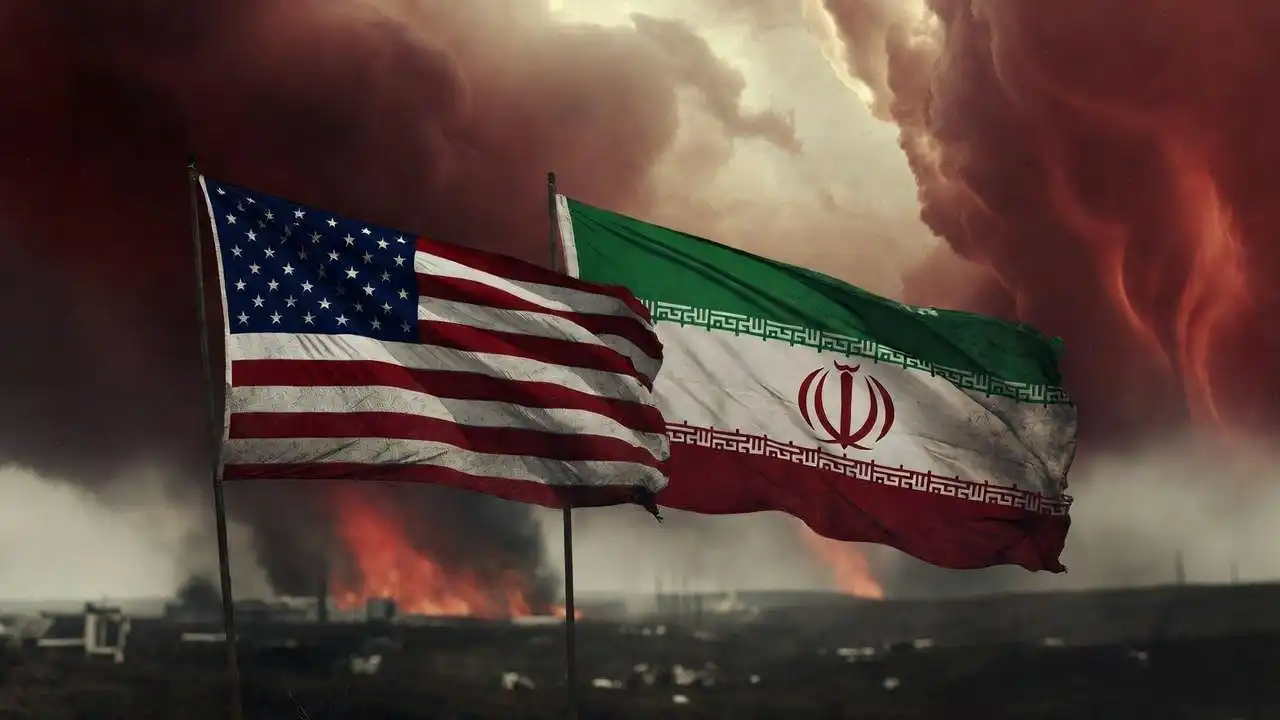
The devastating military conflict between the United States, Israel, and Iran has hardened into a tense operational stalemate as both sides struggle to negotiate an end to the hostilities. On Tuesday, June 2, 2026, Iranian state media reported that Tehran is officially reviewing a proposed temporary agreement to halt the war. This development came shortly after U.S. President Donald Trump publicly claimed that bilateral negotiations between the two nations were progressing. However, despite Trump’s characteristic optimism, deep-seated mistrust and conflicting strategic demands continue to stall a final signature, leaving the vital Strait of Hormuz closed and the global economy under immense strain.
The proposed final text of the temporary deal has met with significant hesitation in Tehran. According to a report by the Mehr News Agency, which cited an official government source, Iran is taking an exceptionally “stern” approach to the current negotiations. Iranian leadership remains highly skeptical of any U.S. proposals due to what they view as a long history of American non-compliance and broken treaties, such as the unilateral U.S. withdrawal from the 2015 nuclear accord. This deep-seated suspicion has slowed down the review process, as Iranian negotiators demand ironclad guarantees that Washington will actually lift economic sanctions before Tehran makes any operational concessions.
A sharp rhetorical dispute has also emerged regarding the frequency and status of direct communications between Washington and Tehran. The semi-official Fars News Agency reported on Tuesday that direct messaging between the two governments actually stopped several days ago. According to Fars, the last transmission was Tehran’s “clear message” demanding an immediate halt to Israel’s military incursion in southern Lebanon. However, President Trump quickly dismissed these reports, calling them completely false and erroneous. In a social media post on Tuesday, Trump asserted that conversations between the two sides have continued without pause, claiming they communicated yesterday, today, and every day over the past week.
Trump has repeatedly claimed since mid-March that the two countries are on the verge of signing a historic peace agreement. The proposed temporary deal aims to extend the shaky ceasefire originally brokered in early April and reopen the Strait of Hormuz to international shipping. However, to secure a quick signature, the current draft deliberately postpones the most contentious and difficult issues. Under the proposed framework, negotiators will shelve any formal discussions regarding the future of Iran’s uranium enrichment and nuclear weapons program until a later date, focusing instead on immediate, short-term security measures to stop the active fighting.
While a temporary ceasefire has largely prevented all-out regional war since early April, the truce remains incredibly fragile. Over the past week, both the U.S. and Iran have repeatedly breached the agreement by launching targeted military strikes against each other’s installations. The U.S. military recently struck Iranian radar sites and drone facilities on the Gulf coast, prompting retaliatory rocket attacks on American-occupied bases in neighboring countries. These recurring exchanges on the water and in the air prove that both militaries are operating on a hair-trigger, with the potential for a single miscalculation to shatter the peace talks entirely.
The human and economic toll of the war, which originally broke out on February 28, 2026, continues to rise rapidly. The three-month-old conflict has killed thousands of people, primarily in Iran and Lebanon, while unleashing massive economic distress across the globe. By effectively closing the Strait of Hormuz—a narrow waterway that previously carried roughly 20% of global oil and liquefied natural gas shipments—the conflict has choked energy supplies. Although global oil prices fell slightly on Tuesday, paring some of Monday’s sharp gains, a senior official at the International Energy Agency warned that global commercial oil inventories are depleting rapidly and could soon hit historically low levels.
Compounding the diplomatic deadlock is the escalating violence in southern Lebanon, where Israeli forces are pursuing their deepest incursion in over twenty-five years. On Tuesday, Israel kept up intensive artillery strikes and air operations against a string of towns, targeting the Iran-backed militant group Hezbollah. This continued violence directly threatens the fragile, U.S.-mediated partial ceasefire announced on June 1. Under that partial agreement, Israel promised to refrain from bombing Hezbollah-controlled suburbs of Beirut in exchange for a halt to Hezbollah rocket attacks. However, the deal has failed to reassure local populations, leaving over 1.2 million Lebanese citizens displaced from their homes.
The partial ceasefire in Lebanon has also created a major political crisis inside Israel. Israeli Prime Minister Benjamin Netanyahu is facing severe, widespread backlash from domestic critics and hardline coalition partners, who accuse him of cowardice for agreeing to hold back from striking Beirut. This political pressure is hitting Netanyahu at the worst possible time, as he prepares for a crucial general election later in 2026 that current polls project he will lose. Observers warn that to salvage his domestic political survival, Netanyahu may feel forced to scrap the partial truce and resume intensive strikes on Lebanon, potentially dragging the region back into a wider war.
Ultimately, the stalemate in the Middle East highlights the immense difficulty of translating a fragile ceasefire into a lasting peace treaty. While Trump continues to promise that a final agreement is just a week away, the reality on the ground reflects a deep, unresolved security crisis. Iran is pushing for a highly limited, short-term interim agreement that can ease its immediate economic pain without forcing it to make major concessions on its nuclear program. Until Washington and Tehran can find a common path to bridge this gap, and until the parties can stabilize the explosive situation in southern Lebanon, the threat of an all-out regional war will continue to hang over the international community.















