

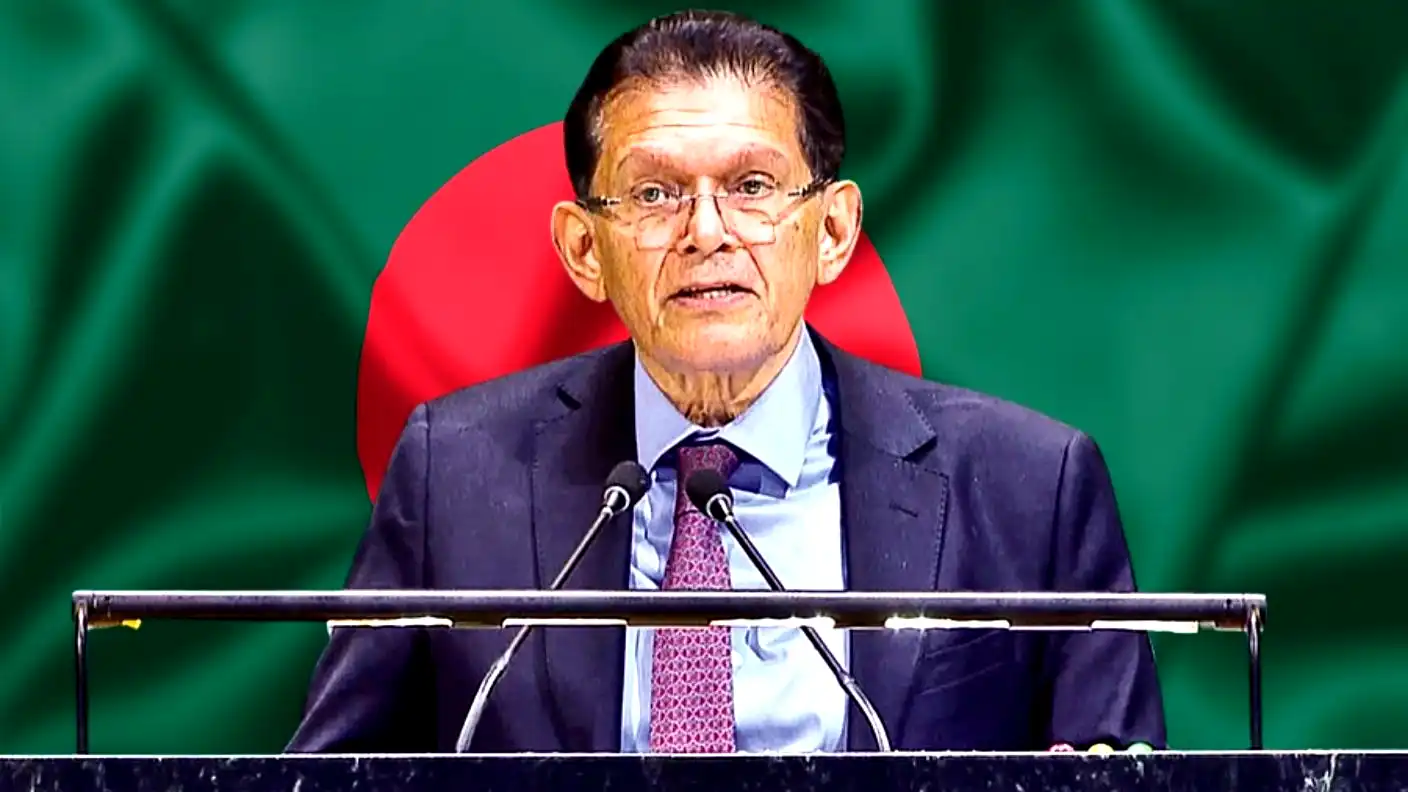
On Tuesday, June 2, 2026, member states of the United Nations elected Bangladeshi Foreign Minister Khalilur Rahman as the president of the upcoming 81st session of the UN General Assembly (UNGA). The high-stakes election, held at the UN headquarters in New York, saw Rahman secure a tight victory after a competitive campaign against a veteran European diplomat. Rahman, who assumed his role as Bangladesh’s foreign minister earlier this year, will take the helm of the world’s most representative multilateral body in September, entering office at a time when the international community faces unprecedented geopolitical fragmentation and severe financial strain.
The voting process drew intense global interest, reflecting the critical role the UNGA president plays in setting the international diplomatic agenda. Out of the 190 UN member states present and voting, Rahman secured 99 votes to win the presidency. His opponent, Andreas S. Kakouris, who serves as the Cypriot foreign minister’s special envoy for multilateralism, received 91 votes. The narrow eight-vote margin highlights the competitive nature of the race, which saw intense lobbying campaigns from both South Asian and European diplomatic delegations in the weeks leading up to the vote.
Following the announcement of the official results, Rahman took the podium to express his gratitude to the gathered delegates, accepting the presidency with deep humility and respect. He acknowledged the immense responsibility of leading the 81st session, especially during a period of historical turbulence. Rahman noted that the United Nations is currently facing severe tests on multiple operational fronts, with active conflicts and wars continuing to inflict untold suffering on millions of civilians worldwide. He warned that these compounding crises, along with rising institutional gridlock, threaten to undermine public trust in the organization’s ability to deliver on its foundational promises.
To address these institutional challenges, Rahman outlined a comprehensive roadmap for his one-year term, focusing on six strategic pillars of action. His primary focus will be on restoring global peace and security to revitalize the UN’s peacekeeping and mediation tools. Additionally, Rahman pledged to accelerate the implementation of the 2030 Agenda for Sustainable Development, address the accelerating threat of climate change, and defend fundamental human rights. He also emphasized the urgent need to establish global governance standards for emerging technologies, including artificial intelligence, and to advance meaningful UN reform to make the world body more transparent and representative.
Born in 1954, Khalilur Rahman boasts a distinguished diplomatic career that spans nearly five decades of public service. He first entered Bangladesh’s diplomatic service in 1979, quickly earning a reputation as a highly capable negotiator and strategic thinker. During his early years in the foreign service, he represented Bangladesh in various bilateral and multilateral settings, helping to shape the young nation’s foreign policy during a period of rapid regional transformation. His extensive experience in both South Asian and global affairs prepared him well for his transition into the international civil service.
In 1999, Rahman transitioned from the Bangladeshi foreign service to join the United Nations Secretariat in Geneva, serving as a special adviser at the United Nations Conference on Trade and Development (UNCTAD). This transition marked the beginning of an illustrious 25-year career within the UN system. Over the next two and a half decades, Rahman held several senior administrative and advisory positions at UN offices in both Geneva and New York. His deep understanding of international trade, development economics, and institutional governance made him a key figure in the drafting of multiple UN flagship publications and policy blueprints.
After completing his long service at the United Nations, Rahman returned to active domestic politics, where the government tapped him to lead the country’s diplomatic apparatus. He was officially sworn in as the Foreign Minister of Bangladesh in February 2026, taking charge of a foreign policy focused on expanding trade, securing climate finance, and maintaining balanced relationships with global superpowers. Analysts widely viewed his appointment as a strategic move to leverage his deep international connections to elevate Bangladesh’s global profile. This plan has now culminated in his election to the UNGA presidency.
When the 81st session of the UNGA convenes in September 2026, Rahman will inherit an organization operating under extreme operational and financial duress. The ongoing military conflicts in Eastern Europe and the Middle East have deeply divided the UN Security Council, rendering the body virtually powerless to enforce peace. At the same time, the United Nations is facing a severe liquidity crisis, with several member states failing to pay their annual dues on time. This financial stress has forced the Secretariat to implement strict cost-cutting measures, making Rahman’s goal of institutional reform and the restoration of public trust both highly urgent and incredibly challenging.
Ultimately, Khalilur Rahman’s election as president of the UN General Assembly represents a proud milestone for Bangladesh and a significant opportunity for the developing world. As a veteran international civil servant who understands the inner workings of the UN Secretariat, Rahman is uniquely positioned to bridge the gap between Member States and the central bureaucracy. The global community will watch closely as he assumes office in September, hoping that his six-pillar agenda can bring much-needed stability, reform, and renewed purpose to an organization that remains humanity’s best hope for collective peace and progress.















