

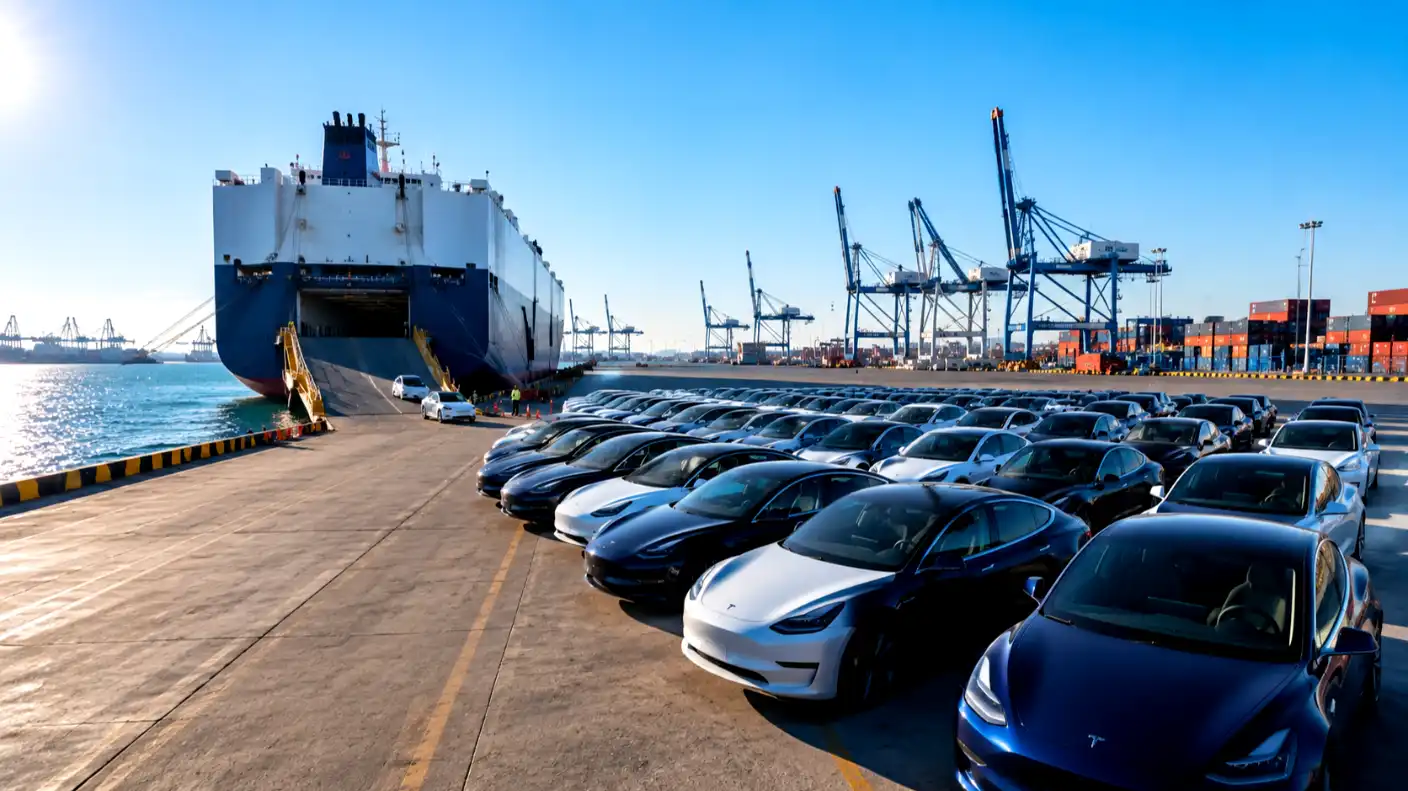
Chinese car brands are rapidly transforming Spain’s automotive landscape, capturing an unprecedented slice of the European market. According to the latest official industry data, vehicles from Chinese manufacturers accounted for an impressive 13.7 percent of all new vehicle registrations in Spain during the first four months of 2026. This sudden surge in sales proves that Chinese automakers have successfully transitioned from niche players to mainstream competitors. As Spanish consumers grapple with rising living costs, the highly competitive pricing and advanced technology of these new imports are reshaping traditional market dynamics in Western Europe.
The raw registration figures highlight the sheer velocity of this market invasion. Between January and April of 2026, Spanish drivers registered 55,972 cars from Chinese brands out of a total of 407,389 overall vehicle registrations. This means that approximately one in every seven new vehicles sold in Spain during the first four months of the year carried a Chinese badge. This milestone represents a massive, multi-fold increase from just a few years ago, when Chinese vehicles represented less than 1.5% of the local market, illustrating how quickly consumer habits can change.
The market penetration looks even more dramatic when examining the choices of everyday Spanish families. Raul Morales, the director of communications at Faconauto—the federation representing Spain’s automotive dealership associations—revealed that Chinese brands’ market share climbs to a striking 20 percent when measured solely against sales to private individuals and families. This means that one out of every five vehicles purchased by regular households is now a Chinese brand. Private buyers, who must spend their own hard-earned money rather than corporate budgets, are leading the charge toward these new models.
Given this rapid momentum, industry experts expect Chinese manufacturers to secure an even larger share of the pie in the near future. Morales projected that Chinese brands will comfortably achieve a 30 percent overall market share in Spain within the next two to three years. He noted that because market penetration among private buyers has already reached 20 percent in the first quarter of 2026, the industry can confidently expect the overall market share to expand further by the end of this year, establishing a new baseline for the Spanish car market.
Spain’s rapid adoption of Chinese automotive technology mirrors successful historical patterns seen in other highly competitive global markets. Morales pointed out that mature markets elsewhere have experienced similarly explosive growth curves. In Chile, for example, Chinese brands achieved a massive 40 percent market penetration over ten years, establishing themselves as the dominant players in South America. The Spanish market appears to be moving at an even faster pace, driven by a global shift toward electrification and a highly aggressive product offensive by Asian manufacturers.
A deliberate, multi-million-dollar brand-building strategy drove this sudden commercial success. Chinese automotive firms have invested substantial resources over the past few years to position their brands as high-quality products at highly competitive prices. In Spain, where consumers remain exceptionally sensitive to price hikes due to inflation, this value proposition has proved irresistible. By offering cutting-edge digital entertainment systems, robust safety features, and modern designs at a lower price point than established European legacy brands, Chinese automakers have dismantled the old stereotype of low-quality imports.
A highly clever distribution strategy has also played a decisive role in accelerating this market penetration. Instead of spending billions of dollars to build parallel, standalone retail networks from scratch, Chinese automakers chose to plug directly into Spain’s established dealership infrastructure. By partnering with existing local dealers who possess decades of retail experience and deep community trust, Chinese brands bypassed the traditional barriers to entry. This mutually beneficial arrangement allowed local dealership owners to secure fresh, high-demand inventory while giving Chinese manufacturers immediate, professional sales support across the country.
The rapid expansion of this physical retail footprint shows no signs of slowing down. Last year, Chinese brands successfully expanded their collective sales network to 600 outlets across Spain. Morales expects this figure to reach a massive 1,000 operational outlets by the end of 2026, giving Chinese brands a physical presence that rivals long-established domestic and European manufacturers. This extensive network ensures that Spanish buyers can easily access test drives, spare parts, and localized maintenance services, resolving the long-term ownership concerns that historically held back foreign car brands.
In the end, the rapid integration of Chinese vehicles into Spain’s daily traffic signals a permanent shift in consumer psychology. Morales believes that by the end of 2026, the popularity of Chinese brands will no longer be a headline news story. Just as Spanish buyers now view South Korean, Japanese, European, or American cars as normal options, they will soon view Chinese brands with the same level of familiarity. As these vehicles become a standard fixture on Spanish highways, the divide between Western and Eastern automotive brands will continue to dissolve, ushering in a new era of global competition in which quality and price decide the winners.















