

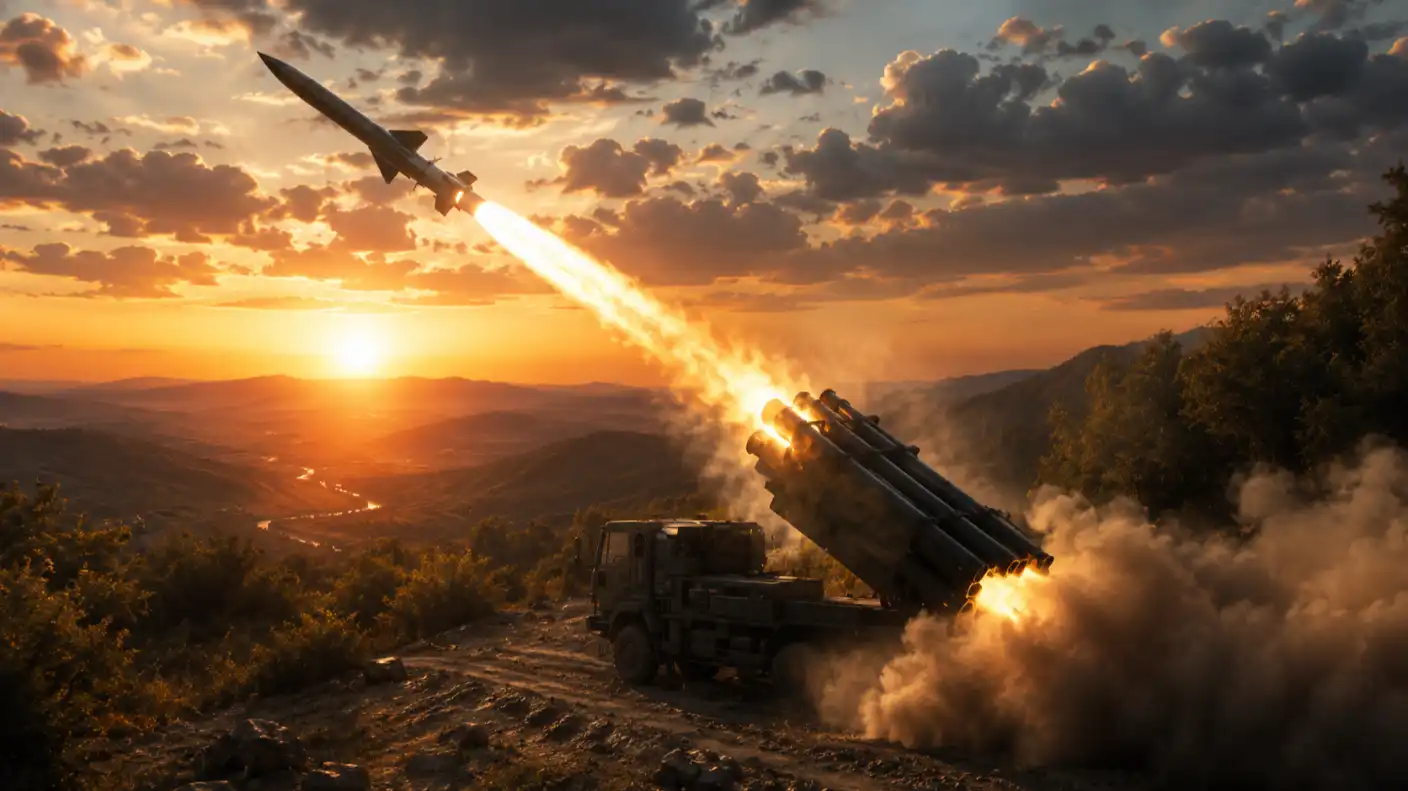
Taiwan is executing a massive, multi-billion-dollar expansion of its land-based anti-ship missile arsenal, rapidly transforming the island into a heavily fortified porcupine to deter a potential Chinese invasion. On Thursday, June 4, 2026, defense officials and military analysts confirmed that Taiwan’s armed forces are accelerating the deployment of hundreds of advanced missiles, both domestically produced and American-made. This strategic buildup represents the core of Taiwan’s modern defense philosophy, which aims to make any amphibious assault across the 180-kilometer-wide Taiwan Strait an unacceptably costly and potentially catastrophic gamble for Beijing.
The sheer scale of this defensive expansion is unprecedented in the island’s recent history. Taiwan’s military is in the process of adding at least 200 US-made Harpoon anti-ship missiles to its coastal defense batteries. This major acquisition comes on top of a sweeping domestic production program to build and deploy hundreds of its homegrown Hsiung Feng (“Brave Wind”) series missiles. The island’s top research institute, the National Chung-Shan Institute of Science and Technology, is currently running its missile factories 24 hours a day to meet the Ministry of National Defense’s urgent production targets, churning out a steady stream of advanced supersonic and subsonic cruise missiles.
This missile-centric defense strategy is part of a broader, highly coordinated “asymmetric warfare” doctrine. Instead of trying to match China’s massive, multi-trillion-dollar military ship-for-ship and plane-for-plane, Taiwan is focusing its limited defense budget on acquiring large numbers of small, mobile, and highly lethal weapons. By blanketing its western coastline with truck-mounted missile launchers, Taiwan can create a lethal, multi-layered “anti-access/area denial” (A2/AD) zone. This defensive network is specifically designed to sink or disable People’s Liberation Army Navy (PLAN) warships before they can even reach the island’s shores, effectively turning the Taiwan Strait into a maritime kill zone.
The total cost of this missile shield is staggering, reflecting the high stakes of the regional security crisis. Taiwan’s legislature has approved a special defense budget of approximately T$100 billion, equivalent to roughly $3.2 billion, dedicated exclusively to the domestic production of anti-ship missiles. This special fund operates on top of Taiwan’s regular annual defense spending, which already exceeds $19 billion. The massive capital injection has enabled the National Chung-Shan Institute to significantly expand its manufacturing capacity, to produce hundreds of advanced Hsiung Feng II, Hsiung Feng III, and extended-range Hsiung Feng III missiles by 2030.
The Hsiung Feng family of missiles provides Taiwan with a highly versatile and deadly defensive toolkit. The Hsiung Feng II is a solid, subsonic cruise missile with a range of approximately 160 kilometers, capable of striking targets well into the middle of the strait. Its more advanced successor, the Hsiung Feng III, is a ramjet-powered supersonic missile that can travel at more than twice the speed of sound, making it incredibly difficult for naval air defense systems to intercept. The military is also deploying an extended-range version of the Hsiung Feng III, which can strike targets up to 400 kilometers away, enabling Taiwanese missile batteries to hit naval bases and staging areas on the Chinese mainland.
To complement its domestic arsenal, Taiwan is integrating advanced, battle-proven American systems to add layers of complexity for Chinese military planners. The truck-mounted Harpoon missiles, produced by Boeing, are highly mobile and can be quickly dispersed across the island’s mountainous terrain to avoid pre-emptive strikes. By combining the supersonic Hsiung Feng III with the subsonic Harpoon, Taiwan can launch coordinated high-low attacks that saturate and overwhelm the radar and interceptor systems of even the most advanced Chinese warships. This combined-arms approach significantly increases the probability of a successful hit during a large-scale amphibious assault.
The urgency of this defensive buildup is a direct response to China’s increasingly aggressive military posturing and its rapid naval expansion. The People’s Liberation Army Navy has grown into the world’s largest naval force by number of ships, featuring advanced aircraft carriers, amphibious assault ships, and guided-missile destroyers. Over the past year, the Chinese military has conducted a series of large-scale military exercises simulating a full-scale invasion of Taiwan, sending dozens of warships and fighter jets across the median line of the Taiwan Strait. Faced with this constant, credible threat, Taipei has had no choice but to accelerate its asymmetric defense preparations.
Taiwanese defense officials have made it clear that their missile arsenal is a purely defensive deterrent, designed to prevent a war from ever starting. By publicly showcasing its growing anti-ship capabilities, Taipei is sending an unambiguous message to Beijing: any attempt to cross the strait will face devastating, bloody resistance. The goal is to sow enough doubt among Chinese military commanders to question whether an invasion is truly worth the massive loss of life and the expense of naval assets that would inevitably result. This deterrence-by-denial strategy has become the central pillar of Taiwan’s national survival plan.
As Taiwan continues to bolster its coastal defenses, the military is also working closely with the United States to enhance its intelligence, surveillance, and reconnaissance (ISR) capabilities. To effectively target an approaching naval fleet, Taiwan needs a real-time, comprehensive picture of the entire strait. The U.S. is providing Taiwan with advanced radar systems, satellite intelligence, and unmanned aerial drones to help its military detect and track Chinese warships long before they enter missile range. This deep intelligence sharing ensures that Taiwan’s missile batteries will have the accurate targeting data they need to be effective in a crisis.
In the end, Taiwan’s massive investment in its anti-ship missile arsenal represents a nation determined to defend its sovereignty against overwhelming odds. By transforming itself into a formidable porcupine armed with hundreds of lethal quills, the island is betting that the best way to win a war is to prevent it from ever happening. As the Hsiung Feng and Harpoon missile batteries fan out across the western coast, they stand as a silent but powerful testament to Taiwan’s unwavering resolve to remain the master of its own destiny, ensuring that the waters of the Taiwan Strait remain a formidable barrier to any potential aggressor.















