

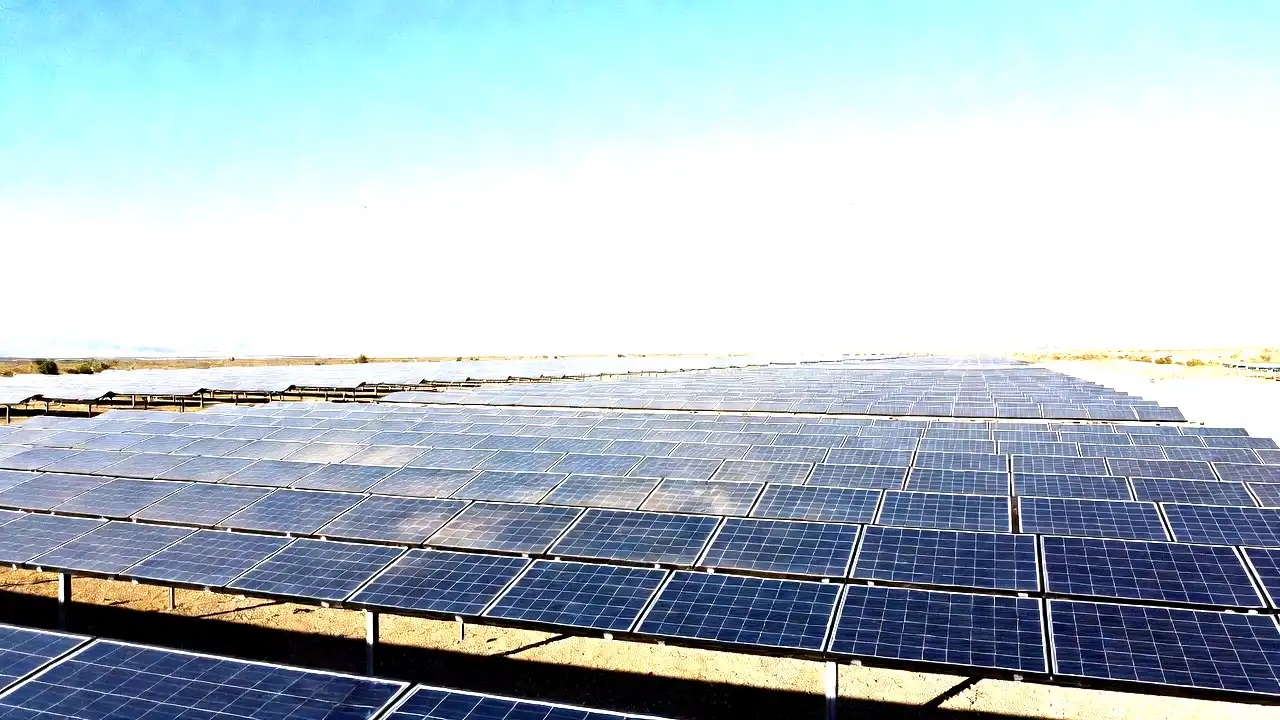
The European Union’s ambitious green transition is entering a highly contentious phase as geopolitical and cybersecurity concerns begin to reshape the continent’s renewable energy strategies. On Thursday, June 4, 2026, details emerged regarding the European Commission’s decision to ban public financial institutions from funding solar projects that utilize Chinese components. Under the new directive, major public lenders such as the European Investment Bank and the European Bank for Reconstruction and Development must stop financing future solar installations that incorporate high-risk equipment. This move aims to protect the continent’s power grids from potential foreign cyber sabotage. Still, industry experts warn that the restrictive policy will inevitably drive up procurement costs and create severe administrative bottlenecks for European developers.
The focus of this sweeping funding ban is a small but highly critical piece of technology known as the solar inverter. While solar panels capture sunlight, inverters serve as the essential “brains” of the system, converting the direct current (DC) electricity generated by the panels into alternating current (AC) electricity used by homes, businesses, and national power grids. Solar systems currently generate 13.4 percent of all electricity in the European Union, making them a cornerstone of the continent’s energy network. Because modern inverters are highly digitized and directly connected to the internet, they are a primary target for security planners seeking to protect critical infrastructure from remote disruption.
The European Commission’s decision to exclude certain suppliers stems from the physical and digital architecture of modern green grids. Today’s high-tech inverters require continuous internet connectivity to allow manufacturers to execute remote software updates, monitor performance, and perform routine maintenance. Security analysts warn that this digital backdoor creates an immense vulnerability. To operate safely, European utilities must trust that the manufacturer will not deploy malicious software updates designed to destabilize the power grid. When using Chinese inverters, European developers must also trust the Chinese government, which has the legal authority to compel any domestic company to comply with its intelligence directives, theoretically giving Beijing the power to disable hundreds of gigawatts of European electricity remotely.
Banning these components represents a massive challenge because Chinese manufacturers currently dominate the global solar supply chain. Chinese brands account for roughly 80% of the global solar inverter market, with industry giants like Huawei and Sungrow ranking as the world’s two largest manufacturers. Within the European Union, approximately 61 percent of all imported solar inverters come directly from China, highlighting how deeply dependent European developers have become on Asian manufacturing. This extreme concentration has long worried European security experts, who argue that relying so heavily on a single, geopolitical rival for critical infrastructure components is a high-risk strategy.
The implementation of the ban will have immediate, painful consequences for the economics of European solar development. Chinese manufacturers benefit from highly automated production and massive economies of scale, allowing them to offer inverters that are typically 20 to 30 percent cheaper than European-made alternatives. Industry analysts estimate that the new funding restrictions will raise overall solar project procurement costs by around 2 percent. While this price increase appears relatively small on paper, it represents a substantial financial burden for utility-scale developments operating on razor-thin margins. Furthermore, because China controls roughly 98 percent of the broader solar and battery raw-material supply chain, European manufacturers will still rely on Asian inputs, thereby increasing transit and intermediary costs.
Beyond the direct financial costs, the new regulatory framework is expected to trigger severe administrative delays for clean energy developers. To enforce the funding ban, customs officials and finance administrators must implement rigorous compliance checks to verify the origin of every component. Developers must provide detailed documentation proving that their project supply chains exclude high-risk suppliers, a process that will inevitably slow down project approvals and delay construction timelines. Industry associations warn that these bureaucratic hurdles could slow down the rate of new solar installations, potentially jeopardizing the European Union’s binding climate targets for the end of the decade.
The transition to the new, restricted funding model is on a highly compressed timeline, leaving developers little room for error. Starting November 1, 2026, all newly initiated solar projects applying for public funds must comply with the updated cybersecurity requirements and exclude high-risk suppliers. While the European Commission has provided a brief transition period for projects that are already in advanced stages of development, any company planning a future installation must immediately restructure its procurement contracts. This looming deadline is forcing developers to scramble to secure alternative agreements with European and allied suppliers, placing immense pressure on the market.
To help local industries survive this sudden transition, the European Union is attempting to scale up its domestic manufacturing capabilities. Under the Net-Zero Industry Act, European policymakers want to significantly expand local production of solar components, including high-tech inverters, between 2027 and 2030. Supporters of the policy argue that the long-term benefits of a secure power grid far outweigh the short-term financial pain. By removing Chinese software from critical energy infrastructure, Europe can dramatically reduce the risk of state-sponsored cyberattacks causing large-scale blackouts, while simultaneously providing a powerful economic boost to domestic technology and engineering firms.
Ultimately, the European Union’s aggressive push to secure its power grid will likely reshape the economics of renewable energy for decades to come. As European manufacturers scale up domestic production, higher local labor and material costs will become permanently embedded in baseline electricity tariffs. Consumers will likely face structurally safer, but slightly more expensive, long-term energy prices as a result. The coming years will prove critical as the industry adjusts to the new rules. Whether European manufacturers can scale up production fast enough to meet demand, or if the rising cost of clean energy will slow down the overall green transition, remains a defining question for Europe’s future.















