

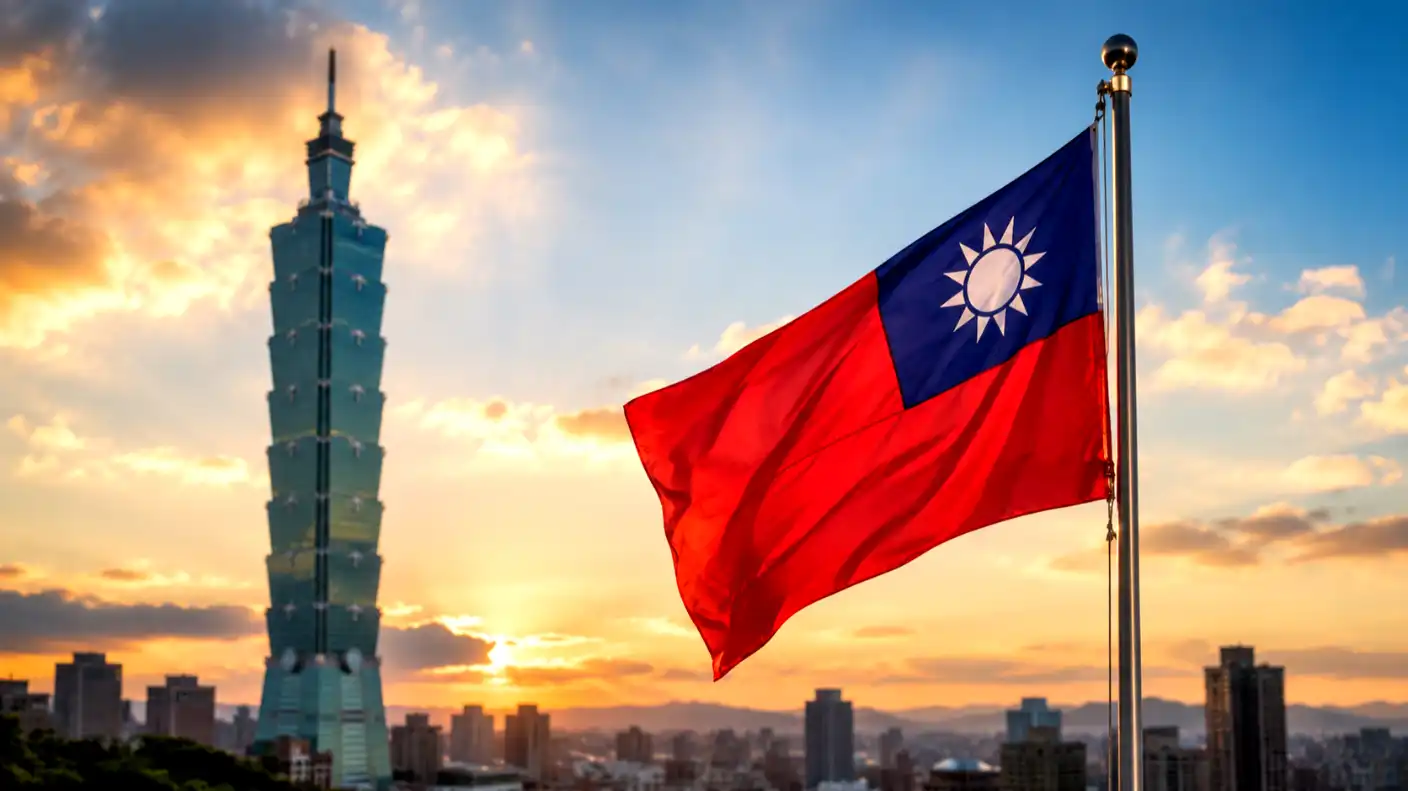
On Thursday, June 4, 2026, Taiwan’s newly elected leadership finally pushed China to acknowledge and take responsibility for its historical actions. In a public message marking the 37th anniversary of the bloody military crackdown on pro-democracy protesters in Beijing’s Tiananmen Square, Taiwan President Lai Ching-te issued a direct appeal to Chinese authorities. Lai urged the Chinese Communist Party to face up to the truth of the June 4, 1989, massacre, soothe the historical pain of the victims’ families, and open the door to genuine reconciliation and dialogue. His remarks highlight a growing, highly ideological divide between democratic Taiwan and authoritarian China at a time of severe cross-strait military and political tensions.
The events that took place in and around Beijing’s central square 37 years ago remain one of the most heavily censored and taboo subjects in modern China. On June 4, 1989, the Chinese government deployed armed troops and tanks to violently end weeks of student-led, pro-democracy protests, killing hundreds and potentially thousands of unarmed civilians. Today, Beijing actively blocks any public discussion of the incident, scrubs mentions of the crackdown from domestic search engines, and deploys security forces to detain activists who attempt to mark the day. By keeping the memory of the massacre completely erased on the mainland, Chinese authorities hope to prevent any resurgence of democratic aspirations among the younger generation.
Because China enforces a total ban on domestic commemorations, the focal point for preserving the memory of the Tiananmen Square victims has shifted entirely to overseas cities. For decades, Hong Kong hosted massive annual candlelight vigils in Victoria Park, drawing over 100,000 citizens. However, since Beijing imposed its national security law on the city, Hong Kong police have aggressively stamped out these memorials, detaining artists and confiscating pro-democracy materials. Consequently, Taiwan’s capital, Taipei, has emerged as the premier democratic sanctuary in the region, where citizens, exiled Chinese dissidents, and international rights groups gather annually to hold public vigils and keep the memory of June 4 alive.
In his detailed Facebook post on Thursday, President Lai used the anniversary to warn against the dangers of rising militarism and state surveillance. He argued that a healthy, stable government should focus its national resources on supporting the dreams and livelihoods of the next generation rather than building up aggressive offensive capabilities. Lai noted that any government that uses violence, heavy surveillance, and digital censorship to strangle citizens’ opinions and erase their dreams is ultimately acting out of institutional fear. He emphasized that Taiwan’s commitment to democracy stands in sharp contrast to China’s authoritarian retirement model.
Taiwan’s call for historical accountability received strong support from the United States, which has consistently urged Beijing to face its past. On Thursday, U.S. Secretary of State Marco Rubio issued a separate, strongly worded statement commemorating the 37th anniversary of the Tiananmen Square crackdown. Rubio called on Chinese leaders to provide a full, public accounting of those killed, detained, or missing during the 1989 military operations. He emphasized that Washington will continue to stand alongside those who fight for basic human rights and freedom of expression, reaffirming the bipartisan American commitment to defending democratic values in the face of rising global authoritarianism.
Unsurprisingly, Beijing’s official response to Taiwan’s remarks was one of quiet hostility. China’s Taiwan Affairs Office did not immediately respond to requests for comment regarding Lai’s statement, but state media have repeatedly labeled the Taiwanese president a dangerous separatist. Beijing views democratically governed Taiwan as its own territory and has rejected multiple offers of bilateral talks from Lai’s administration. Over the past year, the Chinese military has continuously ramped up its provocative operations around Taiwan, deploying warships and fighter jets across the median line of the Taiwan Strait to enforce its sovereignty claims.
During his address, Lai also reminded observers that Taiwan had to navigate its own painful path toward political freedom. Throughout the mid-twentieth century, Taiwan operated under a brutal, decades-long military dictatorship known as the White Terror, during which the government imprisoned and executed thousands of political dissidents. However, in the late 1980s and 1990s, the island successfully carried out a peaceful transition to democracy by confronting its historical mistakes, compensating victims’ families, and opening its archives. Lai argued that if Taiwan could successfully face its past and build a prosperous, open society, China should be capable of doing the same.
The battle over the memory of June 4 is part of a larger global struggle between democratic open societies and rising authoritarian regimes. In a world where global trade, digital technologies, and political alliances are splitting along ideological lines, Taiwan represents a vital strategic outpost. Independent foreign policy experts warn that if China succeeds in annexing Taiwan by force, it will not only secure a strategic maritime chokepoint but will also extinguish one of the most successful democracies in Asia. This reality has driven Western nations to expand their defense sales and technical cooperation with Taipei to deter any potential Chinese military offensive.
In the end, the 37th anniversary of the Tiananmen Square crackdown serves as a powerful reminder that tanks or internet censors cannot easily erase ideas. By urging China to confront its past, President Lai is reminding the international community of the fundamental values that divide Taipei and Beijing. As long as China continues to hide the truth of June 4 behind a wall of censorship, its claims of global leadership will remain deeply flawed. The annual vigils in Taipei and other democratic capitals prove that the memory of the student protesters remains alive, serving as a beacon of hope for a future where reconciliation and dialogue can finally replace fear and state-sponsored silence.















