

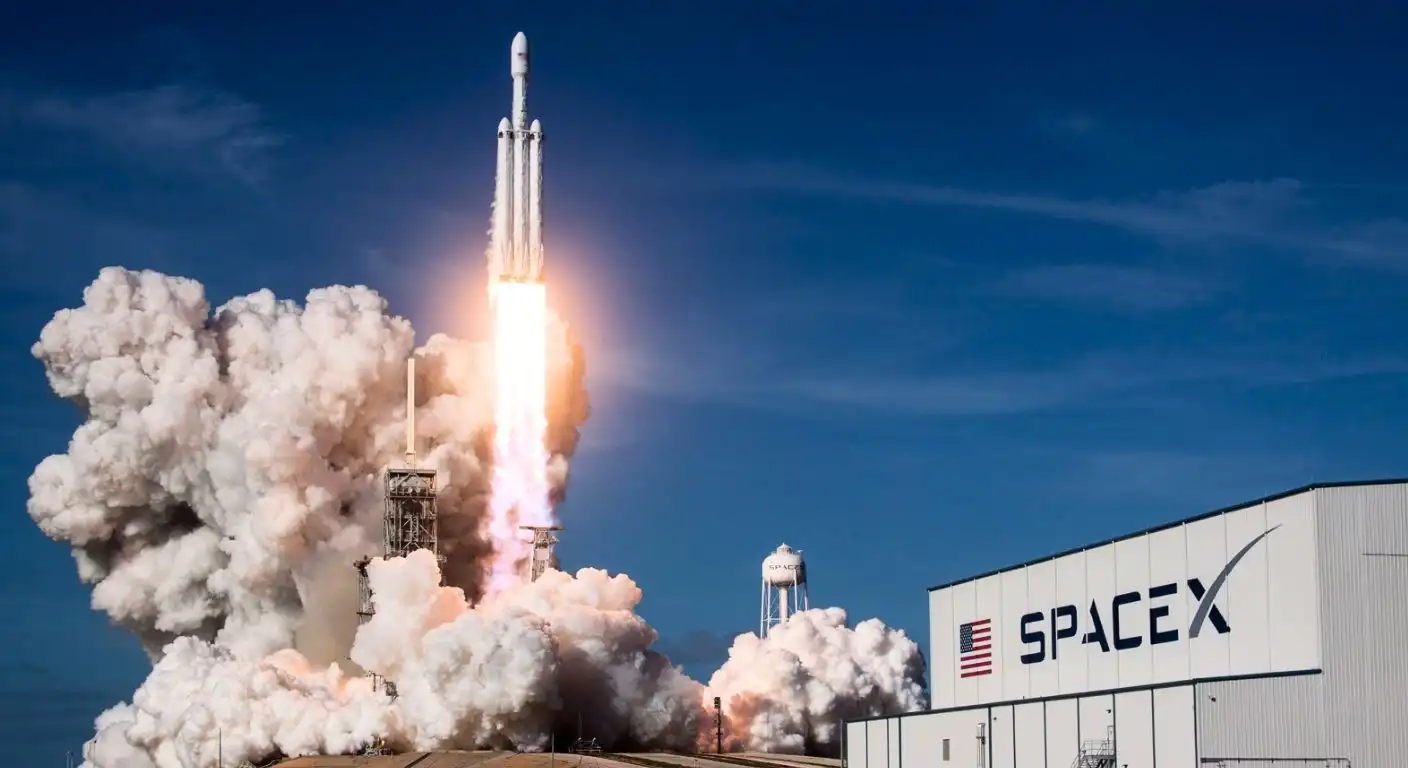
As the countdown begins for the largest initial public offering in global history, the financial world is bracing for a massive, unprecedented collision between a multi-trillion-dollar private giant and the rigid machinery of passive investing. On Thursday, June 4, 2026, Bloomberg Intelligence analysts James Seyffart and Sharoon Francis warned that the upcoming market debut of Elon Musk’s aerospace empire, SpaceX, will force a major rewrite of Wall Street’s trading playbook. Scheduled for June 12, 2026, the public listing aims to raise a record-breaking $75 billion, valuing the company at a staggering $1.8 trillion. This colossal size means that the moment the stock begins trading on the Nasdaq, index-tracking funds must use active strategies to absorb one of the world’s most valuable companies into their portfolios.
The sheer size of the offering presents an extraordinary, high-stakes headache for passive investing structures, which have quietly taken over global equity markets over the past two decades. Today, trillions of dollars flow automatically into exchange-traded funds (ETFs) and mutual funds that track major stock indexes such as the S&P 500 and the Nasdaq-100. Under normal circumstances, index providers require newly public companies to undergo a strict “cooling-off” period of up to one year before allowing them into these indexes. This waiting period ensures that a stock has established a stable trading history and reasonable liquidity before automatic index trackers buy into it, protecting everyday investors from early-stage volatility.
However, because SpaceX is entering the public markets as an instant mega-cap giant, index providers and stock exchanges are rewriting their traditional rules to accommodate the firm. Nasdaq has recently adjusted its listing and index inclusion guidelines, allowing for an accelerated, fast-track process to fold the stock into its benchmark indexes almost immediately. This rapid integration aims to prevent a catastrophic, highly disruptive rebalancing day later in the year, when passive tracking funds would otherwise be forced to purchase tens of billions of dollars of SpaceX stock in a single afternoon. Yet, some institutional analysts warn that this rule-bending is deeply suspicious and exposes passive index investors to immense, unvetted risks.
The rush to index a $1.8 trillion company poses immediate, structural risks to the broader stock market. When an index provider adds a massive company to a popular benchmark, thousands of passive funds must purchase the stock simultaneously to match the index weight, regardless of whether the stock is fairly valued or wildly overpriced. If passive managers must execute these forced purchases instantly, the sheer volume of buy orders can create massive price distortions, driving up the stock price artificially during its first days of public trading. This mechanical buying pressure exposes passive retirement savers to a potential “IPO trap,” in which they are forced to buy the stock at its absolute, hyped-up peak.
Beyond the mechanics of indexing, the proposed public structure of SpaceX has raised major, long-term red flags for conservative corporate governance watchdogs. Minor investors will buy shares with little to no voting power, essentially handing their capital to Musk without any ability to influence board decisions, executive compensation, or company strategy. While Elon Musk currently owns about 42% of the company’s capital, he holds a commanding 79% of all voting rights through a dual-class share structure that gives him absolute, unchecked control over the firm. This highly lopsided power dynamic poses a major risk to large institutional investors who require transparent corporate governance.
This controversial governance structure and fears of a wildly overvalued launch price have already triggered a significant international backlash. On Thursday, Bloomberg reported that at least one major European pension fund has already blacklisted SpaceX, barring its managers from purchasing any of the company’s shares during or after its public listing. The pension fund’s board cited the unacceptable concentration of voting power in Musk’s hands and the highly speculative $1.8 trillion valuation as primary reasons for the ban. This European blacklist highlights a growing, highly significant rift between enthusiastic retail day-traders and conservative institutional asset managers, who are refusing to participate in what they view as a dangerous speculative bubble.
While Elon Musk’s personal brand continues to drive immense retail enthusiasm, SpaceX’s actual financial records reveal a highly capital-intensive business model that relies heavily on continuous cash injections. The company generated $18.7 billion in revenue in 2025, primarily driven by its expanding Starlink satellite internet network. However, the firm swung to a massive net loss of $4.94 billion last year due to extraordinary capital expenditures on its Starship rocket development and its massive AI supercomputing facility in Memphis. This cash-burn trend has continued into 2026, with the company reporting a net loss of $4.28 billion for the first quarter, proving that the firm needs the $75 billion IPO windfall to fund its highly ambitious engineering projects.
The precedent SpaceX is setting on Nasdaq will likely reshape how the entire financial industry handles future mega-cap listings. Behind the scenes, other massive, privately held technology leaders—including ChatGPT developer OpenAI and artificial intelligence rival Anthropic—are closely watching the SpaceX IPO as they prepare their own eventual public debuts. If index providers and exchanges successfully rewrite their rules to accommodate Musk’s empire, they will likely extend these same fast-track privileges to other multi-billion-dollar private giants. This shift means that passive index investors will increasingly find themselves exposed to early-stage, highly volatile technology firms much sooner than in previous decades.
In the end, the historic intersection of the world’s largest public listing and the machinery of passive investing highlights a profound structural shift in global capital markets. The days of small, gradual IPOs are giving way to an era of massive, instant-giant listings that challenge the very stability of our indexing systems. By forcing index providers to bend their rules and prompting European pension funds to issue retaliatory blacklists, SpaceX is proving that its arrival on public markets will be just as disruptive as its rockets are to the aerospace industry. As the June 12 launch date approaches, the entire financial community must wait to see whether the stock market can successfully absorb a $1.8 trillion behemoth, or whether the collision will trigger a painful correction for passive investors worldwide.