

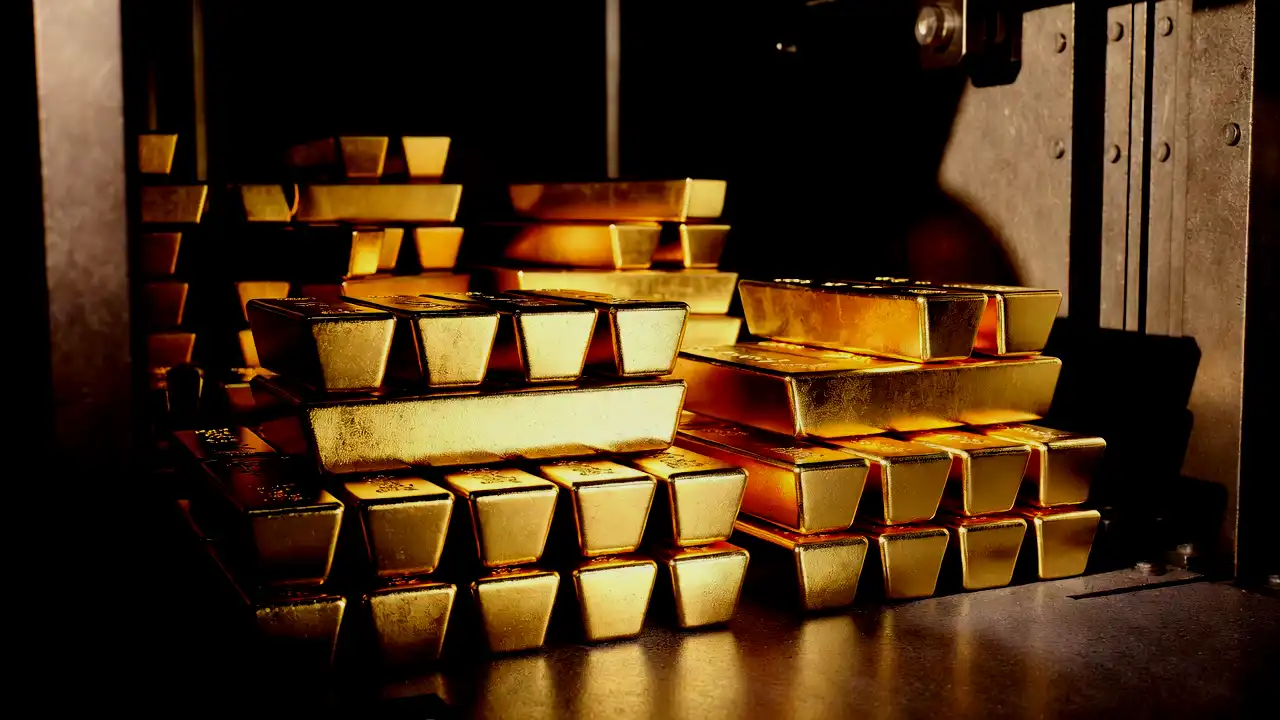
The global gold market is navigating a complex and highly volatile environment as opposing financial forces pull the precious metal in different directions. On Friday, June 5, 2026, gold prices faced considerable downward pressure, trading below $4,450 a troy ounce and heading toward a weekly loss. While intense geopolitical anxieties in the Middle East typically spark a massive rush toward safe-haven assets, the conflict’s macroeconomic consequences are having the exact opposite effect. Stubborn energy inflation and mounting fears of interest rate hikes from the Federal Reserve have dampened investor appetite, putting a tight lid on gold market trends and forcing traders to rethink their portfolios.
The primary driver behind this sudden shift in market sentiment is the persistent threat of energy inflation. Since the outbreak of the U.S.-Israel-Iran war in late February 2026, continuous hostilities in the Persian Gulf have severely disrupted global shipping, keeping the strategic Strait of Hormuz effectively closed to commercial maritime traffic. Because this narrow channel previously handled roughly 20% of the world’s daily petroleum and liquefied natural gas shipments, the ongoing blockade has driven crude oil prices back toward historic highs. This persistent surge in energy costs has directly heightened global inflation risks, forcing major central banks to consider keeping their borrowing costs higher for longer.
The scale of this global inflation challenge is far broader than that of a single regional conflict. A recent economic briefing revealed that 46 out of 68 global central banks are currently overshooting their official inflation targets or the midpoint of their target ranges, suggesting that policymakers are broadly behind the curve. In the United States, consumer price inflation has run at an uncomfortable 0.6% month-on-month pace over the past three months. This persistent, energy-driven inflation has fueled deep-seated fears of stagflation as global economic growth slows. At the same time, consumer costs continue to climb, leaving central bankers with very little room to cut interest rates.
This high-inflation environment has directly transformed expectations for future Federal Reserve policy, dealing a severe blow to non-yielding assets like gold. During a public speech on Tuesday, Cleveland Federal Reserve President Beth Hammack warned that the U.S. central bank may need to raise interest rates soon if inflation risks continue to spike. Following her remarks and a surprisingly strong May non-farm payrolls report that showed the U.S. economy created 172,000 new jobs, market expectations of a Fed rate hike this year surged to 68%, up from just 51% earlier in the week. As yields on two-year U.S. Treasury notes rose to 4.135%, the opportunity cost of holding non-interest-bearing precious metals skyrocketed.
To make matters worse, investors are navigating a highly confusing climate of mixed messages regarding the state of U.S.-Iran peace negotiations. Early in the week, Iranian state-affiliated media reported that direct and mediated communications with Washington had completely stopped, claiming that Tehran’s negotiating team chose to suspend talks due to continued Israeli military operations in southern Lebanon. However, U.S. President Donald Trump aggressively pushed back on these claims on his Truth Social platform, labeling them complete fabrications. Trump asserted that negotiations have been ongoing, stating that representatives from both sides had spoken today, yesterday, and every day over the past week.
In Washington, Secretary of State Marco Rubio echoed Trump’s claims of diplomatic progress during a high-profile testimony before the Senate Foreign Relations Committee on Tuesday. Rubio confirmed that the two administrations are actively in talks and hinted at a potentially historic breakthrough. He revealed that for the first time in recent memory, Iranian negotiators have agreed to discuss sensitive aspects of their uranium enrichment and nuclear program—discussions that they had flatly refused to enter into just a month ago. While a successful peace deal and the subsequent reopening of the Strait of Hormuz would lower energy prices, it would also diminish gold’s safe-haven appeal, keeping investors highly cautious.
Away from the geopolitical chaos of the Middle East, a groundbreaking report from the European Central Bank on Tuesday provided a massive structural boost to gold’s long-term status. The European Central Bank revealed that gold has officially overtaken U.S. Treasury bonds to become the largest asset in total official foreign reserves—comprising both physical gold and foreign exchange holdings—as of the end of 2025. According to the central bank’s data, gold accounted for a staggering 27% of total official international reserves at the end of last year, compared to 22% for U.S. Treasury bonds and 15% for the euro. This marks the first time in over three decades that global central banks have held more gold than U.S. government debt.
The European Central Bank explained that this historic milestone does not reflect a coordinated, active dumping of American debt by central banks, but rather a mechanical valuation effect driven by skyrocketing gold prices. In nominal terms, the price of physical gold surged by approximately 60% in 2025 and 30% in 2024, significantly boosting its share in the overall calculation of sovereign reserves. Central banks across the globe, led by aggressive buying programs in Poland and China, have turned to gold as a premier reserve asset to diversify their portfolios and protect their national wealth against rising global inflation and geopolitical uncertainty.
Despite gold’s historic rise to the top of official reserve holdings, the European Central Bank cautioned that the metal still faces severe structural limitations compared with major fiat currencies. The European Central Bank noted that gold yields absolutely no interest, is highly volatile, incurs significant physical storage and security costs, and suffers from an inelastic global supply that cannot seamlessly adjust to sudden international demands for liquidity. Furthermore, because physical gold is costly to transport and store in secure vaults, central banks cannot use it as easily as liquid U.S. Treasury bonds to execute daily foreign exchange interventions or support their national currencies during a financial crisis.
Ultimately, the current standoff among rising inflation, interest-rate fears, and geopolitical volatility has left the gold market in a tense holding pattern. While central banks across the globe continue to accumulate gold as a long-term strategic reserve asset, short-term traders must navigate the immediate threat of a hawkish Federal Reserve. Until the U.S. and Iran can successfully sign a comprehensive peace treaty to reopen the Strait of Hormuz and bring down global energy prices, the threat of higher-for-longer interest rates will continue to cap gold’s upside potential, leaving the precious metal to consolidate near its current levels as the summer trading season begins.















