

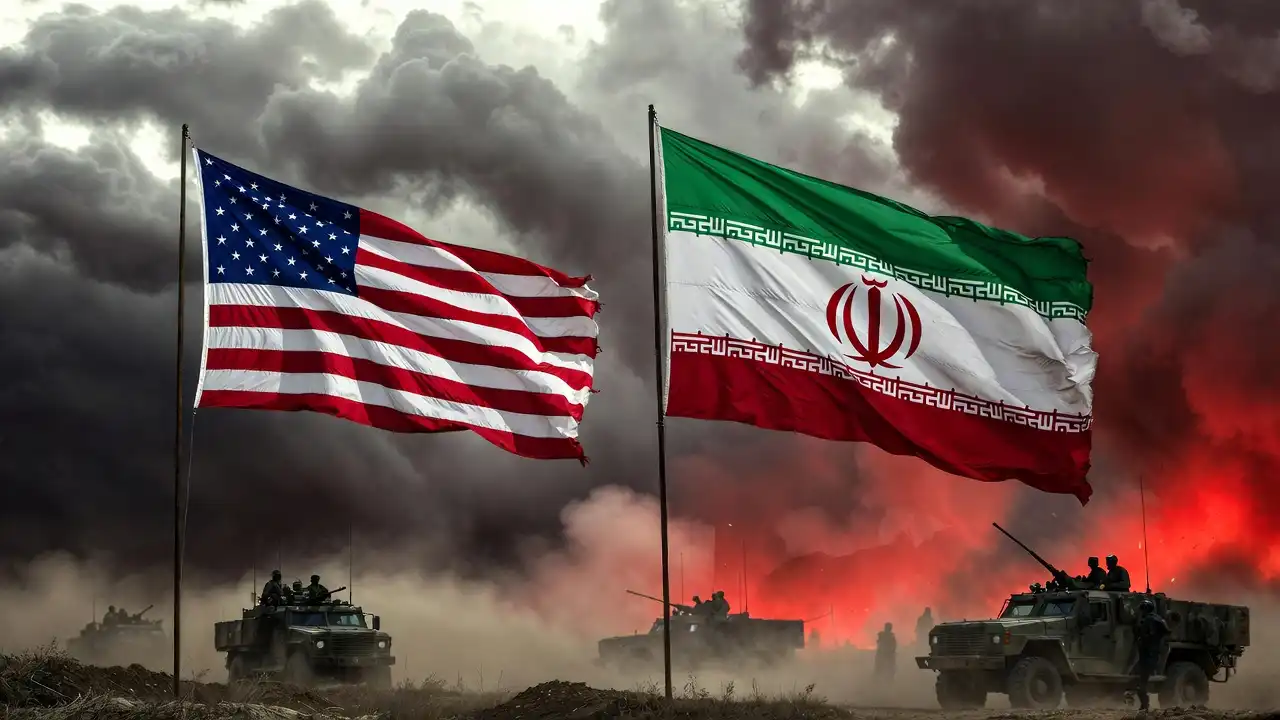
Iran has thrown a major wrench into international peace efforts by making a ceasefire between Israel and Hezbollah a non-negotiable condition for any wider diplomatic agreement with the United States. This new demand has cast deep doubt over the prospects of an interim deal designed to end the devastating regional conflict, which has now entered its fourth month. Tehran insists that it will not sign any peace agreement with Washington to resolve the broader war unless Israel halts its military operations and pulls its troops out of southern Lebanon. By linking these two conflicts, Iran has significantly raised the stakes for US diplomats who are scrambling to restore stability and reopen the crucial Strait of Hormuz to global shipping.
The decision to tie the conflicts together represents a direct challenge to the United States’ diplomatic strategy. Just days ago, US Secretary of State Marco Rubio told congressional leaders that Washington was treating the Israel-Hezbollah conflict as a separate issue from the broader war with Iran. However, Iranian Foreign Minister Abbas Araqchi completely rejected this separation during a broadcast on the Lebanese television station Al Mayadeen. Araqchi made it clear that the war will only end when the fighting in Lebanon stops. He added that any lasting peace must include a complete withdrawal of Israeli forces from all occupied Lebanese territories. The Islamic Revolutionary Guard Corps supported this stance, stating that their main condition for a ceasefire is a total halt to hostilities on all active fronts, including Lebanon.
This diplomatic deadlock follows a major political rejection inside Lebanon. Hezbollah leader Naim Qassem recently turned down a US-brokered peace proposal between Israel and the Lebanese government. The rejected plan aimed to stop the fighting but did not require Israeli troops to withdraw from southern Lebanon. Because Hezbollah was not a party to those negotiations, its leadership refused to accept the terms, vowing to continue fighting and refusing any demands to disarm. Meanwhile, the ground confrontation continues to escalate. Hezbollah fighters recently launched attacks against Israeli troops near the historic Beaufort Castle, while Israeli forces responded with heavy airstrikes on several towns across southern Lebanon.
The ongoing violence has taken a devastating toll on civilians. Since the war flared up at the start of March, medical and government authorities report that at least 3,526 people have died in Lebanon. On Friday, Israel intensified its campaign by launching fresh airstrikes and issuing immediate evacuation orders for nine southern villages. These warnings forced hundreds of families to flee Anqoun and nearby areas, including the Christian village of Maghdoucheh, close to the port city of Sidon. Many of these families had already fled previous violence and were using these towns as temporary shelters. Currently, Israeli forces occupy about 20 percent of Lebanon, pushing a 15-kilometer stretch into the south, which is their deepest incursion since the end of their previous occupation in 2000.
Aside from territorial disputes, massive financial demands are complicating the peace process. Mohsen Rezaei, an adviser to Iran’s Supreme Leader Mojtaba Khamenei, revealed that a potential peace deal between Washington and Tehran hinges on a massive financial concession. Rezaei stated that the administration of US President Donald Trump must agree to release $24 billion in frozen Iranian assets. Tehran desperately needs these funds to support its struggling economy, which has suffered heavily under strict international sanctions. However, US negotiators are highly reluctant to release such a huge sum of money without securing permanent limits on Iran’s nuclear program and its advanced ballistic missile development.
The closure of the Strait of Hormuz has added massive economic pressure on the United States and its global allies. This narrow waterway is a vital transit route for a large portion of the world’s oil and gas shipments. Since the conflict began in March, Iran has blocked shipping through the strait, creating a severe energy supply shock that has sent global oil prices soaring. Reopening this corridor is Washington’s top priority, but Tehran is using the blockade as major leverage. Iranian leaders know that the global economy cannot easily withstand a prolonged maritime shutdown, and they are using this leverage to force the US to accept their conditions regarding Lebanon and sanctions relief.
This high-stakes geopolitical game has created deep political divisions inside Lebanon. Many Lebanese leaders are furious with Iran’s heavy-handed influence. Lebanese Army Commander Joseph Aoun openly accused Iran’s Revolutionary Guards of using the country as a bargaining chip in their negotiations with the West. On the other hand, Lebanon’s Parliament Speaker Nabih Berri, who is a close ally of Hezbollah, offered a potential compromise. Berri stated that he would support the withdrawal of Hezbollah forces north of the Litani River, but only if Israeli troops withdrew from southern Lebanon at the same time. Berri also criticized the US-mediated ceasefire framework as unfair, calling instead for an unconditional ceasefire across land, sea, and air.
In Washington, President Donald Trump remains publicly hopeful, telling reporters that progress is being made and that the people of Lebanon deserve to live in peace. Trump has tried to push for rapid, localized ceasefires to calm the region. However, Israeli Prime Minister Benjamin Netanyahu faces intense domestic political pressure ahead of elections later this year. Netanyahu has repeatedly stated that Israeli forces will not withdraw from Lebanon or stop their military operations until Hezbollah no longer poses a threat to northern Israel. This leaves the Trump administration in a very difficult position, trying to negotiate a broad peace deal while its main regional ally refuses to stop its military campaign.
The military friction is also spreading to the surrounding seas, raising the danger of a direct clash between US and Iranian forces. The Iranian Navy recently claimed that it fired warning shots, using Qader missiles and Shahed drones, at two US destroyers in the Gulf of Oman. According to Iranian state media, the US warships ignored radio warnings and approached the Strait of Hormuz before retreating toward the Indian Ocean. Although the US military has not officially confirmed the incident, it shows how easily the regional war could escalate into a wider confrontation, making a diplomatic solution even more urgent for both sides.
With both sides holding firm to their demands, the path to peace remains highly uncertain. Iran’s decision to link the US peace deal to a complete Israeli withdrawal from southern Lebanon has merged two separate conflicts into one massive regional crisis. Until the United States, Israel, and Iran can find a way to balance their security needs, economic demands, and territorial disputes, the fighting is likely to continue. For now, millions of people in the Middle East remain trapped in the crossfire of this complex geopolitical struggle. At the same time, the global economy continues to feel the pain of a blocked energy corridor.















