

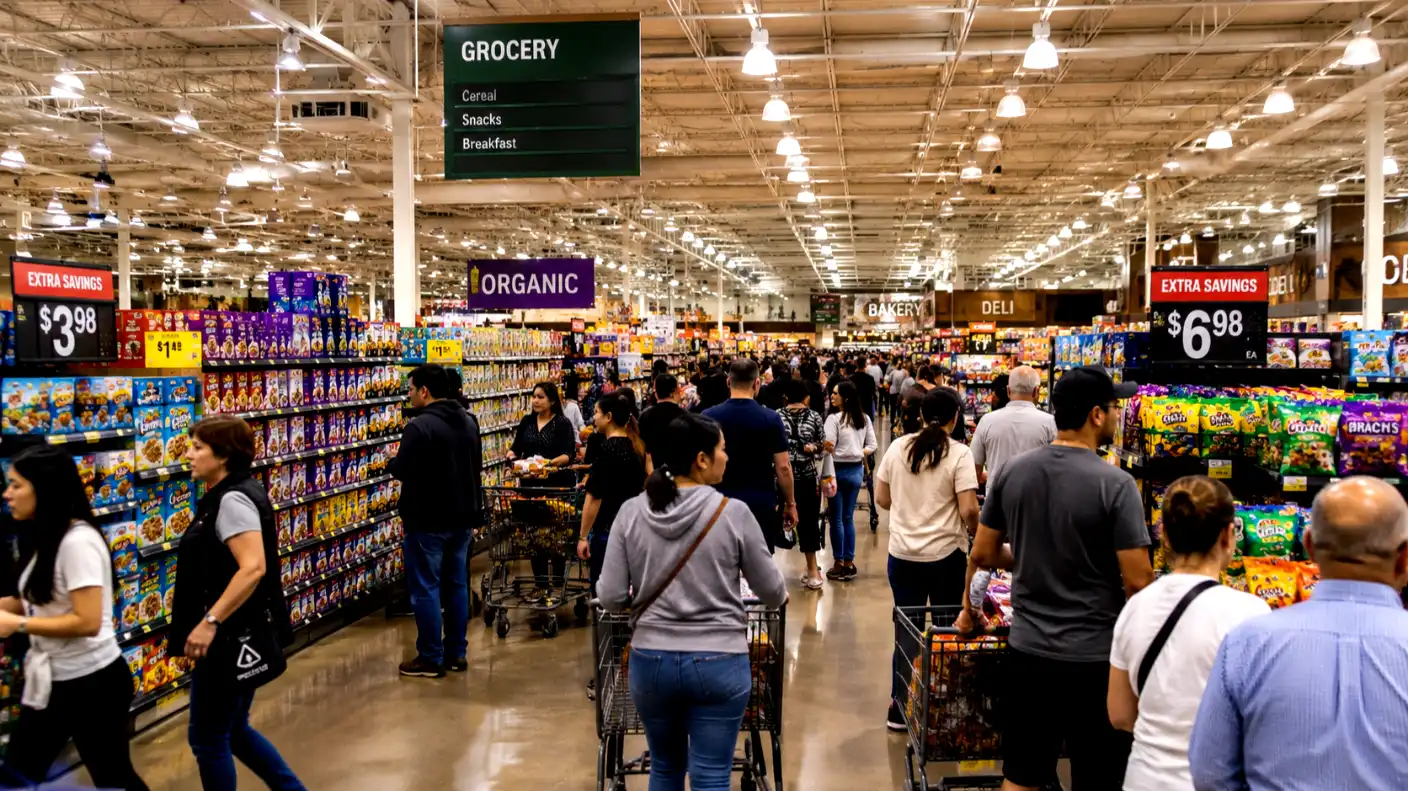
American households are leaning heavily on credit cards to navigate persistent economic pressures. According to the latest monthly G.19 statistical release from the Federal Reserve Board, US consumer credit expanded by a surprising $20.73 billion in April 2026. This figure comfortably surpassed the consensus estimate of $17.80 billion, highlighting the resilience of consumer spending despite high inflation and rising borrowing costs. However, while the headlines suggest a robust economic engine, a closer look at the underlying data reveals a more complex picture. Consumers are increasingly turning to plastic to cover daily expenses, indicating that household budgets are stretching to their limits.
The $20.73 billion jump in April follows a downwardly revised gain of $22.23 billion in March, which was initially reported as $24.86 billion. On a seasonally adjusted annual basis, total consumer credit increased at a rate of 4.8% during April. This steady expansion highlights how much Americans rely on borrowing to sustain their lifestyle. With overall outstanding consumer debt steadily climbing, financial analysts are closely watching these trends. The persistent rise in credit utilization suggests that while the job market remains stable, the cost of living continues to outpace wage growth, forcing millions of families to bridge the gap with debt.
A major driver of the April surge was revolving credit, which consists primarily of credit card debt. The Federal Reserve reported that revolving credit grew at an annualized rate of 10.4% during the month, pushing total revolving debt past the $1.31 trillion mark. This rapid accumulation of high-interest debt shows that consumers are relying heavily on short-term funding. Many people use credit cards for everyday essentials like groceries, utilities, and gasoline, all of which have seen significant price increases over the last year. This trend indicates that the financial cushions built up during the pandemic have largely evaporated, leaving families more vulnerable to sudden financial shocks.
In contrast, nonrevolving credit, which includes auto loans, student loans, and other personal loans, showed much slower growth. Nonrevolving credit increased at an annualized rate of 2.9% in April. This slower pace reflects a growing caution among consumers when it comes to making major, long-term purchases. With commercial bank interest rates on a new 60-month car loan averaging 7.52% and credit card rates exceeding 21.0%, many households are putting off major purchases. High financing costs make large commitments far less appealing, leading consumers to prioritize immediate, essential needs over big-ticket items like new vehicles or recreational equipment.
The surge in credit card usage aligns closely with recent inflation data, which showed that consumer price growth accelerated to 3.8% in April. This represented the highest inflation rate in three years, driven by rising costs for fuel, electricity, and groceries. With necessities eating up a larger share of household income, middle- and lower-income families are feeling the squeeze. A recent survey on personal finance revealed that nearly 44% of Americans carry credit card balances from month to month. For these households, high inflation is a double blow: it raises the prices of the goods they need to buy and increases the interest they must pay on the debt they incur to make those purchases.
The Federal Reserve’s latest Beige Book report provides qualitative support for these findings. Across the country’s twelve Federal Reserve districts, businesses reported a visible shift in consumer behavior. Households are becoming increasingly selective about their purchases, opting for used cars over new ones, and hybrid models to save on fuel. The report also highlighted that while higher-income consumers remain relatively resilient, middle- and lower-income families are facing severe affordability challenges. This has led to fewer visits to retail stores and a greater focus on discount shopping, reinforcing the idea that the surge in credit is a matter of necessity rather than discretionary luxury.
The massive scale of US consumer debt, which Equifax reports reached a historic $18.22 trillion in April, has exposed a deep, K-shaped division in the financial landscape. While wealthy households continue to spend freely and maintain healthy savings, subprime and non-prime borrowers are falling behind. Credit data shows that subprime borrowers now hold a 22.1% share of all bankcard debt, a sharp increase from the post-pandemic low of 14.7% recorded in 2021. As these vulnerable borrowers carry higher balances, delinquency rates on mortgages and other loans are creeping upward, rising from 1.4% to 1.5% in recent months. This divergence raises concerns about the long-term health of the financial system if economic conditions deteriorate further.
This mixture of strong credit growth and stubborn inflation presents a major dilemma for the Federal Reserve. Central bank policymakers have kept interest rates high to cool the economy and bring inflation down to their 2.0% target. However, if they keep rates elevated for too long, the burden of credit card debt could push more consumers into default. On the other hand, if the Fed cuts interest rates too quickly, they risk reigniting inflation. Many financial experts now believe that the Fed will hold off on any interest rate cuts for the remainder of 2026, with some even speculating that a rate hike could be on the table if price pressures continue to build.
The domestic credit landscape does not exist in a vacuum. Geopolitical tensions, particularly the ongoing conflicts in the Middle East, continue to disrupt global supply chains and push energy prices higher. These global forces directly impact the wallets of American consumers at the gas pump and the grocery checkout. With the global economy facing high uncertainty, the resilience of the US consumer remains the primary shield against a deeper recession. However, relying on credit cards to sustain this shield is a risky strategy. If consumers continue to pile on debt at the current pace, the risk of a sharp pullback in spending increases, which could have severe consequences for economic growth in the quarters ahead.
Ultimately, the April consumer credit report serves as a warning sign. While a $20.73 billion expansion shows that economic activity is still moving forward, the reliance on high-interest revolving credit is unsustainable in the long run. As households continue to navigate a high-cost environment, the pressure on personal finances will likely intensify. Policymakers, lenders, and consumers alike must closely monitor these trends. Without a meaningful drop in inflation or a significant boost in real wages, the growing mountain of consumer debt could transform from an economic engine into a major financial roadblock.















