

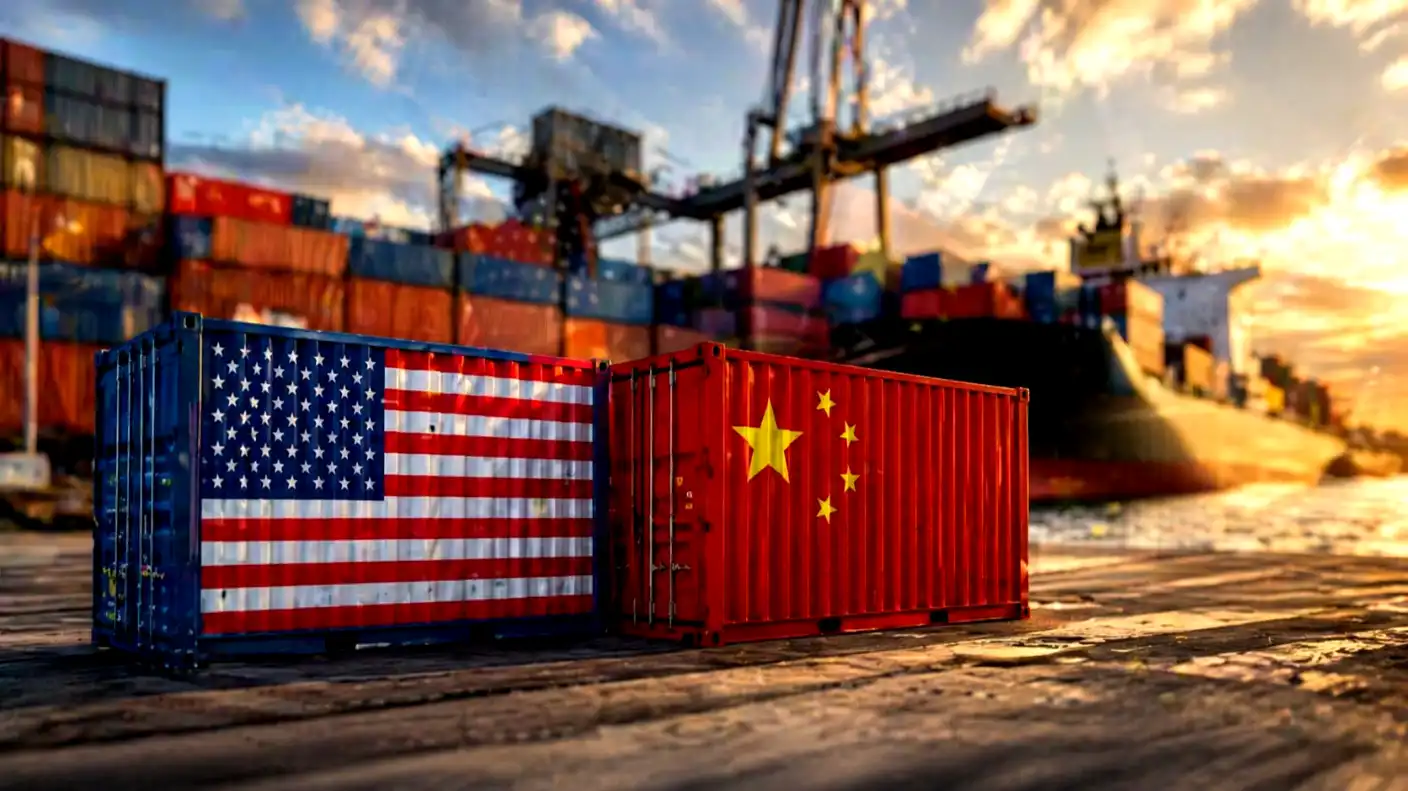
The ongoing trade dispute between the United States and China escalated significantly on June 5, 2026. China’s business community, represented by the China Council for the Promotion of International Trade (CCPIT), declared strong opposition to a massive new U.S. tariff proposal. The Office of the U.S. Trade Representative (USTR) recently announced plans to impose additional tariffs on 60 economies—including China—ranging from 10.0% to 12.5%. The trade group slammed the move as blatant protectionism and unilateral coercion that threatens to destabilize global supply chains.
Under Section 301 of the Trade Act of 1974, the U.S. government conducted a wide-ranging probe into global trade practices. The USTR concluded that 60 foreign economies, which represent an overwhelming 99.40% of total U.S. imports, failed to establish or properly enforce import bans on goods made with forced labor. To penalize these countries, the Trump administration proposed a two-tiered tariff system. Economies with partial bans on forced labor face an additional 10.0% tariff, while those without face a harsher 12.5% tariff. The U.S. placed China and its Hong Kong Special Administrative Region in the higher 12.5% bracket.
The CCPIT spokesperson rejected the U.S. claims, stating that the proposed measures have absolutely no basis in international law. The council argued that Washington is attempting to project its own domestic regulations and unilateral rules onto other sovereign nations. This extraterritorial push bypasses established multilateral frameworks and violates the fundamental rules of the global trading system. According to Chinese business leaders, the U.S. is merely using the pretext of human rights to pressure other countries economically.
The Trade Promotion Council asserted that the USTR’s conclusion that global policies undermine efforts to eliminate forced labor lacks factual backing. They argued that the proposed tariffs serve as a blunt tool to exert political pressure rather than address actual labor issues. By setting up differentiated tariff arrangements, the United States is violating the principles of fair competition and non-discrimination. These principles form the bedrock of international trade.
The CCPIT urged the United States to stop overgeneralizing and abusing trade restrictions under the guise of security or labor concerns. The trade body insisted that both nations must return to a rules-based multilateral trading system and resolve their big economic differences through respectful dialogue. Safeguarding the stability of global industrial and supply chains should remain a shared priority for both Washington and Beijing.
This sudden tariff proposal represents a creative maneuver by the Trump administration to rebuild its trade barriers. Earlier this year, in February 2026, the U.S. Supreme Court struck down many of President Donald Trump’s “Liberation Day” tariffs, ruling them illegal. Additionally, a temporary 10.0% global baseline tariff that Trump set under Section 122 will expire on July 24, 2026. Trade experts believe the USTR is using Section 301 of the Trade Act of 1974 as an alternative route to maintain high import taxes before the summer deadline.
The U.S. tariff proposal does not target China alone; it has sweeping implications for 59 other economies. Highly developed trading partners like the European Union, Canada, the United Kingdom, Japan, and South Korea find themselves caught in the U.S. dragnet. Under the proposed rules, the U.S. will impose a 10.0% duty on countries with partial regimes, such as the EU and Canada. Meanwhile, Japan, South Korea, India, and Brazil face the full 12.5% tariff. Trade officials in several of these countries have already expressed alarm, warning that the levies will drive up consumer costs.
If the U.S. government implements these tariffs, the financial impact on global trade will be astronomical. Because the targeted nations supply 99.40% of all goods imported into the United States, American businesses and consumers will bear the brunt of the tax. Importers will have to pay billions of dollars in extra duties, leading to higher retail prices for everyday items. Critics warn that this aggressive move will likely trigger retaliatory tariffs from major trading partners, sparking a chaotic global trade war.
As the USTR prepares for public hearings on the proposal later this month, global businesses are bracing for a period of extreme uncertainty. The CCPIT stated that it will continue to act as a vital bridge between the Chinese and American business communities. The council will help enterprises strengthen their compliance frameworks and manage international trade risks. However, the outcome depends on whether Washington is willing to abandon unilateral pressure and engage in constructive trade negotiations.















