

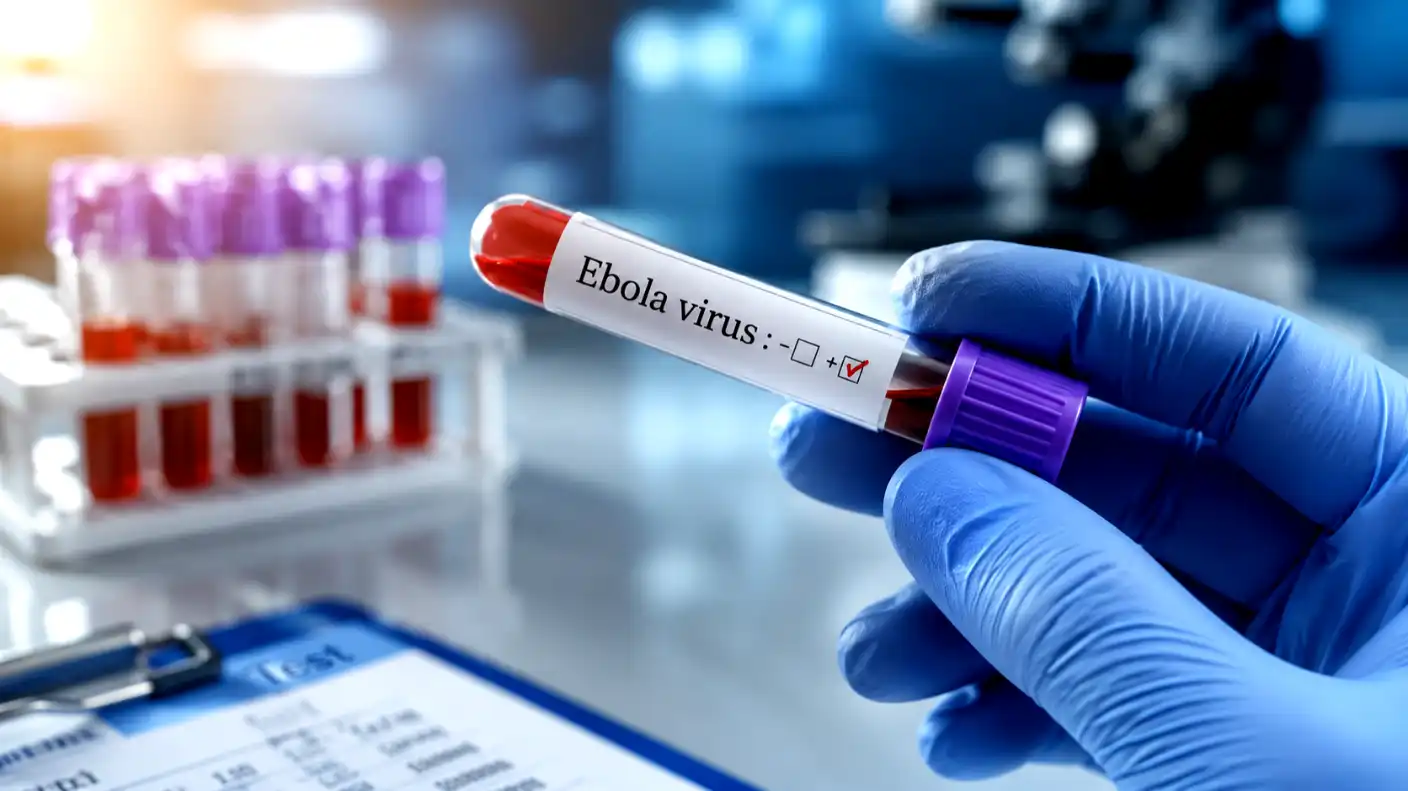
A rapidly expanding Ebola epidemic in Central Africa has prompted global health agencies to issue severe warnings. On Saturday, June 6, 2026, the United States Centers for Disease Control and Prevention (CDC) warned that the ongoing outbreak in the Democratic Republic of the Congo (DRC) and Uganda could become one of the largest in history. Healthcare professionals are struggling to contain the highly contagious virus as it spreads across multiple provinces. Computer simulations from the CDC show a grim worst-case scenario, projecting that the virus could infect more than 20,000 people over the next three months if containment measures do not improve immediately.
The current crisis involves the Bundibugyo ebolavirus strain, which presents deep clinical challenges for emergency response teams. Unlike the widely known Zaire strain, which healthcare workers can prevent and treat using established vaccines like Ervebo and existing monoclonal antibodies, the Bundibugyo strain has no approved vaccines or licensed treatments. This significant medical gap forces emergency teams to rely entirely on basic public health measures. Medical workers must focus heavily on isolating patients, tracing potential contacts, and supervising safe burials. These intensive strategies place an enormous physical and logistical strain on local health systems already weakened by years of conflict.
Recent field data highlights the alarming velocity of the infection. By June 2, 2026, health ministries confirmed 397 cases of Ebola across the region, with 381 cases in the DRC and 16 in neighboring Uganda. The official confirmed death toll has reached 63, but investigators suspect the actual number of fatalities is far higher. Field teams are currently investigating more than 250 suspected deaths that they have not yet formally tested. With a confirmed case-fatality rate of 15.9% and only eight documented recoveries, local communities face a severe crisis. The disease’s geographical footprint has also widened dramatically, spreading to 22 health zones across the eastern Congolese provinces of Ituri, North Kivu, and South Kivu.
The CDC compares the trajectory of this current outbreak to the devastating West Africa Ebola epidemic that occurred between 2014 and 2016. That historic disaster infected more than 28,000 people and claimed over 11,000 lives before global health teams managed to halt transmission. Epidemiologists warn that without rapid intervention, the current Bundibugyo outbreak could match those catastrophic figures. According to CDC mathematical models, if responders can isolate only 20% of infected individuals within two days of symptom onset, the virus’s exponential growth will quickly overwhelm regional isolation centers.
Ongoing military conflict and community distrust in eastern Congo severely hinder the medical response. Decades of violence and instability have displaced millions of residents and created deep-seated suspicion toward government officials and foreign aid workers. In Ituri province, the primary epicenter of the outbreak, angry crowds recently attacked several treatment centers, burning isolation tents and demanding the bodies of deceased relatives. These attacks allowed at least 25 highly infectious patients to flee the facilities, increasing the threat of community transmission. Due to these persistent security threats, field teams can only successfully trace about 20% of active contacts each day.
The frequent movement of people across borders has forced neighboring nations to adopt strict containment policies. In North America, the Canadian government has enacted a mandatory 21-day quarantine for travelers who have recently visited the DRC, Uganda, or South Sudan. This quarantine duration reflects the maximum incubation period of the Ebola virus. Other countries are also tightening border screening protocols to prevent the Bundibugyo strain from reaching international transit hubs. The World Health Organization (WHO) declared the outbreak a Public Health Emergency of International Concern in mid-May to coordinate international border security.
To organize the global defense against the virus, the WHO and the Africa Centers for Disease Control and Prevention launched a joint six-month emergency response plan. This massive operational initiative aims to raise $518 million to fund containment measures, purchase personal protective equipment, and deploy medical staff between June and November 2026. Fortunately, international donors have pledged approximately $500 million toward the response. This funding includes a $160 million grant from the World Bank, $82 million from the United States government, and $57 million from European partners, leaving only a minor funding gap.
Despite the influx of hundreds of millions of dollars, veteran field workers emphasize that money alone cannot stop the epidemic. The Director-General of the WHO stated that local trust remains the most powerful weapon against the disease. When communities refuse to report active cases or bypass safe burial rules, the virus will continue to spread regardless of available resources. For the emergency response to succeed, international organizations must collaborate closely with local religious and tribal leaders. Respecting local cultural traditions while enforcing strict sanitation rules represents the only viable way to end the outbreak and prevent a historic global tragedy.















