

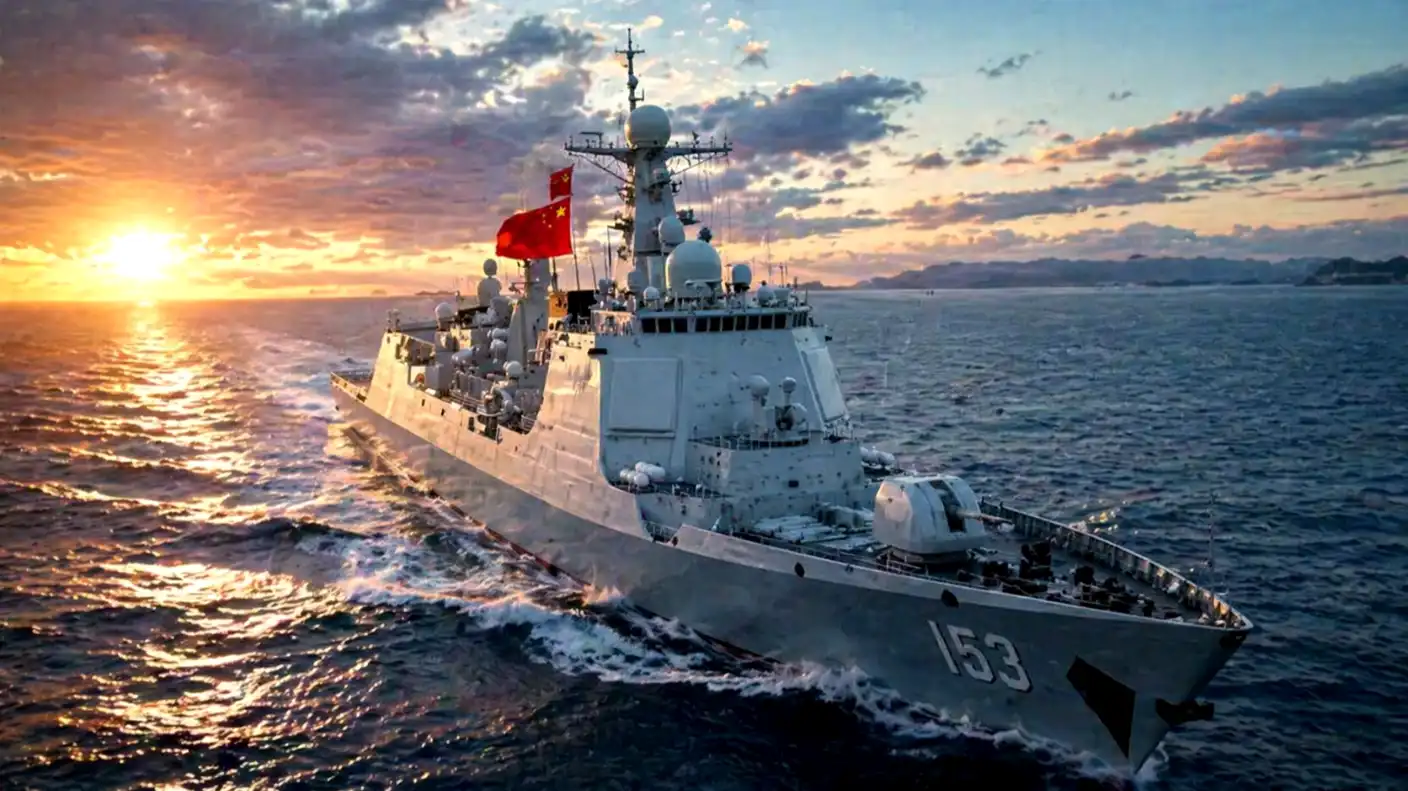
The maritime standoff between Taiwan and China reached a tense new milestone over the weekend. On Saturday, June 6, 2026, Taiwan’s coast guard reported that a Chinese coast guard ship and an oceanographic survey vessel carried out a coordinated provocative operation near the strategically sensitive Pratas Islands. This coordinated maneuver represents a significant escalation in Beijing’s gray-zone warfare tactics. Security analysts note that while Chinese ships regularly patrol the contested waters, this event marks the first time that Chinese law enforcement and scientific research vessels have worked in tandem to challenge Taiwan’s maritime sovereignty in the region.
The incident unfolded over 48 hours in the northern end of the South China Sea. On Friday, June 5, 2026, a Chinese coast guard vessel entered the waters surrounding the Pratas Islands and began patrolling the area. The following day, a Chinese oceanographic research vessel joined the coast guard ship, operating close to the lightly defended islands. Taiwan’s coast guard immediately dispatched its own patrol vessels to monitor the situation. In a formal statement, Taiwanese officials emphasized that the coordinated presence of a government law enforcement ship and a civilian research vessel was a deliberate attempt by Beijing to project administrative control over the disputed atoll.
The Pratas Islands, also known as the Dongsha Islands, have no civilian population and serve primarily as a national park and a remote military outpost. Located approximately 400 kilometers (or 250 miles) from the main island of Taiwan, these islands lie strategically between southern Taiwan and Hong Kong. Because of this vast distance, military experts view the atoll as highly vulnerable to a potential surprise attack or blockade by China’s People’s Liberation Army. Beijing’s coast guard ships frequently test Taiwan’s response times in these waters, gradually wearing down the island’s maritime defense capabilities.
During the standoff, a tense radio exchange took place between the opposing crews. The Chinese coast guard vessel broadcast a message over maritime radio channels, claiming it was conducting routine law enforcement operations in Chinese territorial waters. The Chinese crew also broadcast political propaganda, stating that “Taiwan’s future lies in national reunification.” Taiwan’s coast guard immediately broadcast back, demanding that the Chinese ships leave the area. The Taiwanese crew told the Chinese vessel to “stop undermining peace” and urged them to “return and pursue democracy” as the proper way to serve their country. Taiwan’s coast guard later accused Beijing of trying to manufacture a false illusion of legal jurisdiction over the atoll.
The incident triggered sharp condemnation from high-ranking officials in Taipei. Taiwan’s National Security Council Secretary-General, Joseph Wu, published a map of the vessels’ tracks on his personal social media account. Wu described the coordinated maritime maneuvers as highly provocative and openly accused the Chinese government of acting like a regional bully. The Ministry of National Defense in Taipei also raised its alert levels, noting that China’s use of non-military vessels to harass outlying islands allows Beijing to pressure Taiwan without triggering a direct military conflict with the United States or other regional allies.
This latest confrontation occurs within a broader struggle for control of the South China Sea, where an estimated $3.36 trillion worth of global maritime trade passes annually. China claims sovereignty over nearly 90% of the waterway through its historical “nine-dash line,” overlapping with the exclusive economic zones of several nations, including Vietnam, the Philippines, Malaysia, and Brunei. By asserting administrative control over the Pratas Islands, Beijing seeks to secure its naval corridors and protect its southern flank, while simultaneously restricting Taiwan’s access to vital shipping lanes that sustain its export-driven economy.
In response to Beijing’s constant military and gray-zone pressure, Taiwan has taken significant steps to bolster its defense capabilities. Just one month ago, on May 8, 2026, Taiwan’s parliament broke a grueling six-month political stalemate by passing a landmark $25 billion special supplementary defense budget. Although the approved amount was lower than the $40 billion initially proposed by President Lai Ching-te’s administration, the budget provides vital funding for American arms packages. These funds will purchase HIMARS rocket systems, Javelin anti-tank missiles, howitzers, and sophisticated counter-drone systems to enhance Taiwan’s deterrence.
The coordinated operation near the Pratas Islands highlights the evolving nature of China’s gray-zone tactics, which combine military pressure, economic coercion, and psychological warfare. By using coast guard and scientific survey ships instead of gray-hulled navy warships, Beijing successfully tests Taiwan’s defenses while keeping the confrontation below the threshold of an actual war. As long as China continues to reject Taiwan’s sovereignty, these maritime standoffs will likely become more frequent, forcing Taipei to continuously deploy its limited maritime resources to defend its remote territories.















