

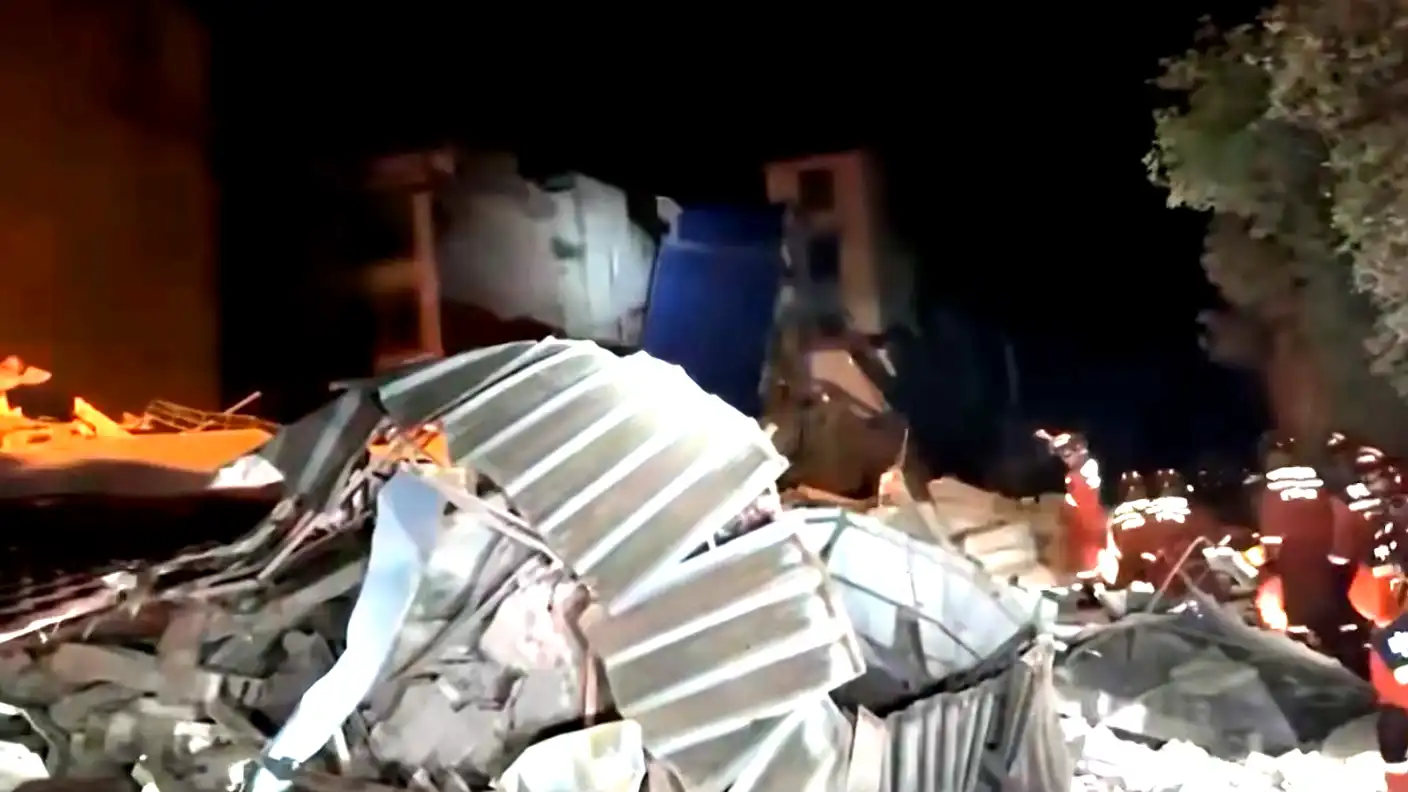
A highly destructive earthquake has struck the southern Philippines, causing widespread devastation, collapsing commercial buildings, and triggering panic across several coastal provinces. On Monday morning, June 8, 2026, a massive magnitude 7.8 earthquake rocked the island of Mindanao, sending terrified residents fleeing into the streets and forcing thousands to seek immediate shelter on higher ground. Local disaster response officials confirmed that the violent shaking has killed at least 15 people and injured more than 200 others. The powerful tremor hit during the opening day of the school year, throwing local communities into a state of absolute emergency as rescue teams combed through the rubble.
The powerful seismic event struck at 7:37 AM local time, with its epicenter located offshore, approximately 26 kilometers southwest of Sarangani province in the Soccsksargen region. According to the Philippine Institute of Volcanology and Seismology, the earthquake occurred at a shallow depth of 10 kilometers beneath the ocean floor. The shallow nature of the rupture significantly amplified ground shaking and immediately triggered a powerful tsunami warning for nine southern coastal provinces, including South Cotabato, Davao Occidental, and Zamboanga del Sur. Government disaster agencies urged residents living along vulnerable shorelines to evacuate immediately to higher ground.
Following the urgent evacuation orders, coastal monitoring stations observed initial tsunami waves hitting the shoreline. Land-based observation posts recorded waves of up to one meter (or 3.3 feet) in parts of Sultan Kudarat and Sarangani, while adjacent provinces reported smaller, non-destructive water surges. Fortunately, the initial wave heights remained below the worst-case projections, allowing disaster managers to lift the tsunami threat notice several hours later. However, experts noted that only about 1.5% of historical earthquakes in this specific subduction zone generate tsunami waves of this height, demonstrating the unusual power and mechanics of this specific submarine slip.
The nearby metropolis of General Santos City, located close to the epicenter, suffered some of the most severe structural damage. In the heart of the city, the violent shaking caused the upper floor of a popular Jollibee fast-food restaurant to collapse completely. At the same time, the concrete outer walls of a major commercial shopping complex gave way and crashed onto the street below. Images from local convenience stores showed shattered glass facades, destroyed entryways, and overturned benches strewn across the pavement. The intense ground movement also triggered widespread regional power outages and severed telephone lines, leaving emergency responders struggling to communicate across the disaster zone.
The earthquake also compromised critical public infrastructure, forcing emergency evacuations of medical facilities and schools. In General Santos City, the tremor severely damaged parts of St. Elizabeth Hospital, cracking concrete walls and compromising the main structure’s integrity. Medical personnel acted quickly, evacuating dozens of patients and setting up temporary outdoor triage stations to continue life-saving care on the lawn. In the nearby province of Davao del Sur, part of a local high school caved in just as students gathered outside for their morning assemblies, narrowly avoiding a massive tragedy as teachers quickly guided the children to open fields.
The national disaster agency released a grim preliminary casualty report as first responders reached the hardest-hit communities. Out of the 15 confirmed deaths, regional police reported that 12 fatalities occurred across the Soccsksargen region of Mindanao, while three individuals died in Davao Occidental province. Police spokesperson Robert Dagun told local reporters that the death toll will likely rise as search-and-rescue teams gain access to remote, isolated mountain villages. Many residents remain trapped beneath collapsed concrete walls and in landslides triggered by the intense shaking, making rescue operations a race against time.
In the hours following the disaster, Philippine President Ferdinand Marcos Jr. ordered a swift, coordinated government response to assist the affected populations. The Office of Civil Defense immediately deployed search-and-rescue units, military personnel, and emergency medical teams to the epicentral area to support local governments. However, civil defense officials strongly warned residents not to re-enter damaged homes or unstable commercial properties. Seismologists have already recorded dozens of moderate aftershocks, including a magnitude 3.8 tremor around noon, raising the risk of secondary structural collapses.
This natural disaster will undoubtedly place an immense economic burden on the southern Philippines, which is already struggling to rebuild its aging public infrastructure. Economists from regional development banks estimate that the long-term cost of clearing debris, repairing damaged highways, and rebuilding schools and hospitals could easily exceed $1 billion, with reconstruction costs rising. The sudden disruption also threatens the local agricultural sector, which produces vital export crops for the national economy. To mitigate the economic shock, the central government is preparing to tap into national emergency calamity funds to provide immediate relief and cash assistance to displaced families.
The devastating earthquake serves as a stark reminder of the Philippines’ extreme vulnerability to natural disasters. The archipelago lies directly along the Pacific Ring of Fire, a highly volatile horseshoe-shaped belt in the Pacific Ocean where most of the world’s volcanic eruptions and earthquakes occur. In this region, the Philippine Sea plate collides with the Sunda block at approximately 7.3 centimeters per year, accumulating massive tectonic stress over decades. Until municipal planners enforce stricter building codes and upgrade local warning systems, the communities of Mindanao will remain highly vulnerable to these inevitable, powerful shifts of the earth.















