
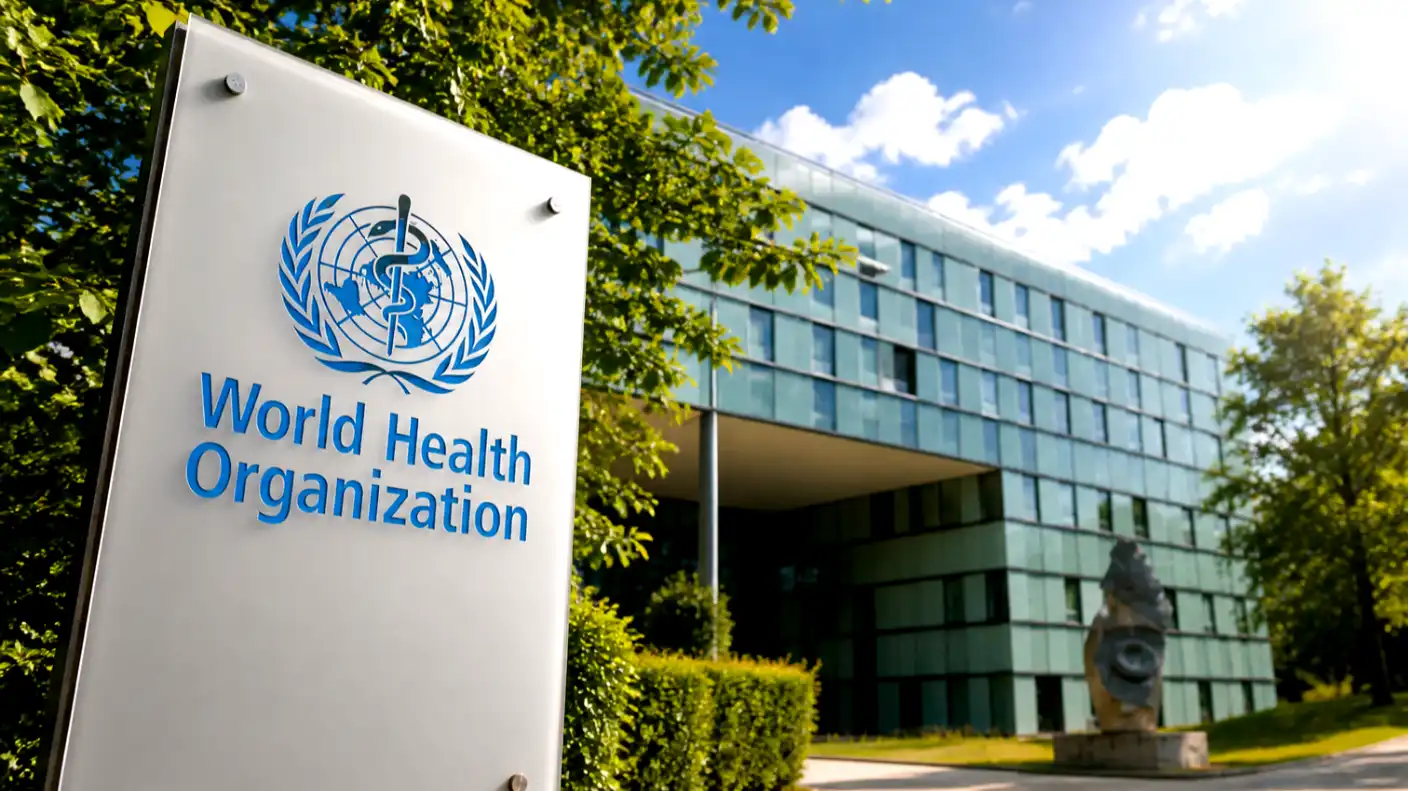
The head of the World Health Organization (WHO) has publicly called on Uganda to reopen its border with the Democratic Republic of Congo (DRC) to prevent the isolation of communities during a severe health crisis. On Monday, June 8, 2026, WHO Director-General Tedros Adhanom Ghebreyesus stood inside a specialized Ebola isolation ward in Uganda’s capital, Kampala, and asked the government to reconsider its current containment strategy. Tedros argued that sealing the border does little to stop the virus and heavily weakens the regional response. The high-profile intervention highlights a growing disagreement between international epidemiologists and local political leaders over how to manage the rapidly expanding epidemic.
During his assessment of the isolation facility, Tedros warned that blanket travel restrictions and border closures are ineffective ways to combat infectious diseases. He emphasized that such measures discourage the transparency and community trust that save lives during an epidemic. When authorities close borders, local populations often resort to illegal, unmonitored crossings to visit families or trade goods, making it nearly impossible for medical teams to track potentially infected individuals. While the WHO chief praised Uganda’s overall response to the outbreak as prompt and capable, he expressed hope that the East African nation would quickly lift the barrier.
The dispute traces back to late May 2026, when a local Ugandan health task force ordered the immediate closure of the border with the DRC. The Ugandan Ministry of Health implemented the measure after several health workers in the country were directly exposed to the virus. These workers contracted the disease from Congolese patients who had crossed the border to seek medical care before authorities declared the outbreak in eastern Congo on May 15. The government temporarily closed all formal crossings, authorizing travel only for emergency response, humanitarian operations, food and cargo transportation, and critical security reasons.
To enforce this strict border policy, Ugandan authorities placed anyone entering from the DRC under a mandatory 21-day quarantine. Under these rigorous surveillance protocols, all authorized entrants must undergo strict health screenings, document their travel histories, and submit to continuous monitoring. While the government defended these strict measures as necessary to protect public health, economic analysts warn that the border shutdown will slice more than 1.5% off the region’s trade gross domestic product. By blocking the flow of essential goods, the closure has caused severe shortages of food, medicine, and critical supplies in border towns like Bunia.
What makes this outbreak particularly dangerous is the specific pathogen driving the epidemic. The current crisis involves the Bundibugyo ebolavirus strain, a rare and highly lethal species of the virus. Unlike the more common Zaire strain, which doctors can prevent using established vaccines like Ervebo, the Bundibugyo strain has no approved vaccines or licensed treatments. This clinical gap forces emergency medical teams to rely entirely on basic public health interventions, such as tracing contacts, isolating symptomatic individuals, and ensuring safe, dignified burials. The lack of ready medical tools has placed an enormous burden on local public health systems.
The latest epidemiological data confirms that the virus is spreading rapidly across the region. Health ministries have confirmed 544 cases of Ebola, with 515 confirmed cases centered in Congo’s northeastern Ituri province, the primary epicenter of the outbreak. Meanwhile, Uganda has reported 19 cases, primarily among individuals who crossed the border from Congo before the shutdown. Global humanitarian organizations report that children make up approximately 25% of the confirmed fatalities. Compounding the medical crisis, the affected areas of eastern Congo face active armed conflict between government forces and local militias, which severely restricts the movement of medical teams.
The high risk of international transmission has forced neighboring countries to take drastic precautions. In North America, the Canadian government has enacted a mandatory 21-day quarantine for travelers who have recently visited the DRC, Uganda, or South Sudan. The WHO declared the outbreak a Public Health Emergency of International Concern shortly after its confirmation to mobilize global resources. To coordinate global defense, the WHO and the Africa Centers for Disease Control and Prevention launched a joint six-month emergency response plan, aiming to raise $518 million to support containment operations.
As the countdown to contain the virus continues, health leaders agree that local community trust remains the most powerful weapon against the disease. When communities refuse to report active cases or bypass safe burial rules out of fear of quarantine, the virus spreads unchecked, regardless of available resources. For the joint response plan to succeed, international agencies must work closely with local leaders to ensure public health measures respect local traditions. Until Uganda and the DRC can coordinate their border policies and restore safe, monitored transit, the region will likely remain trapped in this dangerous cycle of containment and contagion.