

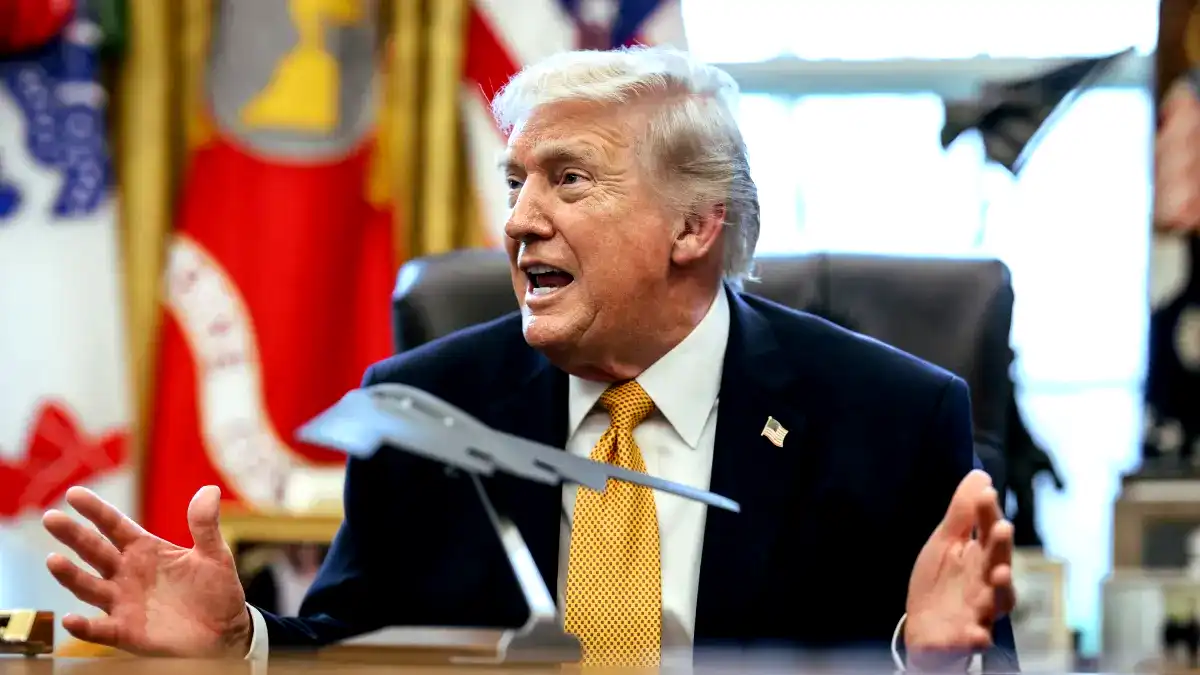
A dramatic military escalation in the Middle East came to a sudden halt after U.S. President Donald Trump personally intervened, demanding an immediate end to direct clashes between Israel and Iran. On Tuesday, June 9, 2026, Trump announced that final peace negotiations to end the 100-day-old war were back on track, just hours after the two regional superpowers exchanged missiles and airstrikes. Both Israel and Iran quickly suspended their attacks following Trump’s public demands, pulling the region back from the brink of a full-scale war that had threatened to send global oil prices past $100 a barrel.
The crisis began on Sunday after Israeli warplanes struck Hezbollah targets in the southern suburbs of Beirut, violating a fragile two-month-old ceasefire. In swift retaliation, Iran launched a barrage of at least 30 ballistic missiles toward northern Israel. The Israel Defense Forces, with assistance from U.S. military assets, intercepted most of the incoming threats. Israel then launched its own retaliatory strikes deep inside Iran, hitting military sites and a petrochemical complex. The direct exchange marked the most serious breakdown of the April 8 ceasefire, threatening to derail the entire peace process.
As the violence flared, President Trump took to his social media platform, Truth Social, to issue a blunt ultimatum. “Israel and Iran must immediately stop ‘shooting,’” he wrote in a series of posts. “Both sides, Israel and Iran, are looking to do an immediate CEASEFIRE!” Trump’s forceful and public intervention appeared to work. Shortly after his posts, both nations announced they would suspend military operations against each other.
In a televised address, Israeli Prime Minister Benjamin Netanyahu confirmed his country would halt its attacks but issued a stern warning. “If that terrorist regime makes the mistake of attacking us again, we will respond with force,” he stated. Similarly, Iran’s military announced via state media that it had “delivered a painful response” and its operations were now halted. However, the statement added a sharp condition, warning that if aggressions continue, particularly in southern Lebanon, “much more severe and crushing measures will be on the way.”
Behind the scenes, the U.S. president reportedly applied immense personal pressure on the Israeli leader. News reports detailed a tense phone call in which Trump scolded Netanyahu for the escalating conflict and reasserted his own authority over the peace process, allegedly telling the Prime Minister, “I call all the shots. He doesn’t call the shots.” This intense back-channel diplomacy was crucial in forcing both sides to stand down and allow negotiators to get back to work.
With the immediate military threat paused, Trump expressed renewed optimism about securing a permanent deal. He claimed that the “Final negotiations on ‘Peace’ are proceeding, subject to ignorance or stupidity getting in its way.” The president suggested a final agreement could be reached within “one or two days,” a remarkably ambitious timeline given the complexity of the issues. However, he made it clear that the strong U.S. naval blockade of Iranian ports would remain in full effect until a “Final Deal” is officially signed and sealed.
Reaching that final deal will require bridging significant gaps between the warring parties. Iran has a clear set of negotiating demands, including a permanent ceasefire in Lebanon, the withdrawal of all Israeli forces from the border region, and the unfreezing of billions of dollars in overseas assets. Tehran is also reportedly seeking some form of joint management over the strategic Strait of Hormuz, the waterway through which nearly a fifth of the world’s daily oil supply transits.
The recent military clashes sent immediate shockwaves through global financial markets, with oil prices surging toward the $100-per-barrel mark as traders feared a prolonged disruption to Middle Eastern energy supplies. The threat of a wider conflict involving Iran-backed Houthi rebels in the Red Sea further spooked investors. The quick de-escalation brokered by Trump brought immediate relief, stabilizing crude prices, but analysts warn that the market remains highly sensitive to any new geopolitical flare-ups.
While President Trump’s aggressive intervention has successfully paused the direct conflict, the region remains on a knife-edge. The underlying issues that sparked the war on February 28, 2026, remain unresolved, and the deep-seated distrust between Israel and Iran ensures that the path to a lasting peace is fraught with risk. Until negotiators can translate the temporary halt in fighting into a comprehensive and enforceable treaty, the Middle East will continue to balance precariously between fragile diplomacy and the threat of a wider war.















