

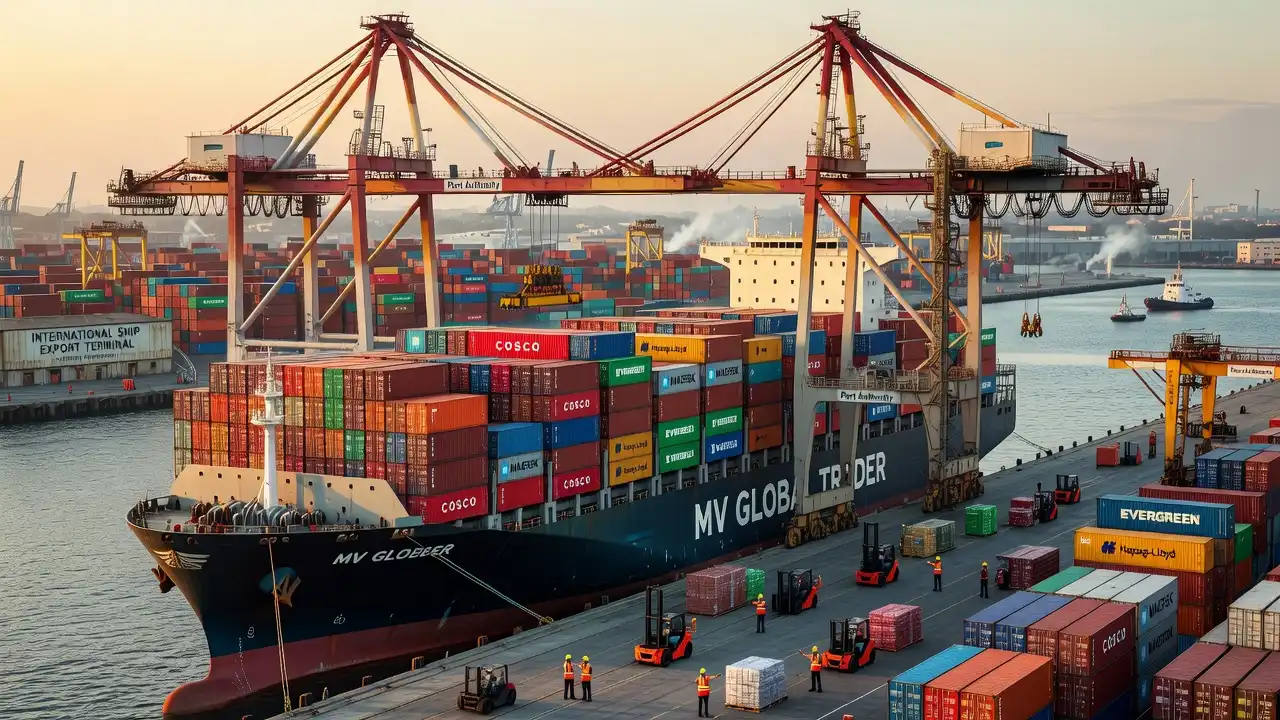
The United States’ trade balance has reached a highly encouraging milestone, signaling that international trade could become a major engine of domestic economic growth. According to newly released data from the Commerce Department’s Bureau of Economic Analysis and the Census Bureau, the overall U.S. international trade deficit in goods and services narrowed by 1.2% to $55.9 billion. This performance beat the expectations of Wall Street economists, who had projected the trade gap to shrink to $56.2 billion.
The positive development was driven by an unprecedented surge in American exports, which reached a record high of $327.1 billion. By outpacing the steady rise in imports, these strong export numbers have put the United States on track to post a positive trade contribution to its Gross Domestic Product. If this trend holds through the coming months, it will mark a major turning point for the domestic economy, which has struggled with trade-related drags on growth for several consecutive quarters.
Inside the Numbers: Decoding the April Trade Balance
The narrowing of the trade gap reflects a complex rebalancing of goods and services flows, as well as a significant revision of prior economic data.
The Shrinking Deficit and Revised Baseline
The contraction of the trade deficit to $55.9 billion represents a significant improvement from the previous month. Government statisticians revised the March trade data downward to a deficit of $56.6 billion, substantially lower than the originally reported $60.3 billion.
This downward revision suggests that the trade deficit peaked earlier in the year and is now on a steady downward trajectory.
On a year-to-date basis, the cumulative goods and services deficit decreased by $213.5 billion. This represents a massive 49.1% contraction compared to the same period in the prior year, illustrating a structural tightening of the nation’s trade imbalance.
The three-month moving average deficit also stabilized, hovering near $55.8 billion, which shows that the narrowing of the gap is part of a sustained, multi-month trend rather than a temporary fluctuation.
A Breakdown of Goods versus Services
The overall narrowing of the trade gap was driven primarily by a significant improvement in the merchandise trade balance:
- The Goods Deficit: The deficit in physical goods decreased by $2.4 billion, settling at $83.7 billion. This improvement shows that American manufacturers and agricultural producers are successfully expanding their global market share.
- The Services Surplus: The surplus in services, which includes financial, digital, and consultancy exports, decreased by $1.7 billion to $27.8 billion. While the services sector remains a consistent source of strength for the U.S. economy, the small decline in the surplus was not enough to offset the massive gains in merchandise exports.
The Export Engine: Energy, Agriculture, and Industrial Supplies
The primary driver of the shrinking trade gap was a massive, record-breaking export performance. Total U.S. exports rose by $8.3 billion, representing a 2.6% monthly increase, pushing total outbound shipments to an unprecedented $327.1 billion.
The Geopolitical Energy Cash Engine
The ongoing conflict in the Middle East has had a profound, unexpected impact on U.S. trade balances. The war with Iran, which began in February, and the subsequent blockade of the Strait of Hormuz have driven global energy prices significantly higher. Because the United States has established itself as the world’s top petroleum producer, the international energy shock has become a powerful economic engine for domestic energy exporters.
U.S. exports of goods increased by $8.7 billion to $221.3 billion, led almost entirely by industrial supplies and materials.
Outbound shipments of crude oil, fuel oil, and refined petroleum products experienced a massive boost in both value and volume as international buyers scrambled to secure alternative energy sources.
Exports of refined petroleum products, particularly motor gasoline and aviation fuel, rose sharply as global shipping routes lengthened and international demand surged.
By supplying high-priced energy to energy-starved allies in Europe and Asia, U.S. energy companies have generated record-breaking export revenues, significantly reducing the national trade deficit.
Agriculture and Food Shipments Climb
Alongside the massive energy surge, the U.S. agricultural sector also performed strongly. Exports of foods, feeds, and beverages posted their third consecutive monthly increase.
This agricultural growth was driven primarily by a substantial rise in soybean and wheat exports.
Despite ongoing trade tensions and tariff disputes, international buyers, including state-backed purchasing agencies in China, significantly increased their purchases of American grain and food products.
The steady demand for U.S. agricultural products shows that the global reliance on American food supplies remains high, providing a stable baseline for the nation’s export economy.
The Import Landscape: Capital Goods, Autos, and the AI Infrastructure Boom
While surging exports dominated the trade report, U.S. imports also grew 2.0% to $383.0 billion. In economics, a rise in imports is often viewed with mixed feelings, but the current import data suggests that domestic consumer and business demand remains remarkably healthy.
The Artificial Intelligence Hardware Spend
A major driver of the ongoing rise in imports is the massive, nationwide corporate push to expand digital and technological infrastructure. Capital goods imports rose to an all-time high, driven almost entirely by a surge in computer accessories, servers, and high-tech components.
This historic spending reflects the immense capital investments that American technology giants and cloud providers are making to construct artificial intelligence infrastructure.
Because many of the physical components, advanced microchips, and cooling systems required to build AI data centers are manufactured overseas, the tech boom is driving a continuous, high-volume flow of capital goods imports into the United States.
Automotive and Consumer Spending Remain Strong
Beyond the tech sector, American consumers are still spending heavily on major durable goods despite high inflation and elevated interest rates:
- Automotive Imports: Inbound shipments of passenger vehicles, parts, and engines rose by $3.6 billion, illustrating that domestic demand for new cars remains highly resilient.
- Consumer Goods: Imports of nonfood consumer goods, including electronics, apparel, and household items, rose by $2.4 billion, showing that retail spending is holding up well despite economic uncertainty.
The steady growth in these categories proves that the narrowing of the trade gap is not a symptom of a weakening domestic economy. Typically, a trade deficit narrows because imports decline due to weaker consumer demand.
In this case, however, imports are rising while exports are growing faster, indicating a highly positive, growth-oriented rebalancing of the U.S. economy.
Macroeconomic Implications: Shifting GDP Calculations for the Second Quarter
The narrowing of the trade gap has profound implications for how economists calculate overall U.S. economic growth, suggesting that the second quarter could outperform initial expectations.
Breaking the Seven-Quarter Drag
Net exports play a critical role in the calculation of Gross Domestic Product. When the United States imports significantly more than it exports, the trade deficit acts as a direct drag on GDP growth.
During the first quarter, the widening trade deficit subtracted 1.25 percentage points from overall GDP growth, keeping annualized growth at a modest 1.6%.
The sharp narrowing of the trade gap in April, however, completely alters this dynamic. If the U.S. can sustain its high level of exports through the remainder of the quarter, net exports are on track to contribute positively to overall GDP growth.
This would mark the first positive contribution of trade to overall economic growth in eight quarters, providing a significant boost to the national economy and potentially lifting Q2 GDP growth well above the modest levels recorded earlier in the year.
Interest Rate and Federal Reserve Pressures
While the narrowing trade gap is highly positive for GDP growth, it complicates the Federal Reserve’s work. The central bank, led by newly appointed Chair Kevin Warsh, is currently engaged in a difficult battle against persistent inflation.
The fact that both exports and imports are rising suggests that both domestic and international demand remain highly resilient.
Furthermore, the surge in energy exports is a direct result of high global oil prices driven by the war in the Middle East. While this energy spike helps reduce the trade deficit, it also keeps domestic fuel and utility costs elevated, keeping inflation well above the Fed’s 2.0% target.
With both consumer spending and job growth remaining stable, the Federal Reserve is highly likely to keep interest rates higher for longer to cool down the economy, keeping borrowing costs high for businesses and homeowners.
Strategic Views: The “America First” Agenda versus Geopolitical Interdependence
The latest trade figures have reignited the intense debate over the administration’s aggressive tariff and trade policies, with different groups interpreting the data in vastly different ways.
The Nationalist View: Tariffs and Reciprocity
Supporters of the administration’s “America First” trade policies argue that the narrowing trade gap directly validates their strategy. The government has prioritized reducing the trade deficit and rebuilding domestic manufacturing through initiatives like the Agreement on Reciprocal Trade and targeted tariffs on foreign goods.
Proponents of this view argue that high tariffs on Chinese and European imports are successfully forcing multinational corporations to reduce their reliance on foreign supply chains and invest in domestic production facilities.
They believe that the massive $213.5 billion year-to-date reduction in the trade deficit proves that aggressive, reciprocal trade policies can successfully rebalance global trade scales and protect American jobs and wages.
The Realist View: Energy Dominance and AI Demands
In contrast, global trade economists and financial strategists argue that the shrinking deficit has very little to do with the administration’s tariff policies. Instead, they contend that the narrowing gap is driven by two independent, structural forces: U.S. energy dominance and a natural rebalancing of post-pandemic import volumes.
These analysts point out that the massive surge in export revenues is a direct consequence of the war in the Middle East, which has inflated global oil prices and enabled the U.S. to profit handsomely from its position as the world’s top energy exporter.
They also note that while companies are spending heavily on foreign-made AI equipment, overall import volumes for consumer goods have moderated from the record-high levels recorded during the post-pandemic spending boom.
According to this realist view, the shrinking deficit is a temporary result of geopolitical conflict and shifting technology cycles. Aggressive tariffs risk triggering retaliatory trade wars that could eventually hurt American exporters and increase costs for domestic consumers.
Conclusion: Rebalancing the Global Trade Scale
The narrowing of the U.S. trade deficit to $55.9 billion in April represents a highly positive milestone for the domestic economy. By driving total exports to a historic record high, American energy producers, agricultural companies, and manufacturers have proven they can compete successfully on the global stage, even amid a highly volatile international environment.
As the nation heads toward the second half of the year, the trade balance will remain a critical indicator of economic health. While the current export boom is providing a helpful boost to GDP growth, the U.S. economy remains deeply connected to global markets, and its long-term stability will depend on whether policymakers can successfully navigate the complex forces of geopolitical conflict, energy pricing, and technological innovation.