

Egypt’s embattled economy has received a crucial, much-needed breathing space as consumer price pressures eased for a second consecutive month. On Wednesday, June 10, 2026, the Central Agency for Public Mobilization and Statistics (CAPMAS) announced that the country’s annual urban inflation rate slowed to 14.6% in May, down from 14.9% in April and a ten-month high of 15.2% in March. This unexpected cooldown represents the lowest inflation rate the North African nation has recorded since February. This economic relief comes despite immense inflationary pressures stemming from the ongoing conflict between the United States and Iran, which has severely disrupted global shipping, spiked energy prices, and weakened regional currencies.
The primary driver behind this consecutive monthly slowdown is the fading impact of previous government-mandated fuel price hikes. In the early stages of the year, the Egyptian government raised domestic fuel and gas prices by 14% to 30% to curb its fiscal deficit. However, the inflationary shock of those hikes has finally begun to dissipate. CAPMAS reported that annual transport-sector inflation eased significantly to 24.7% in May, down from 29.2% in April and a staggering peak of 39.5% in March. This cooling of transportation and logistics costs has successfully offset ongoing price increases in several major food categories, including meat, poultry, and fresh fruits.
The positive trend in May extended beyond Egypt’s major urban centers to the entire republic. The national statistics agency reported that the annual headline inflation rate for the entire country—which includes rural and regional areas—slowed to 13.0% in May, down from 13.4% in April. On a month-over-month basis, the general consumer price index for the entire republic reached 292.0 points, representing a modest 1.4% increase over April. This month-on-month deceleration indicates that, while consumer prices are still rising, they are doing so at a much slower, more manageable pace than the volatile double-digit spikes observed in the first quarter of the year.
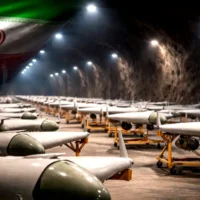
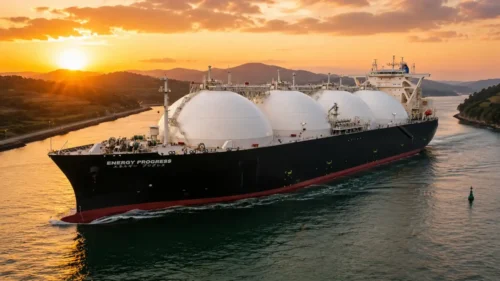
This economic moderation is highly remarkable given the extreme geopolitical headwinds currently battering the Middle East. The direct military conflict between the United States and Iran has effectively closed the strategic Strait of Hormuz, through which roughly 20% of the world’s daily oil transit passes. The resulting blockade has forced Egypt to pay significantly higher energy import bills, placing an immense burden on the state’s budget. Furthermore, the war has severely disrupted shipping traffic through the Suez Canal—a critical source of foreign currency for Egypt—as escalating security risks and soaring insurance premiums forced international cargo vessels to reroute around Africa.
The outbreak of the war in late February also triggered a sudden and massive exit of foreign capital from Egypt’s financial markets. Fearing a prolonged regional conflict, foreign portfolio investors rapidly withdrew an estimated $8 billion in short-term “hot money” from local debt instruments in March alone. This sudden capital flight caused Egypt’s net foreign assets to plunge by over $6 billion in a single month. The sudden exit of foreign currency placed immense pressure on the local currency, causing the Egyptian pound to depreciate by approximately 8% to 10% against the U.S. dollar. While a weaker currency typically drives up the cost of imported goods, the country has managed to absorb the shock without triggering a hyperinflationary spiral.
Egypt has managed to withstand these severe geopolitical shocks far better than it did during the 2022 Ukraine war, thanks to a massive financial safety cushion. In March 2024, Egypt secured a crucial $8 billion financial support package from the International Monetary Fund (IMF), which required the country to float its currency and raise interest rates. More importantly, massive foreign direct investments from wealthy Gulf states have completely transformed the central bank’s balance sheet. A landmark $35 billion investment deal with the United Arab Emirates to develop the Ras El-Hekma Mediterranean resort helped boost Egypt’s official foreign currency reserves to an all-time high of over $53.13 billion, providing the country with the liquidity to defend its currency and pay for essential imports.
The consecutive monthly declines in consumer price growth provide immense political and economic relief to the Central Bank of Egypt (CBE). At its most recent monetary policy meeting on May 21, the central bank held its benchmark interest rates steady, citing the gradual deceleration in monthly price growth. With urban inflation now at 14.6%, the real interest rate, adjusted for inflation, has moved closer to positive territory, reducing the need for further aggressive monetary tightening. Economists believe that if inflation continues to cool, the central bank can keep interest rates stable, helping the non-oil private sector recover from its prolonged contraction.
Despite the positive trajectory, economic analysts and international financial institutions warn that this inflationary respite may prove highly short-lived. The central bank wants to steer inflation toward its long-term target of 7%, allowing a tolerance band of about 1.5% to 2.0% in either direction. However, the government must soon implement a series of scheduled utility adjustments, including raising electricity prices for commercial and residential consumers. Furthermore, if global crude prices remain elevated above $90 per barrel due to ongoing blockades, the state’s fuel subsidy budget will face immense pressure, likely forcing the government to implement another round of domestic fuel price hikes before the end of the summer.
As the war in the Middle East continues with no permanent settlement in sight, Egypt’s economic managers must continue to tread a highly delicate path. The May inflation data proves that the structural reforms and the massive foreign currency reserves have successfully insulated the domestic market from the worst effects of the regional conflict. However, the country remains highly vulnerable to external energy shocks and supply-chain disruptions. Until global shipping lanes reopen and regional tensions fully subside, Egypt’s battle against inflation will remain a high-stakes challenge, requiring disciplined fiscal consolidation and careful monetary policy to protect the livelihoods of its 105 million citizens.