

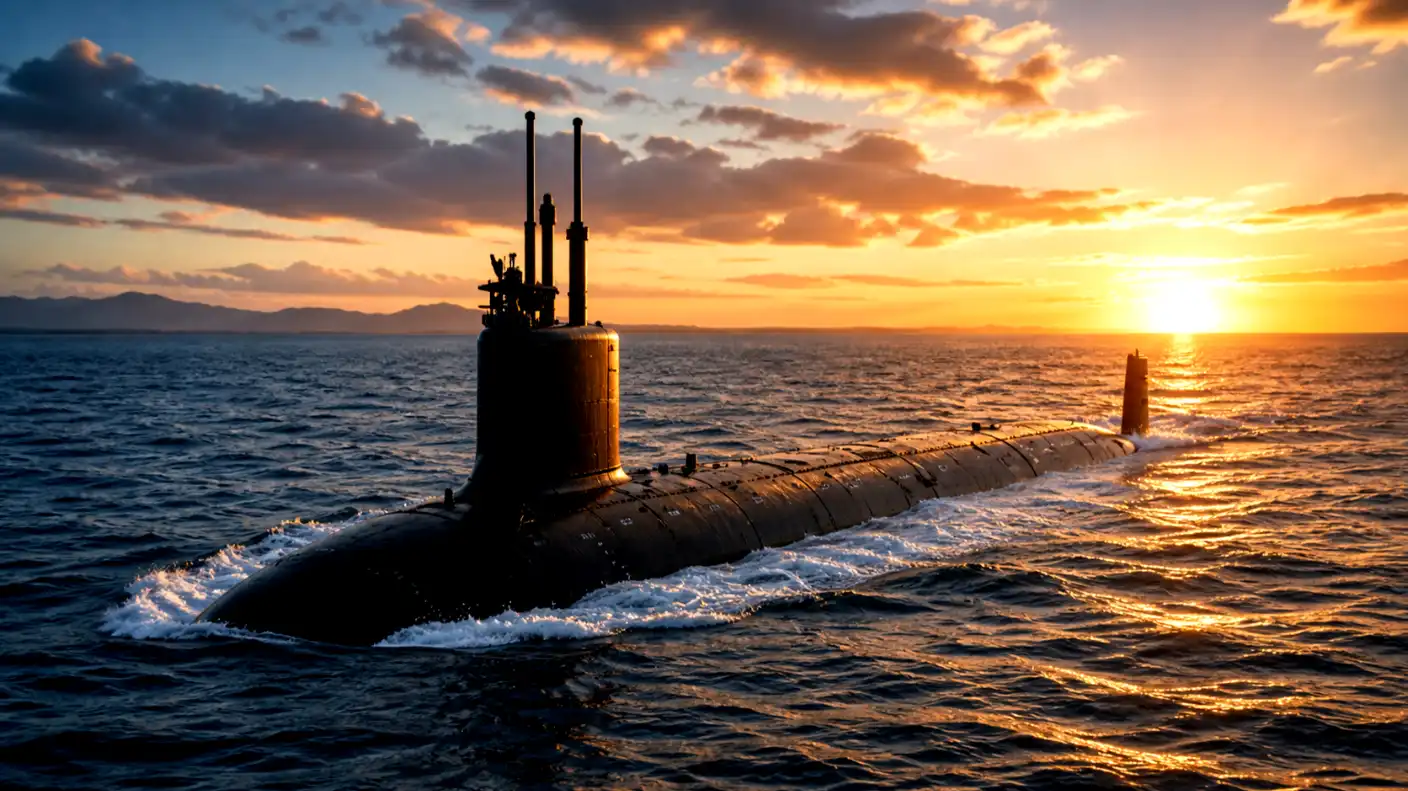
South Korea has launched an aggressive, coordinated campaign to clear the legal and institutional pathways for its highly ambitious naval modernization plans. On Wednesday, June 10, 2026, the country’s Ministry of National Defense announced that the government will make massive efforts to expedite the legislative process to establish a formal policy framework for its nuclear-powered submarine program. The defense ministry aims to have the complete institutional policy framework in place by next year, paving the way for domestic shipbuilders to begin construction. The announcement followed the second high-level meeting of a specialized pan-government task force, which coordinates security, scientific, and industrial efforts across multiple ministries.
The establishment of this pan-government task force dates back to December 2025, when the administration of President Lee Jae Myung formed the body to synchronize the country’s technological and diplomatic resources. To ensure a cohesive, whole-of-government approach, the task force unites senior officials from the military, the Ministry of Science and ICT, the Ministry of Trade, Industry and Energy, and the Nuclear Safety and Security Commission. During the meeting on Wednesday, these interagency representatives discussed the specific legislative steps required to authorize naval nuclear propulsion, plans to build a robust nuclear safety regulatory framework, and strategies for upcoming consultations with the International Atomic Energy Agency (IAEA) to uphold international nonproliferation standards.
This legislative push directly supports a bold military roadmap that South Korean Defense Minister Ahn Gyu-back unveiled last month, on May 26, 2026. Under this strategic defense plan, South Korea aims to build at least three massive, 8,000-ton nuclear-powered attack submarines using entirely domestic technology and design capabilities. The government wants to launch the first vessel in the mid-2030s, with a target to enter full operational service in the latter half of the decade. The military believes that acquiring these advanced vessels will completely transform the country’s maritime defense, allowing its submarines to remain submerged for months at a time, unlike the current diesel-powered fleet that must regularly surface to recharge its batteries.
Building a domestic fleet of state-of-the-art nuclear submarines represents one of the most expensive and complex engineering projects in South Korea’s history. Defense analysts estimate that the research, development, and construction phases of the three planned 8,000-ton vessels will easily cost over $1 billion per submarine, creating a massive economic boom for local aerospace, shipbuilding, and heavy industry sectors. To fund this ambitious project, the government plans to gradually increase the national defense budget, dedicating a stable stream of capital that will represent nearly 1.5% of total annual military spending over the next decade.
South Korea’s nuclear submarine ambitions gained critical international momentum during a bilateral summit between President Lee Jae Myung and U.S. President Donald Trump in November 2025. During those high-stakes talks, President Lee secured explicit U.S. backing for the program, which the two leaders officially recorded in a joint security fact sheet. Historically, the bilateral atomic energy agreement between Washington and Seoul, commonly known as the 123 Agreement, has strictly prevented South Korea from enriching uranium or reprocessing spent nuclear fuel without American approval. Trump’s strategic endorsement represents a historic shift, opening the door for the allies to negotiate a workable compromise.
To translate this high-level political agreement into concrete action, a delegation of senior U.S. officials, led by Under Secretary of State for Political Affairs Allison Hooker, visited Seoul last week for two days of intense interagency consultations. During these meetings, which concluded on June 3, 2026, Hooker met with South Korea’s First Vice Foreign Minister Park Yoon-joo to outline the technical and legal parameters of the submarine project. South Korean diplomats reported that the U.S. side raised no objections to Seoul’s plan to build the submarines domestically using its own technology. Instead, the talks focused on establishing a secure supply chain for the necessary nuclear fuel.
To address global nonproliferation concerns and avoid triggering a regional arms race, South Korea has committed to utilizing only low-enriched uranium (LEU) to power the submarines’ reactors. The defense ministry confirmed that the envisioned submarines will operate strictly on fuel with an enrichment level of below 20 percent uranium-235, which is identical to the fuel used in civilian nuclear power plants. This low enrichment level makes the material completely useless for developing nuclear weapons, satisfying both IAEA guidelines and U.S. security requirements. Under the proposed framework, South Korea will construct the reactors and the hulls domestically, while the United States will supply the secure LEU fuel.
As South Korea accelerates its legislative and diplomatic efforts, the nuclear submarine program stands as a powerful symbol of the nation’s push for greater strategic autonomy. The decision to establish a full policy and regulatory framework by next year proves that the government in Seoul is fully committed to transforming its naval capabilities. While significant hurdles remain—particularly regarding international inspections and domestic legislative approvals—the solid backing from Washington and the strong interagency coordination in Seoul suggest that the project will move forward rapidly. Until the first 8,000-ton vessel launches in the mid-2030s, this ambitious program will remain a focal point of regional security and alliance cooperation.















