
European gas prices crept higher on Wednesday, June 10, 2026, as a dramatic escalation of military hostilities in the Middle East rattled commodity markets. British and Dutch natural gas contracts edged up in early trading as energy investors reacted with deep caution to a rapid exchange of air strikes between the United States and Iran. The sudden return to open conflict has shattered hopes for a durable regional ceasefire, which U.S. President Donald Trump had claimed was close to completion just hours earlier. This geopolitical volatility has left European markets highly vulnerable, forcing buyers to pay a steady risk premium to secure near-term fuel deliveries.
The immediate market reaction across European trading hubs was modest but highly symbolic of the underlying tension. On Wednesday, the benchmark ICE Dutch TTF Natural Gas Futures contract edged up by 0.2%, trading around 48.83 euros per megawatt-hour (MWh), with some intraday contracts briefly touching 49.20 euros. Simultaneously, British Natural Gas Futures rose by 0.2% to sit at 117.45 pence per therm, eventually settling at 118.13 pence. While these daily gains remain small compared to the extreme market spikes recorded earlier in the spring, the upward movement proves that energy traders remain highly sensitive to any developments along the primary shipping lanes of the Persian Gulf.
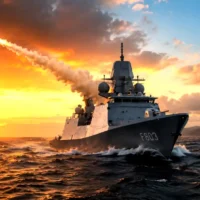
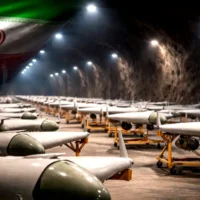
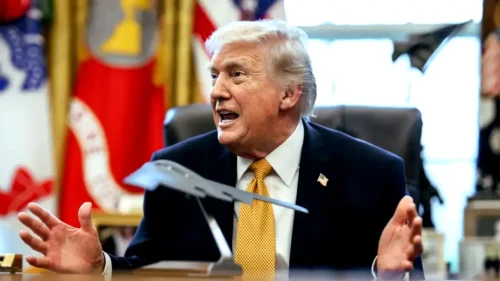
The sudden price movement directly reflects a severe, rapid escalation in the direct military conflict between Washington and Tehran. The tensions flared after President Trump accused Iranian forces of shooting down a U.S. Army Apache helicopter over the strategic Strait of Hormuz on Monday. Although an autonomous sea surface drone successfully rescued both pilots from the water within two hours, the U.S. military launched a massive wave of retaliatory airstrikes targeting Iranian coastal radar installations and air defense batteries. In immediate response, Iran fired ballistic missiles. It launched attack drones targeting American military installations in Bahrain, Kuwait, and Jordan, effectively ending any near-term hopes of a negotiated peace treaty.
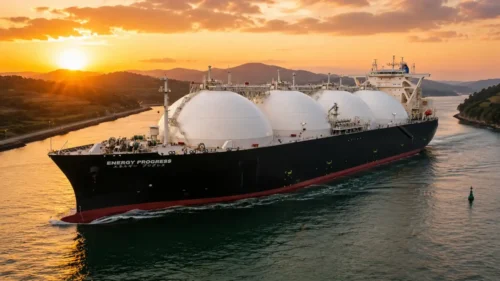
This intensifying military conflict has placed an immense strain on global liquefied natural gas (LNG) flows, creating a high-stakes supply squeeze for European buyers. The Strait of Hormuz represents the world’s most critical energy artery, handling approximately 20% of global oil and liquefied natural gas shipments. Because of the ongoing hostilities and the threat of drone attacks, international shipping companies have completely suspended transits through the narrow waterway. This prolonged blockade has forced European utility companies to spend billions of dollars on alternative, far more expensive LNG cargoes from West Africa and the United States, adding nearly $1 billion in extra transportation fees to the region’s collective energy bill.
The current crisis highlights Europe’s extreme, systemic vulnerability to international energy shocks. Since cutting ties with Russian pipeline gas following the 2022 invasion of Ukraine, the Eurozone has relied heavily on imported liquefied natural gas to power its heavy industries and heat its homes. This fundamental shift has locked the continent into a highly volatile, globalized spot market, where any localized conflict can instantly trigger a regional pricing crisis. While benchmark gas prices have dropped from their extreme March peaks of over $120 a barrel equivalent, they remain heavily inflated by this fundamentally altered global energy map.
Compounding the geopolitical anxiety, European utility companies are also grappling with significant domestic supply reductions. Norway, which has replaced Russia as Europe’s single largest supplier of pipeline natural gas, recently initiated a series of planned and unplanned maintenance closures at its most critical infrastructure sites. Massive maintenance operations at the giant Troll gas field and the Kollsnes processing plant have significantly reduced the daily flow of Norwegian gas to the continent. These domestic pipeline cuts have coincided with the Middle Eastern shipping disruptions, leaving European buyers with very little margin for error as they attempt to rebuild their winter reserves.
The combination of restricted imports and domestic pipeline cuts has severely hindered Europe’s ability to rebuild its emergency fuel stockpiles. According to official European registry data published on Wednesday, gas storage sites across the European Union are currently only 42.79% full. This represents a highly concerning decline compared to the same period last year, when European storage sites stood at a much healthier 51.4% capacity. This substantial deficit means that Europe enters the summer restocking season with a significant disadvantage, leaving the continent highly vulnerable if a prolonged winter or sudden heatwave drives up demand over the next several months.
The persistent high-energy environment is also taking a massive toll on Europe’s broader industrial economy. High gas prices have forced chemical plants, metal smelters, and heavy manufacturing facilities across Germany and France to scale back their operations to remain financially viable. Analysts estimate that these high energy inputs have shaved nearly 1.5% off the continent’s manufacturing output this year, pushing several prominent industrial companies to consider relocating their production facilities to North America or Asia, where energy costs are significantly lower. This industrial flight threatens to undermine Europe’s competitiveness and permanently fuel long-term economic stagnation.
As the conflict in the Middle East continues with no diplomatic resolution in sight, the outlook for European energy markets remains highly volatile. The slight rise in Dutch and British natural gas prices on Wednesday proves that the market will remain on a knife-edge of expectation as long as the U.S. and Iran continue to trade military blows. For European consumers, the immediate consequence of this geopolitical gridlock is a direct rise in utility bills and manufacturing costs. Until international negotiators can secure an enforceable peace treaty that fully reopens the Strait of Hormuz, Europe’s economy will remain at the mercy of global supply shocks and volatile pricing.