

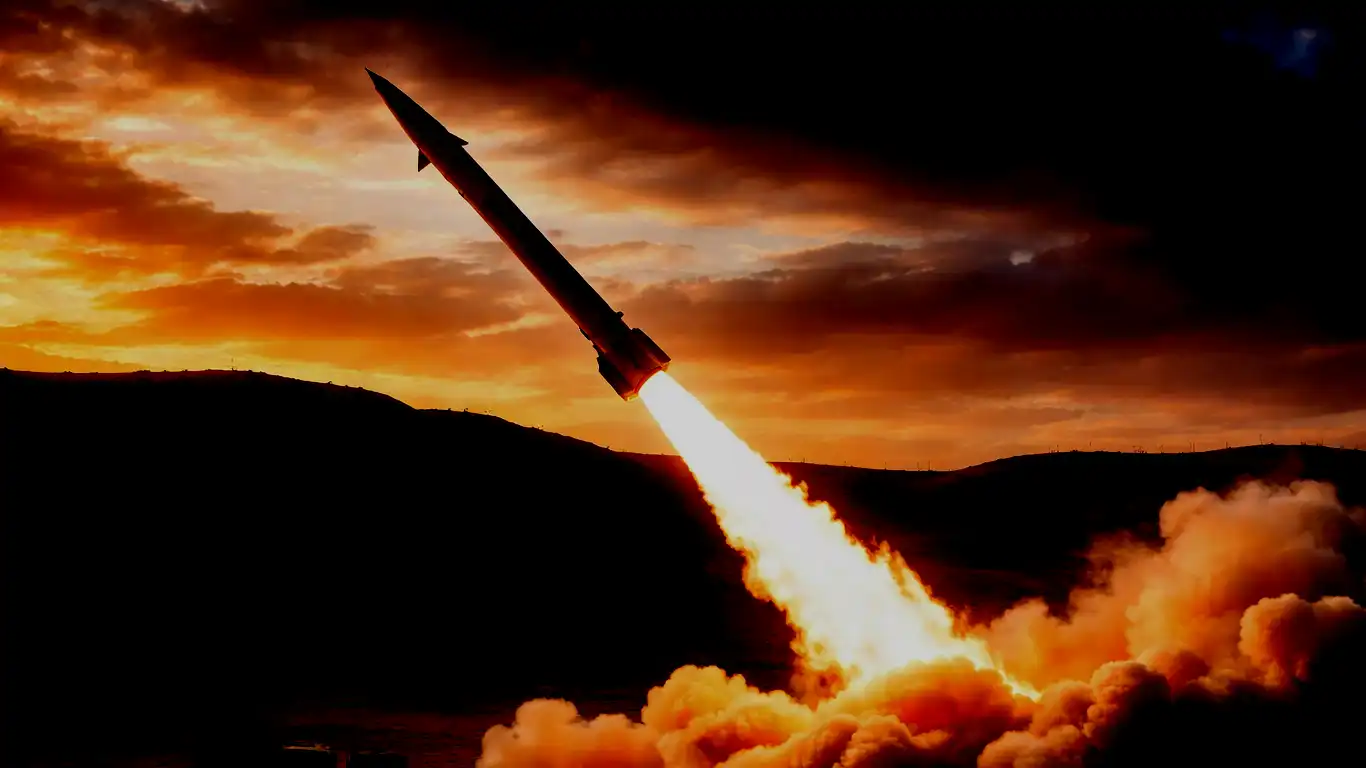
Taiwan’s military has sent a powerful defensive signal directly across the narrow waters separating the island from the Chinese mainland. On Wednesday, June 10, 2026, Taiwanese forces conducted a highly symbolic live-fire artillery exercise, launching advanced, U.S.-supplied High Mobility Artillery Rocket Systems (HIMARS) from its western coast into the waters of the Taiwan Strait. This exercise represents a significant escalation in Taiwan’s defensive posture, marking the first time the island’s military has fired these battle-tested, American-made rockets directly into the waters facing China. The high-profile drill simulated a rapid response to a potential Chinese amphibious invasion, showcasing Taiwan’s growing ability to repel an attacking force.
The 10th Army Corps conducted the drill along Taiwan’s western coast, positioning the mobile rocket launchers near the mouth of the Dajia River in Taichung City. Military planners view this coastal stretch as a prime landing zone for any potential Chinese amphibious assault, making the site highly strategic. Under the command of the 58th Artillery Command, the military deployed six truck-mounted HIMARS launchers, positioning three vehicles on each side of the river estuary. Within minutes of receiving firing orders, the crews maneuvered their vehicles into position and unleashed their payloads, filling the morning sky with bright flashes and heavy smoke.
The live-fire drill unfolded in three highly coordinated waves to demonstrate rapid-fire capabilities and combat readiness. Over the course of the exercise, each HIMARS launcher fired two rockets per wave, resulting in a total of 12 rockets per wave across all six vehicles. In total, the military launched 36 rockets across three waves, targeting specified coordinates approximately 9 kilometers (5.6 miles) offshore in the Taiwan Strait. To prevent any unintended international incident or accidental escalation, the military utilized M28 reduced-range practice rockets, which fly a limited distance before falling safely into the water.
The primary objective of the exercise was to demonstrate the HIMARS system’s exceptional mobility and its famous “shoot-and-scoot” tactics. The truck-mounted rocket pod allows crews to drive out from hidden, reinforced bunkers, fire their precision munitions in under three minutes, and then rapidly relocate to a new hiding place before enemy radar can lock onto their position. Company commander Ko Ming-pin told onlookers that the successful drill demonstrated the solid combat capabilities of his unit, emphasizing that this extreme mobility greatly improves the launchers’ battlefield survivability in an actual conflict.
Although the military utilized reduced-range training rockets for this exercise, the weapon system possesses a far deadlier reach when fully loaded with live combat rounds. When equipped with the advanced Army Tactical Missile System (ATACMS), a single HIMARS pod can strike targets up to 300 kilometers (or 186 miles) away with an accuracy margin of just ten meters. This massive range puts major military bases and launch sites in China’s southern Fujian province, located directly across the strait, squarely within Taiwan’s defensive striking distance. Military planners believe this capability will allow Taiwan to suppress China’s amphibious launch capabilities at the source during an invasion.
The ongoing deployment of the HIMARS is part of a broader, multi-billion-dollar military procurement program designed to reshape the island’s asymmetric defense strategy. Taiwan has purchased a total of 29 HIMARS units from the United States, representing an investment of over $1 billion. The island received its first batch of 11 systems in late 2024, and the Ministry of National Defense recently confirmed that the remaining 18 units will arrive next year, significantly ahead of the original 2028 delivery schedule. By focusing on mobile, hard-to-track systems rather than expensive warships or fixed bases, Taiwan hopes to make any invasion attempt prohibitively expensive for Beijing.
To sustain this massive military buildup amid near-daily Chinese incursions, Taiwan’s parliament has steadily increased national defense spending. The island’s military budget has recently climbed to over 3% of its gross domestic product, representing approximately 1.5% of total regional defense outlays in East Asia. Beyond the rocket systems, Taiwan aims to grow its anti-ship missile inventory to more than 1,800 units by 2029. As part of this effort, the government secured 450 Boeing Harpoon anti-ship missiles in early June 2026, with an additional 400 units currently moving through the U.S. delivery pipeline.
The live-fire drills have drawn a defiant response from Taiwan’s political and military leadership, who refuse to back down in the face of constant intimidation. China views the self-governed island as a renegade province and has never renounced the use of military force to bring it under its control. Reflecting the island’s resolve, Army Sergeant Wang Ming-hui stated that, given the current enemy threat, the military will continue its rigorous HIMARS training with unwavering determination. He declared that the armed forces will remain the nation’s strongest force, prepared to protect Taiwan’s democratic way of life at all costs.
As the smoke clears over the Taichung coastline, the successful HIMARS exercise has highlighted the evolving geopolitical standoff in the Asia-Pacific region. By firing American-made rocket systems directly into the Taiwan Strait for the first time, Taiwan has demonstrated its readiness to defend its western beaches against a maritime invasion. While these drills will likely provoke fresh anger and military posturing from Beijing, they also prove that the island’s asymmetric defense strategy is rapidly maturing. Until the international community can find a way to resolve the cross-strait dispute peacefully, the waters of the Taiwan Strait will remain one of the most volatile flashpoints in global geopolitics.















