

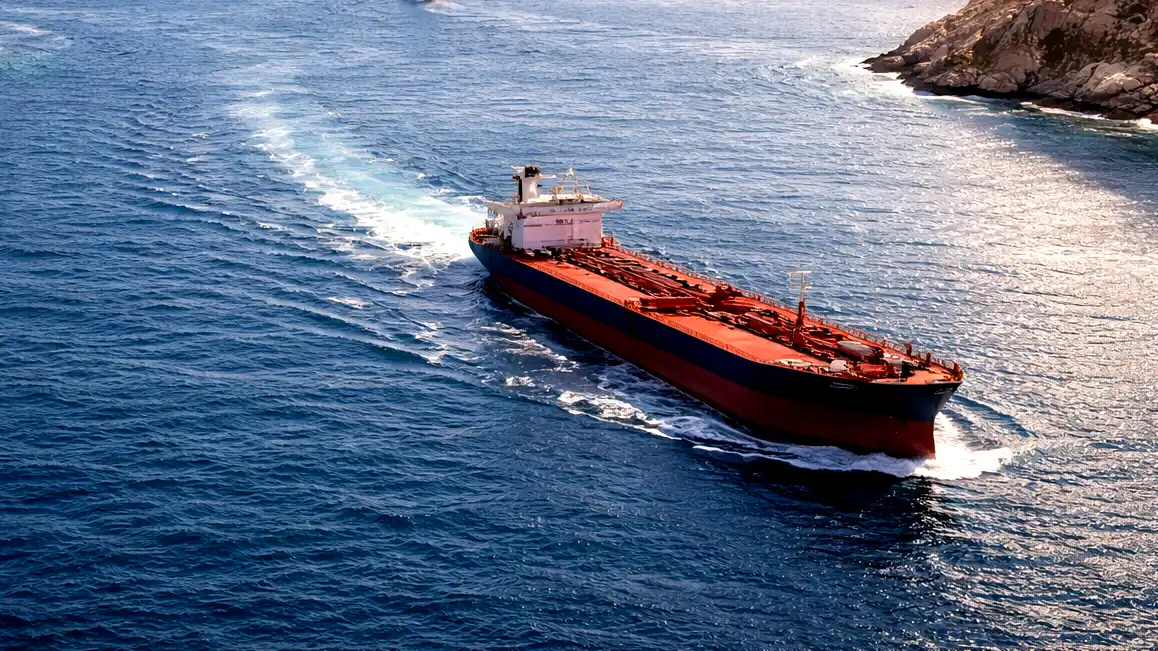
Off the coast of Oman, a quiet and highly coordinated maritime maneuver recently took place under the cover of the weekend. A massive cluster of 16 oil tankers gathered in the open waters to conduct ship-to-ship transfers, moving millions of barrels of crude oil that had been trapped inside the Persian Gulf. Just a month prior, this specific offshore area sat empty. Today, it serves as the primary staging ground for a covert, multi-billion-dollar shadow trade.
These vessels are part of a rapidly growing fleet of non-Iranian tankers that have decided to disable their Automatic Identification System transponders. By choosing to go dark, these shipowners are successfully sneaking Middle Eastern crude oil past a highly volatile blockade. This clandestine trade is rapidly transforming the geopolitical landscape of the Persian Gulf. Far from a complete blockade, the critical waterway has turned into a high-stakes, two-lane highway where stealth tactics are successfully restoring the global oil supply and preventing a disastrous energy crisis.
The Chokepoint: A Hundred Days of Siege
The struggle to keep oil flowing out of the Persian Gulf represents one of the most severe maritime challenges of the modern era. The Strait of Hormuz has been heavily restricted for approximately 100 days, following the outbreak of the military conflict between the United States and Iran in early March.
The Impact of the War on Shipping
The onset of the conflict immediately disrupted the global energy trade. As the U.S. and Israel launched targeted operations to dismantle military infrastructure, Iran retaliated by targeting commercial cargo ships and oil tankers passing through the narrow strait.
This blockade trapped hundreds of ships and thousands of seafarers inside the Persian Gulf, causing global seaborne tanker volumes to plummet.
With the primary transit route for Middle Eastern oil effectively blocked, energy analysts warned that global crude prices could surge to $200 a barrel, threatening to push the global economy into a severe recession.
The Split into Two Lanes
In response to the threat, the Strait of Hormuz has split into two parallel shipping lanes. One side of the strait remains under tight Iranian control, characterized by drone strikes, boarding actions, and naval intimidation.
The other side operates under a quiet U.S. Navy overwatch. In this lane, non-Iranian commercial vessels coordinate closely with Western naval forces to plan their exits.
While the U.S. Central Command maintains a defensive blockade in the Gulf of Oman to prevent illicit trade, the sheer volume of global energy demand has forced shipping operators to develop alternative, highly covert methods to move their cargo past the naval blockades.
The Tactic: Going Dark to Escape the Gulf
The primary tool that shipowners are utilizing to bypass the military cordon is the deliberate disabling of their ship-tracking systems.
The Mechanics of AIS Transponders
Under international maritime law, all large commercial vessels must operate an Automatic Identification System transponder. This system continuously broadcasts the ship’s identity, position, speed, and heading to other vessels and coastal authorities to prevent collisions and ensure maritime safety.
However, in a heavily militarized zone where transponders act as a beacon for hostile drone strikes and naval boardings, shipowners are increasingly choosing to disable these systems.
When a tanker goes dark, it disappears from standard, public ship-tracking databases. While this tactic is highly controversial and carries significant operational risks, it allows vessels to navigate the narrow chokepoint without revealing their positions to hostile forces along the shoreline.
The Quantitative Escape
The strategy is yielding highly successful results. Georgios Sakellariou, a freight analyst at the vessel-pool management firm Signal Maritime, noted that the stream of dark transits has increased significantly.
According to shipping data, by late May, approximately a quarter of the non-Iranian large oil tankers trapped in the Persian Gulf had successfully escaped.
The total number of large tankers stranded inside the Gulf has dropped to around 90, down from a peak of roughly 160 in early April.
While this exit rate is still insufficient to restore trade to pre-war levels, it indicates that a substantial volume of oil is successfully leaking from the blocked waterway.
Rising Flow Rates
This steady stream of covert transits has had a measurable impact on global energy supplies. Rapidan Energy Group estimates that approximately 2 million barrels a day of oil and related products are now flowing out of the Persian Gulf.
While this flow rate is still far below the normal, pre-war volume of more than 13 million barrels a day, it represents a massive increase from the early weeks of the conflict when shipments had slowed to a near-total standstill.
By utilizing these stealthy transits, Gulf producers are successfully keeping the global market supplied with essential crude, preventing the catastrophic shortages that many economists had feared.
ADNOC and the Pioneer Shippers
The Abu Dhabi National Oil Company has emerged as one of the primary first-movers in using dark transits to bypass the blockade and fulfill its international supply contracts.
The Offshore Transfer Network
A Bloomberg investigation recently revealed that ADNOC has been among the most active companies moving crude oil through the Strait of Hormuz, with its transponders disabled.
Rather than attempting to sail fully laden supertankers directly to Asian buyers through the heavily monitored strait, the company has developed a highly flexible offshore transfer network.
ADNOC is moving its key crude grades, including Upper Zakum and Das, from offshore production terminals inside the Gulf to locations outside the chokepoint.
The company is offering these cargoes to international buyers on a free-on-board basis from storage sites near Fujairah and through ship-to-ship transfers off the coast of Oman.
This strategy allows ADNOC to move its oil out of the dangerous Gulf waters using smaller, stealthy vessels before transferring the cargo to larger supertankers in safer, international waters.
The Proof in Satellite Imagery
The scale of this covert shipping operation is visible in satellite data. Satellite imagery from the European Union’s Copernicus browser showed an oil tanker actively loading cargo on six of the eight days when clear images were available at Zirku Island in May.
Before the war, the Zirku Island terminal, which handles the Upper Zakum crude grade, was capable of loading more than 1 million barrels of oil a day, according to the intelligence firm Kpler.
A clear example of this operation occurred when the very large crude carrier Basrah Energy loaded 2 million barrels of crude from the Zirku Island terminal.
The vessel immediately disabled its transponder, slipped silently through the Strait of Hormuz, and successfully arrived at the Fujairah Oil Tanker Terminals outside the Gulf to offload its cargo, proving that large-scale oil shipments can still navigate the chokepoint if they operate under complete electronic silence.
Kuwait and Other Gulf Shippers Join the Shadow Trade
Following the success of the Emirati workarounds, other major oil-producing nations in the Gulf are adopting the same shadow tactics to keep their own economies afloat.
The Kuwaiti Workaround
Kuwait’s state-owned shipping company has quickly joined the covert trade. In late May, two large crude carriers managed by the Kuwait Oil Tanker Co., each carrying approximately 2 million barrels of crude oil, successfully crossed the Strait of Hormuz.
Immediately after clearing the narrowest part of the chokepoint, both vessels disabled their tracking transponders and began signaling off the coast of Kuwait, effectively disappearing from public tracking systems.
By using these dark transits, Kuwait is successfully maintaining its crude exports to key buyers in East Asia, ensuring that its sovereign revenues do not collapse under the weight of the blockade.
One of these tankers was reportedly carrying Basrah Medium crude bound for refineries in Vietnam, illustrating how such covert supply lines are critical to keeping industrial economies across Asia running.
Aramco and Regional Coordination
Saudi Arabia’s state oil giant, Aramco, has also been quietly moving limited crude cargoes through the strait using similar dark transit methods.
Additionally, Saudi Arabia and the UAE are utilizing land-based pipelines that run hundreds of miles across the Middle East to bypass the Persian Gulf entirely, delivering oil directly to ports on the Red Sea and the Gulf of Oman.
By combining these land-based workarounds with ship-to-ship transfers and dark transits, the major Gulf producers are presenting a unified, highly coordinated effort to resist the economic strangulation of the blockade.
While total export volumes remain far below their historical norms, the continued movement of these cargoes highlights the extreme resilience of the global energy supply chain.
The Impact on the Global Market: Why Oil Isn’t Two Hundred Dollars
The success of these stealthy shipping operations has had a profound, stabilizing effect on global financial markets, keeping energy prices far lower than initially expected.
Pulling Prices Down by Thirty Percent
When the conflict first escalated and the Strait of Hormuz was closed, panic buying on Wall Street drove international oil prices sharply higher.
However, the steady increase in covert dark transits, combined with several other global factors, has successfully defused this price spike.
The combination of about 2 million barrels a day of covert Gulf flows, a significant drop in Chinese crude purchases, surging domestic oil exports from the United States, and the activation of cross-country pipelines has brought oil prices down almost 30% from their peak at the height of the war.
By keeping global inventories from falling to critical levels, the shadow fleet of the Persian Gulf has successfully insulated the global economy from a devastating inflationary shock.
Public Validation from Washington
Top officials in Washington have publicly acknowledged the success of these workarounds. On Wednesday, President Donald Trump posted a statement on social media, claiming that the administration’s policies are working and that a lot of oil is successfully getting out of the Strait of Hormuz.
A day earlier, U.S. Energy Secretary Chris Wright addressed an energy conference and confirmed that tanker traffic through the region is rising very meaningfully.
These statements show that Washington is increasingly confident that its defensive naval overwatch and the clandestine tactics of its allies are successfully blunting the economic weaponization of the strait.
By allowing oil to escape the Gulf through backchannels, the U.S. can maintain its economic pressure on Iran without triggering a politically disastrous surge in domestic gasoline prices.
Views: The Security and Legal Risks of the Shadow Fleet
While the rise of the dark tanker fleet has helped stabilize global oil prices, the practice poses significant physical, financial, and legal risks to the maritime industry.
The Threat of Collision and Environmental Disaster
Operating large, fully laden oil tankers without transponders in one of the world’s most crowded and militarized waterways is an exceptionally hazardous practice.
The Automatic Identification System is a critical tool used by captains to avoid collisions, especially at night or during poor weather.
When dozens of supertankers turn off their trackers, they significantly increase the risk of catastrophic collisions in the narrow shipping channels.
A major collision involving a laden supertanker could trigger an unprecedented environmental disaster, spilling millions of barrels of crude oil into the fragile marine ecosystem of the Gulf and permanently closing the strait to all shipping.
Furthermore, going dark makes it exceptionally difficult for naval forces to coordinate search-and-rescue operations if a vessel is attacked or encounters mechanical trouble, placing seafarers’ lives at extreme risk.
Billions of Dollars in Legal Disputes
The ongoing disruption has also triggered a massive wave of litigation within the global shipping and commodities industries.
Because oil cargoes are typically bought and sold multiple times before any crude is actually loaded onto a vessel, the sudden blockade has created a highly complex web of interconnected financial exposures.
Oil traders, charterers, and shipowners are currently locked in billions of dollars of legal disputes over force majeure declarations, missed delivery deadlines, and astronomical shipping insurance premiums.
With war risk insurance rates for the Gulf reaching historic highs, some shipowners have decided to avoid the region entirely, while others are demanding massive premium charter rates to compensate for the risk of operating in a combat zone.
These legal and financial disputes will continue to complicate the global oil trade for months, if not years, after the physical blockade of the strait is eventually resolved.
Conclusion: Re-Engineering Global Trade
The dramatic rise of the dark tanker fleet in the Strait of Hormuz serves as a historic testament to the extreme resilience and adaptability of global commerce.
Faced with a devastating military conflict and a complete naval blockade of the world’s most critical energy chokepoint, the maritime industry has successfully re-engineered its trade routes, utilizing stealth technology, satellite coordination, and offshore transfers to keep the world supplied with oil.
While the Strait of Hormuz remains a highly dangerous, militarized, and restricted zone, the ghost fleet of the Gulf has successfully blunted the threat of a global economic collapse.
By proving that energy will always find a way to reach the market, these covert shipping operations have reshaped the rules of geopolitical conflict, demonstrating that in a highly connected global economy, the physical blockade of a critical trade corridor can be successfully circumvented if shippers are willing to take the ultimate risk and go completely dark.















