
A major diplomatic offensive is currently unfolding across European capitals as leaders prepare for a critical security summit. With the war in Ukraine grinding through its fifth year and U.S.-led diplomatic efforts temporarily stalled, European leaders are taking the initiative to rewrite the rules of transatlantic diplomacy.
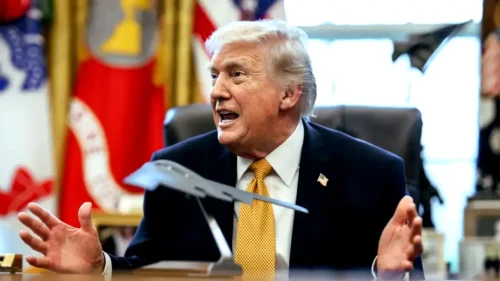
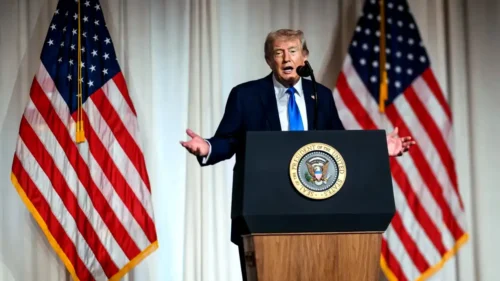
Next week, the heads of state of the world’s most advanced economies will gather in France for a high-stakes Group of Seven summit. For the leaders of the United Kingdom, France, and Germany, the gathering represents a crucial opportunity to execute a highly coordinated strategy: securing the buy-in of U.S. President Donald Trump for a new, European-led peace framework.
By presenting a unified front, European policymakers aim to convince the U.S. president to support a structured peace plan that would force Moscow to the negotiating table.
This European diplomatic push occurs at a time when Washington is almost entirely consumed by its intensifying military and economic conflict with Iran in the Middle East. Recognizing that the United States has less diplomatic energy to dedicate to Eastern Europe, the European powers are attempting to carve out a bigger role for themselves in shaping the future of global security.
The Shift in Momentum: Moving Beyond the Alaska Framework
The E3 nations—comprising the United Kingdom, France, and Germany—believe that the strategic landscape of the war has changed, creating a unique opening to push for a settlement on more favorable terms.
The Anchorage Legacy and the E3’s Challenge
A newly released report by Bloomberg recently revealed that the E3 believes the momentum of the war has shifted toward Ukraine, creating an opening for negotiations that would move far beyond the terms that emerged after Trump’s summit with Russian President Vladimir Putin in Alaska last year.
During that Anchorage summit, held on August 15, 2025, the U.S. and Russian presidents discussed a tentative framework to freeze the conflict.
However, European leaders have long been skeptical of those understandings, viewing them as too favorable to Moscow and a threat to Europe’s long-term security.
Led by British Prime Minister Keir Starmer, French President Emmanuel Macron, and German Chancellor Friedrich Merz, the E3 are determined to replace the Alaska framework with a more robust, European-designed plan.
They believe that Russia’s strategic position has weakened over the past year, giving the Western alliance more leverage to demand significant concessions from the Kremlin.
The Fifth Year of Attrition
The realities on the ground support this diplomatic confidence. The conflict, which began with the full-scale invasion in February 2022, has entered its fifth year.
Despite committing massive amounts of manpower and military hardware to the front lines, Russian forces are making almost no progress.
In May, Russian territorial gains hit their lowest point in years, with Moscow’s forces capturing a minuscule 14 square kilometers of Ukrainian land at the cost of catastrophic casualties.
At the same time, the Russian economy is showing severe signs of strain. While high oil prices driven by the war in the Middle East have provided a temporary boost to the Kremlin’s treasury, the domestic economy is struggling with high inflation, labor shortages, and rising fiscal deficits as the cost of sustaining the war machine continues to climb.
By launching a coordinated diplomatic offensive now, the E3 hopes to exploit these vulnerabilities and force Putin to realize that his economic and military situation will only deteriorate further if he refuses to negotiate.
The E3 Proposal: Ceasefires and Multinational Forces
To turn this strategic opportunity into a reality, European leaders have drafted a comprehensive peace proposal that combines immediate security measures with long-term guarantees for Kyiv.
The Sunday Summit in London
The E3 leaders set out the core details of their peace plan during a high-profile meeting with Ukrainian President Volodymyr Zelenskyy in London.
The joint statement issued after the talks outlined a clear, step-by-step pathway to end the active fighting:
First, the plan calls for an immediate, comprehensive ceasefire along the entire line of contact.
Second, the proposal specifies that the current front line must serve as the absolute starting point for formal peace negotiations, effectively freezing the two militaries’ positions.
Third, the E3 demands robust, legally binding security guarantees for Ukraine to ensure that Moscow cannot use a temporary pause in fighting to rearm and launch a fresh offensive in the future.
Robust Security Guarantees for Kyiv
The most significant and controversial element of the European plan is the inclusion of a multinational peacekeeping force to be deployed inside Ukrainian territory.
Under the E3 proposal, this international force, consisting of troops from European and allied nations, would monitor the ceasefire line and act as a highly visible deterrent against future Russian aggression.
The deployment of a multinational force represents a major departure from previous peace frameworks, which relied primarily on paper guarantees and promises of future aid.
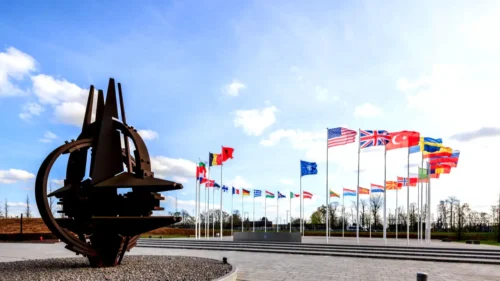
By placing European soldiers directly on Ukrainian soil, the E3 aims to create a physical tripwire. Any future Russian advance would immediately risk triggering a direct military confrontation with European powers, providing Ukraine with the highest level of security short of full NATO membership.
The Kremlin’s Refusal: Putin’s Stiff Opposition
Unsurprisingly, the E3’s ambitious peace proposal has faced immediate, hostile opposition from the Russian leadership, setting the stage for a major diplomatic clash at the upcoming G7 summit.
Rejecting the European Peace Plan
President Vladimir Putin has publicly and flatly rejected the European peace plan. In recent statements, the Russian leader argued that a ceasefire based on the current front lines would simply allow Ukraine to restock its depleted ammunition supplies, reinforce its defenses, and prepare for a future counteroffensive.
He reiterated that Russia will not accept a temporary pause in the fighting that does not address its core territorial and political demands.
Furthermore, Putin strongly opposed the deployment of European peacekeeping forces inside Ukraine.
The Kremlin views the presence of Western troops on its borders as a direct threat to its national security and an unacceptable expansion of European military influence.
Putin warned that the introduction of foreign soldiers into the combat zone would only increase the risk of a direct, catastrophic conflict between Russia and European powers.
The Dismissal of Zelenskyy’s Open Letter
The Russian leader has also dismissed European attempts to act as mediators in the conflict, pointing out that the E3 nations have consistently provided Ukraine with military and financial aid throughout the war.
Last week, Putin criticized European leaders, claiming they are clearly biased participants who cannot act as neutral arbitrators.
Putin also flatly rejected Zelenskyy’s direct offer to hold face-to-face peace talks.
The Russian president dismissed an open letter from the Ukrainian leader, calling it rude and intended to make personal meetings impossible.
Instead of accepting the European initiatives, Putin insisted that he would stand firm on the compromises discussed during his Anchorage meeting with Trump, declaring that European states should focus their efforts on convincing the authorities in Kyiv to agree to those compromises.
Ukraine’s Campaign: Bringing the War Closer to Home
While European diplomats prepare for the G7 summit, Ukrainian forces are actively working to strengthen their hand ahead of potential negotiations by taking the war directly to Russian soil.
The Deep-Strike Campaign Inside Russia
To increase the pressure on the Kremlin, Ukraine has launched a sustained and highly effective campaign of long-range strikes deep inside Russian territory.
Using advanced domestic drones and high-tech weaponry, Ukrainian forces are systematically targeting oil refineries, energy infrastructure, and military factories linked to defense production.
These deep strikes have succeeded in bringing the reality of the war closer to home for ordinary Russian citizens, disrupting domestic fuel supplies and exposing the vulnerabilities of Russia’s air defense networks.
By damaging Russia’s economic lifelines, Kyiv aims to prove to the Russian leadership that continuing the war of attrition will exact an increasingly heavy financial and physical toll on the Russian state.
Coordinated Economic War Sanctions
To complement Ukraine’s military pressure, the United Kingdom and the European Union are working on a fresh round of coordinated economic sanctions to impose on Russia in the coming weeks.
These new measures will target the shadow fleet of oil tankers that Russia uses to bypass international price caps, as well as foreign technology companies that continue to supply Moscow with critical dual-use components.
By combining new economic sanctions with Ukraine’s deep-strike campaign, the European allies hope to create a highly stressful economic environment for the Kremlin.
They believe that if Russia faces rising inflation, falling oil revenues, and constant drone attacks on its industrial infrastructure, Putin will eventually face domestic pressure to accept the E3’s invitation to the negotiating table.
Views: Can Europe Successfully Manage Trump’s Unpredictability?
The upcoming G7 summit represents a major test of Europe’s ability to manage its relationship with a highly unconventional and transactional U.S. president.
The Case for European Strategic Autonomy
Many European diplomats and international relations experts argue that the G7 summit in France is a critical moment for Europe to assert its strategic autonomy.
They contend that because Washington is distracted by its escalating military and economic conflict with Iran, Europe has a unique responsibility to take the lead in managing its own regional security.
Supporters of this view argue that the E3 plan is highly pragmatic.
By presenting Trump with a complete, structured peace framework that includes European boots on the ground, the E3 can appeal to the president’s desire to reduce American military commitments abroad.
They can argue that the European plan will allow the United States to focus its resources on the Middle East and Asia. At the same time, Europe assumes the primary burden of guaranteeing peace on its own continent. This proposal aligns perfectly with Trump’s long-standing demands for burden-sharing within the alliance.
The Skeptical View on Trump’s Unilateralism
In contrast, political realists and security analysts warn that the E3’s strategy is highly risky and could easily backfire.
They point out that Trump has consistently favored unilateral, personal diplomacy over multilateral frameworks like the G7.
If the president believes that the European plan is too restrictive or conflicts with his own Anchorage understandings with Putin, he may reject the E3 proposals outright.
Critics also warn that Trump’s unpredictable approach to foreign policy could leave Europe diplomatically isolated.
If Trump decides to negotiate a separate, unilateral deal with Putin that bypasses the European allies entirely, Brussels will have very little leverage to stop him.
Without U.S. backing, the E3 would struggle to enforce any ceasefire or deploy peacekeepers inside Ukraine in the face of Russian opposition, proving that Europe’s strategic autonomy remains highly dependent on American support.
Conclusion: Re-Engineering European Security
The E3’s diplomatic offensive ahead of the G7 summit in France represents a bold and necessary attempt to rewrite the rules of European security.
Faced with a stalled U.S. diplomatic channel and a grueling war of attrition on their doorstep, the leaders of the United Kingdom, France, and Germany are attempting to take control of their own security destiny.
While the challenges of securing Trump’s buy-in and overcoming Putin’s fierce opposition are immense, the stakes could not be higher.
The ghost of last year’s Anchorage agreements serves as a powerful warning to Brussels that if Europe does not actively shape its own peace, others will shape it for them.
As G7 leaders gather in France next week, the future of the Western alliance and the map of Eastern Europe will depend entirely on whether the E3 can successfully convince the U.S. president to stand with Europe in demanding a just, secure, and lasting peace.