

The long-standing diplomatic rivalry between East Asia’s two largest economies reached a tense new milestone over the weekend. Chinese Foreign Ministry spokesperson Lin Jian issued a sharp public warning, urging the international community to remain highly vigilant against a dangerous resurgence of neo-militarism in Japan. Speaking during a regular press briefing in Beijing, Lin declared that the government in Tokyo has officially torn off its self-styled mask of a “peaceful nation.” This heavy diplomatic broadside signals a fundamental collapse in bilateral relations, as China actively coordinates with other regional powers to contain Japan’s rapid rearmament.
The current war of words began after Japan’s government defended its defensive posture in response to a joint statement issued by China and Pakistan on May 26, 2026. Both nations signed the bilateral communiqué at the conclusion of Pakistani Prime Minister Shehbaz Sharif’s visit to Beijing, explicitly emphasizing the need to uphold the outcomes of World War II and to oppose any attempts to revive fascism and militarism firmly. Tokyo quickly took offense to the joint statement, releasing an official rebuttal asserting that Japan’s path as a peaceful nation under its “exclusively defense-oriented policy” remains entirely unchanged. However, Beijing flatly rejected Japan’s explanation, calling it a dishonest whitewash.
During his press briefing, Lin Jian laid out a highly detailed list of aggressive military moves that prove Tokyo is abandoning its post-war pacifist pledges. The spokesperson pointed out that Japan has continued to substantially increase its defense spending while systematically loosening long-standing restrictions on the export of lethal weapons. Furthermore, Beijing accuses Tokyo of advancing the deployment of medium- and long-range cruise missiles, expanding its offensive strike capabilities, and stockpiling large amounts of highly sensitive nuclear materials. Lin argued that these coordinated actions directly contradict Japan’s self-proclaimed status as a self-defense force.
This intense diplomatic friction coincides with a major, hawkish shift in Japan’s domestic political leadership. Since taking office, Prime Minister Sanae Takaichi—whom Chinese state media has labeled as the main spokesperson for Japan’s new militarism—has aggressively pushed to double the country’s defense budget to 2% of its gross domestic product. This massive, multi-billion-dollar military buildup, which will cost over $1 billion to complete, aims to establish a far more assertive and self-reliant military. During a security and defense policy panel, Takaichi openly warned that Japan must prepare for a potential “long-term conflict,” a statement that Beijing immediately condemned as dangerous wartime mobilization rhetoric.
A central concern for Beijing is the Takaichi administration’s ongoing campaign to revise Japan’s historic post-war Peace Constitution, specifically Article 9, which outlaws war as a means of settling international disputes. Conservative politicians in Tokyo have argued for decades that the pacifist constitution, which American occupying forces drafted in 1947, unnecessarily restricts the country’s sovereign right to defend its territory and support regional allies. By pushing to recognize the Self-Defense Forces as a legitimate standing military formally, the Japanese government aims to normalize its armed forces, a move that critics warn represents a complete betrayal of the country’s post-war peace pledges.
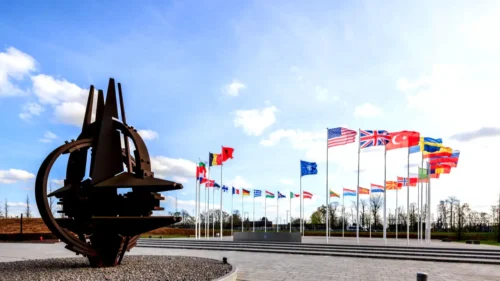
Beijing has also expressed serious alarm over Japan’s rapidly deepening military cooperation with organizations outside the Asia-Pacific region, most notably NATO. On June 1, 2026, Chinese officials strongly opposed Tokyo’s decision to dispatch several military officers from its Self-Defense Forces to the headquarters of the NATO Security Assistance and Training Program for Ukraine in Germany. Lin Jian argued that sending active troops to assist a NATO-led mission in Europe directly violates Japan’s pacifist charter and constitutes a dangerous move of “new militarism” disguised under the rhetoric of proactive pacifism.
In response to the mounting criticism from Beijing, Japanese Defense Minister Shinjiro Koizumi has forcefully rejected the “new militarism” label. Speaking to international delegates at the Shangri-La Dialogue security summit in Singapore, Koizumi pointed out the hypocrisy of China’s accusations, noting that the country labeling Japan as militaristic possesses a massive, modern arsenal of nuclear weapons and long-range strategic bombers. Koizumi asserted that Japan holds neither of these offensive systems, and maintained that Tokyo’s defensive buildup represents a necessary, proportionate reaction to secure its sovereign borders against rising regional threats, most notably China’s own maritime expansion.
As the geopolitical stand-off in East Asia continues to intensify, the war of words over Japanese rearmament reflects a deep, structural security dilemma. The rapid expansion of Japan’s military budget, which currently accounts for nearly 1.5% of the region’s total defense spending, has permanently transformed the balance of power in the Western Pacific. While Tokyo views its defensive buildup as a necessary deterrent to protect its territory, Beijing regards these actions as a dangerous revival of the imperialist past. Until the two regional powers can establish genuine security channels and build mutual trust, the skies and waters of East Asia will likely remain on the knife-edge of military tension.