

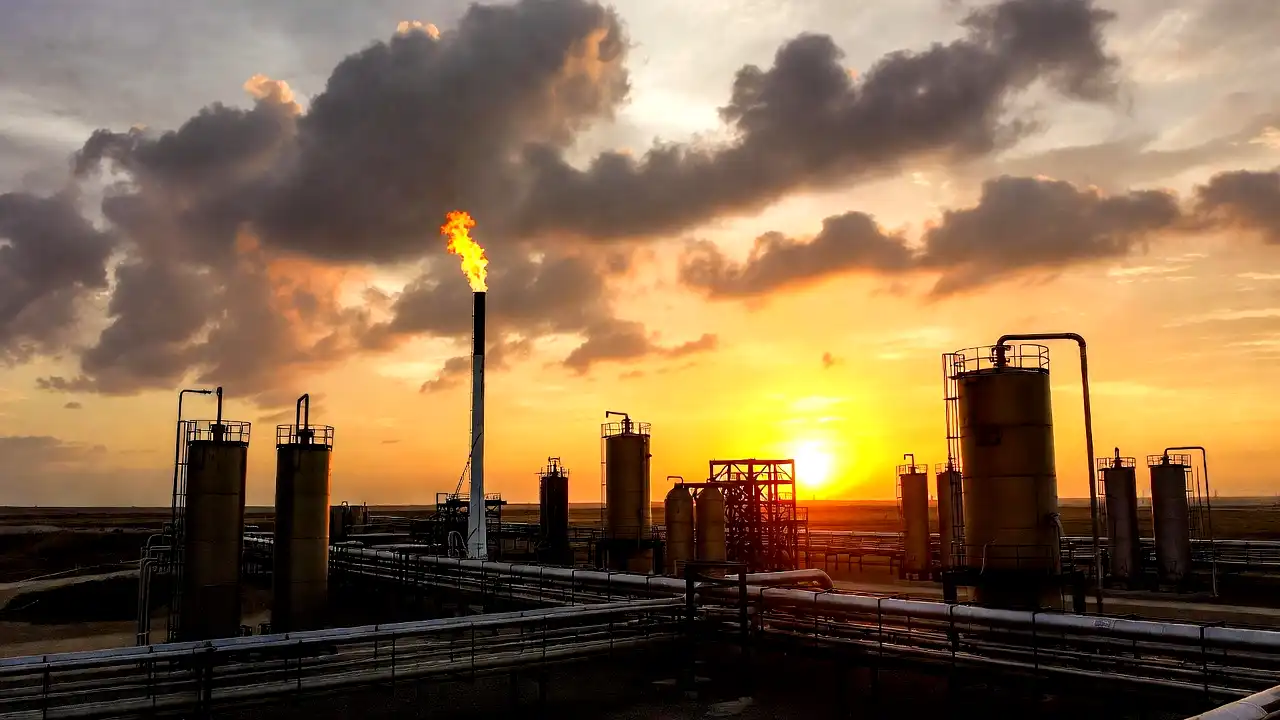
A powerful surge in domestic inventories has pushed U.S. energy prices to their lowest level in more than two weeks, halting a massive, weather-driven rally in its tracks. On Thursday, June 11, 2026, U.S. natural gas futures plummeted by over 3.5% after a government energy administration released its highly anticipated weekly storage report. The official data showed that domestic energy firms injected a much larger-than-expected volume of gas into underground storage over the previous week. This unexpected supply buffer completely overwhelmed the bullish market narrative of early-summer heatwaves, driving the benchmark front-month contract down to $3.07 per million British thermal units (MMBtu).
The sudden market sell-off was a direct response to the larger-than-expected inventory build. For the week ending June 5, 2026, the National Energy Administration reported a net injection of 108 billion cubic feet (Bcf) of natural gas into underground storage facilities. This actual storage injection easily surpassed the consensus forecast of financial analysts and trading desks, which had called for a much smaller build of approximately 101 Bcf. The 108 Bcf injection also represented a significant increase over the previous week’s 95 Bcf build, indicating that the market is accumulating reserves at an accelerating pace.
Following this latest weekly injection, the total volume of working natural gas in U.S. underground storage reached 2.686 trillion cubic feet. This substantial inventory level puts domestic stockpiles about 6% (or 151 Bcf) above the five-year historical average of 2.535 trillion cubic feet. Although the current storage surplus has gradually narrowed from the 10% peak recorded earlier in the spring, it remains comfortably high. The persistent inventory cushion serves as a powerful bearish wall, reassuring utility buyers that the country has more than enough physical gas to meet upcoming summer cooling demand without localized shortages.
The sudden price decline highlights a classic summer tug-of-war in the energy sector, where a bullish short-term weather story is running headlong into a bearish supply wall. On the bullish side, meteorological services project above-normal temperatures to spread across the United States through June 20, which will inevitably boost air conditioning use and raise electricity output by 3% over last year’s levels. However, the physical reality of comfortable storage levels and strong underlying supply has completely capped the summer heat bid. Investors realize that while the heat waves will increase gas consumption at power plants, the current inventory surplus remains too large to justify a sustained price rally.
The market’s oversupply has grown even more pronounced due to a temporary decline in U.S. liquefied natural gas (LNG) export capabilities. Over the first week of June, average outbound LNG export flows slipped to 16.5 billion cubic feet per day (Bcf/d), down from 17.1 Bcf/d in May. This drop in export demand was primarily due to planned seasonal maintenance at major liquefaction terminals in Texas, including Freeport LNG and Corpus Christi LNG. By temporarily restricting the volume of gas that can leave the country as LNG, these terminal maintenance projects have forced more fuel to remain in the domestic pipeline network, which represents nearly 1.5% of total yearly domestic consumption.
The continuous flow of gas from domestic drilling fields has also played a major role in keeping prices grounded. While the country’s overall gas production in the Lower 48 states declined slightly to 109.0 Bcf/d in June from May’s average of 109.7 Bcf/d, output remains historically high. This strong production has comfortably offset the decline in LNG exports and the rise in power plant consumption. Major domestic gas infrastructure projects, which currently require over $1 billion in annual capital investments, continue to move high volumes of fuel from gas-rich basins in Texas and Appalachia directly to consumer markets, ensuring that local supplies remain abundant.
What sets U.S. natural gas apart from almost every other global energy asset is its complete insulation from international geopolitical tensions. While global crude oil and European gas prices have experienced extreme volatility due to the ongoing military conflict between the United States and Iran, U.S. domestic natural gas remains strictly a local weather-and-storage story. The closure of the strategic Strait of Hormuz has cut off about 20% of global LNG supplies, driving up European prices to nearly 50 euros per MWh. However, because the U.S. market relies almost entirely on domestic pipelines rather than imported shipments, American gas prices have completely shrugged off the Middle East war premium.
As the market attempts to consolidate near the key technical support level of $3.08 per MMBtu, the near-term path for natural gas remains highly dependent on the weather. While the larger-than-expected 108 Bcf storage build has temporarily cooled the market, a prolonged, nationwide heatwave in late June could still deplete the storage surplus and trigger a secondary price rally. However, until LNG export terminals complete maintenance and global export flows return to normal levels, the massive domestic supply wall will continue to weigh on futures contracts. For now, U.S. energy markets will remain in a tight holding pattern, balancing high summer temperatures against a comfortable cushion of underground reserves.















