

In a decisive effort to contain the economic fallout of the conflict in the Middle East, the central bank of the single currency area has raised its interest rates for the first time in nearly three years. On Thursday, June 11, 2026, the Frankfurt-based institution announced a 25-basis-point interest rate hike across its three key benchmarks, reversing a prolonged easing cycle that defined its approach for much of 2025. The bold move aims to prevent a recent, war-induced surge in energy and gas costs from broadening out into long-term inflation. The central bank president, Christine Lagarde, strongly defended the rate increase, describing it as a robust decision that remains valid across three distinct economic scenarios.
The newly announced monetary tightening will impact borrowing costs across 21 European nations when the changes officially take effect on June 17, 2026. Under the new rate structure, the deposit facility rate—the primary tool through which the central bank steers the monetary policy stance—will rise to 2.25%, up from 2.00%. At the same time, the rate on main refinancing operations will increase to 2.40%, while the marginal lending facility rate will climb to 2.65%. By lifting these borrowing baselines, policymakers are sending a clear signal to commercial banks and corporate lenders that they will not tolerate a sustained rise in consumer price expectations.
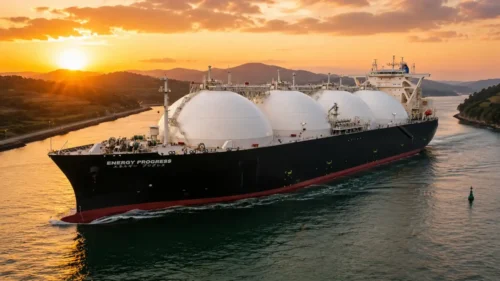
The central bank’s hawkish pivot is a direct response to a massive energy price shock triggered by the war in the Middle East, which has dragged on since late February. The ongoing military conflict has led to frequent, temporary closures of the strategic Strait of Hormuz, through which approximately 20% of the world’s daily oil supply normally passes. This maritime blockade has forced international shipping companies to completely reroute their vessels, driving up shipping costs and shaving nearly 1.5% off the region’s overall trade GDP. This severe disruption has pushed global crude oil prices past $95 a barrel, costing European energy importers over $1 billion in unexpected transit fees.
This escalating energy crisis has quickly trickled down to European consumers, pushing the regional inflation rate well beyond the central bank’s official 2% target. According to preliminary government statistics, annual consumer price inflation across the single currency area accelerated to 3.2% in May, up from 3.0% in April, marking its highest level since September 2023. This rapid acceleration was driven almost entirely by a spectacular 10.9% monthly surge in energy prices, which has also begun to feed into food, manufacturing, and transport costs. Core inflation, which strips out volatile energy and food prices to show long-term underlying trends, also ticked up to a concerning 2.5% in May.
Addressing reporters during a post-meeting press conference in Frankfurt, President Lagarde defended the rate hike as a highly calculated, necessary measure rather than a panicky “insurance hike”. She explained that the central bank’s staff had modeled three distinct short-term economic scenarios—mild, adverse, and severe—to map out how the Middle East shock might evolve. Under the mild scenario, oil prices would normalize quickly, bringing inflation below the 2% target by 2027. Under the adverse and severe scenarios, prolonged maritime blockades and rising geopolitical tensions would drive energy prices even higher, pushing inflation toward 5.0% and threatening a severe economic recession. Lagarde emphasized that the rate hike is robust across all three scenarios, ensuring the bank remains well-positioned to navigate the ongoing uncertainty.
Alongside its interest rate decision, the central bank released its updated quarterly macroeconomic projections, painting a sober picture of the Eurozone’s financial health. Reflecting the damaging impact of the war on real incomes and consumer confidence, the bank downgraded its 2026 economic growth forecast to a modest 0.8%, down from the 0.9% expansion it had projected in March. At the same time, the regulator raised its 2026 inflation forecast to 3.0%, up from the previous estimate of 2.6%, and warned that inflation will likely remain above its target through the first half of 2027. This subdued outlook indicates that Europe is entering a challenging period of stagflation, characterized by weak growth and high prices.
While the rate hike aims to protect long-term economic stability, it will inflict immediate financial pain on millions of retail mortgage holders across the continent. Financial experts warn that the rate increase will immediately impact customers with tracker mortgages, which are directly tied to the central bank’s benchmark rates. For an average family with a €150,000 outstanding balance on their tracker loan, the 25-basis-point hike will increase repayments by over €200 per year. For larger, standard home loans of €360,000, the rate hike will add approximately €50 extra to monthly repayments. If analysts’ predictions of two more rate hikes this year come true, families could face an extra €1,800 in annual borrowing costs.
The central bank’s decision to raise rates in a slowing economy has drawn sharp criticism from several prominent commercial economists and financial analysts. Critics point out that the Eurozone economy contracted by 0.2% in the first quarter of the year, proving that domestic demand and household consumption are already remarkably weak. Some independent analysts have openly labeled the rate hike as a major policy error, arguing that raising borrowing costs will not solve a supply-side energy shock but will instead suffocate what little economic growth remains. They warn that the central bank risks pushing the fragile region into a deep, self-inflicted recession by prioritizing inflation control over economic activity.
As the Eurozone prepares for a prolonged period of high interest rates, the chief policymaker’s defense of the rate hike underscores the immense challenges facing the global economy. The successful containment of the inflation surge depends entirely on whether the central bank can steer the region through the ongoing Middle East crisis without causing a severe economic contraction. While the newly modeled scenarios have provided a robust framework for monetary policy, the reality on the ground remains highly volatile. Until diplomatic efforts can secure a permanent peace treaty and fully reopen the Strait of Hormuz, Europe’s economy will remain caught in a delicate balancing act between high interest rates and sluggish growth.