
The financial atmosphere across the United States is showing its first major sign of relief after months of intense pressure. For much of the year, American households have faced a challenging combination of persistent inflation, rising interest rates, and a volatile military conflict in the Middle East that threatened to push energy costs to record-high levels.
In a highly encouraging development, the preliminary June reading of the University of Michigan’s Consumer Sentiment Index has surpassed Wall Street analysts’ expectations, marking a solid rebound from the historic lows recorded in May.
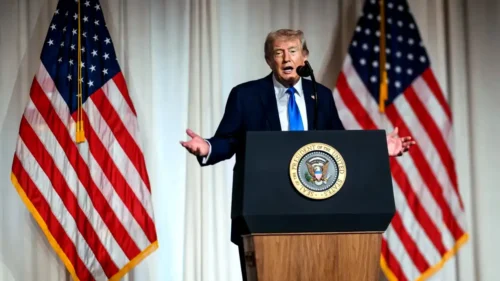
The positive shift in household mood is closely linked to a sudden and dramatic turnaround in global diplomacy. Following months of escalating military operations and mutual strikes, U.S. President Donald Trump canceled planned airstrikes against Iran and announced that a potential peace agreement could be signed as soon as this weekend in Europe.
This unexpected diplomatic opening triggered an immediate drop in international oil prices, easing extreme price anxiety that has squeezed household budgets and bringing a welcome wave of economic optimism back to the American consumer.
The June Data: Breaking Down the Rebound
The latest economic indicators suggest that while the American consumer remains highly cautious, the extreme pessimism of the spring is beginning to lift.
Beating the Consensus of Forty-Six
The preliminary June release of the Michigan Consumer Sentiment Index showed a significant uptick, with the headline index at 48.9.
This development represents a substantial beat over the market consensus, as most economists and financial analysts had predicted a modest improvement to only 46.0.
The 48.9 reading marks a solid recovery from May’s final print of 44.8, which was the lowest point in the survey’s modern history, falling even below the previous record low set during the peak of the inflation shock in June 2022.
While a reading of 48.9 remains very low relative to the survey’s long-term historical average of 84.5, the direction of the movement is highly significant for the market.
After three consecutive months of declining confidence, the June rebound proves that the downward spiral in consumer mood has finally broken, offering a ray of hope to retailers, manufacturers, and service providers who depend on consumer spending to keep their businesses profitable.
The Current Conditions and Expectations Sub-Indices
The overall improvement in sentiment was supported by positive movements across both of the survey’s primary sub-indices:
- Current Economic Conditions: The sub-index measuring how consumers view their personal financial situation rose to 51.8, up from 50.3 in the previous month. This improvement suggests that some of the immediate cash-flow pressures on families are beginning to ease.
- Consumer Expectations: The sub-index tracking consumers’ short-term outlook for business, labor, and personal income conditions six months from now jumped to 47.1, up from May’s deeply depressed reading of 44.1. This significant increase shows that households are increasingly hopeful that the worst of the economic crisis may finally be behind them.
The Geopolitical Trigger: Trump’s Diplomatic U-Turn and the Oil Price Slide
The primary force driving this sudden recovery in consumer confidence is not a change in domestic fiscal policy, but the rapid shifts of international geopolitics in the Middle East.
The Shadow of the Strait of Hormuz
To understand why consumer sentiment had collapsed so dramatically in May, one must look at the direct impact of the U.S.-Iran war on American households.
Following the outbreak of hostilities in February, Iranian forces and U.S. naval units engaged in a tense military standoff that led to the effective closure of the Strait of Hormuz.
Because this narrow waterway serves as the primary corridor for a large portion of the world’s oil supply, the blockade triggered a massive global energy crisis.
For ordinary Americans, this international conflict translated directly into an expensive reality at local gas stations, where average fuel prices exceeded $4.00 per gallon for more than two consecutive months.
Because fuel is an essential, non-discretionary purchase for most working families, this sudden spike in energy costs imposed a direct tax on household budgets, forcing lower- and middle-income consumers to divert disposable income to the gas pump and leaving them deeply pessimistic about their financial future.
The Quick Turnaround in Geopolitical Risk
This cycle of energy-driven inflation changed direction dramatically after the president’s sudden diplomatic U-turn.
Only hours after threatening to launch highly destructive strikes against Iranian infrastructure, President Trump canceled the planned military operations and announced that negotiators were working to finalize a memorandum of understanding, with a potential signing scheduled for this weekend.
This sudden diplomatic opening had an immediate, stabilizing impact on global financial markets.
International Brent crude oil prices fell sharply from their peak near $120 a barrel, dropping to a two-month low.
As energy traders priced out the immediate risk of a major war, wholesale gasoline prices began to slide, providing a massive psychological boost to American consumers who realized that the expensive energy squeeze at the gas pump might finally be coming to an end.
The Spending Disconnect: Resilient Cash Registers
The rebound in consumer sentiment is helping resolve one of the most puzzling economic contradictions of the year, which economists call the spending disconnect.
How Americans Feel versus How They Spend
For the past several months, retail analysts have grappled with a significant anomaly in consumer behavior.
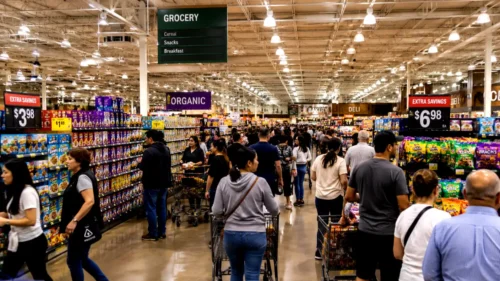
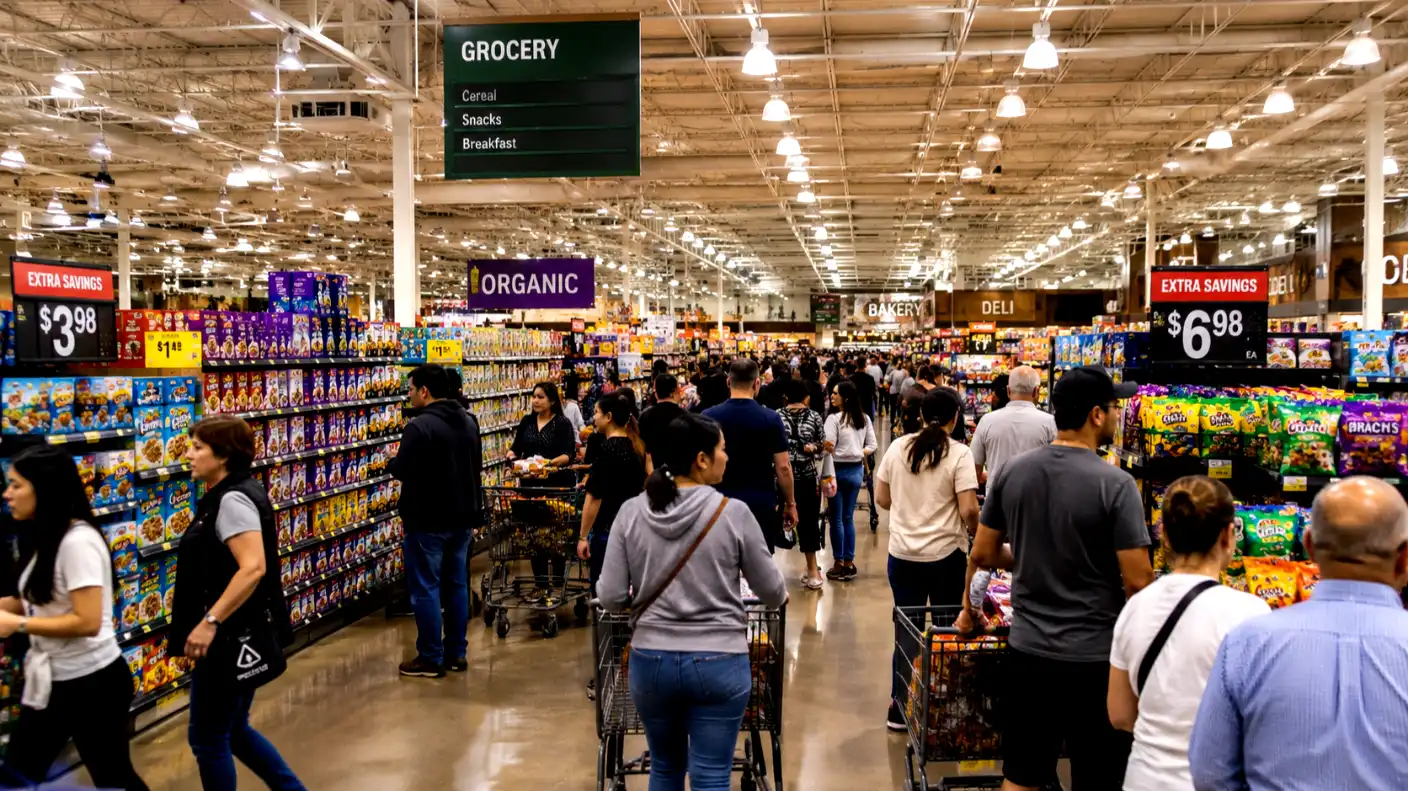
While the University of Michigan’s survey showed that consumer sentiment had collapsed to an all-time low of 44.8 in May, actual consumer spending remained remarkably robust.
Retail and food services sales rose to $757.1 billion, representing a steady 0.5% monthly increase, while overall personal consumption expenditures ran at a high $21.98 trillion annualized pace.
This disconnect created significant confusion on Wall Street.
Normally, when consumer sentiment collapses to near-record lows, households pull back on their discretionary spending, causing a sharp contraction in retail sales and triggering a broader economic slowdown.
In this case, however, the cash registers kept ringing, proving that while Americans felt deeply pessimistic about the long-term outlook, they were still willing and able to spend money in the short term.
The Safety Net of Larger Tax Refunds
Economists point out that several temporary financial cushions supported this resilient spending.
Most notably, many American households received larger-than-usual tax refunds, providing a temporary cash buffer that allowed them to maintain their spending patterns despite rising costs.
However, as we move further away from the tax season and those refund checks are fully spent, the risk of a severe pullback in consumer spending remains high.
With average gasoline prices remaining above $4.00 a gallon for over two months, lower- and middle-income families have had to exhaust a significant portion of their savings to cover basic fuel and utility costs.
In this context, the recent decline in oil prices and the corresponding rebound in consumer sentiment are essential to prevent a sharp contraction in retail spending during the crucial summer months, ensuring that the domestic economy does not slip into a consumer-led recession.
Inflation Expectations and the Fed’s Next Move
While the rebound in consumer confidence is highly positive for the retail sector, it introduces new, highly complex challenges for the nation’s central bank.
Evaluating the Labor Market and Realized Prices
The broader economic backdrop remains highly mixed. On one hand, the U.S. labor market remains stable, with the national unemployment rate holding steady at 4.3%.
This low unemployment rate ensures that most households still have a steady source of income, providing a solid foundation for consumer spending.
On the other hand, actual realized prices remain stubbornly high.
The latest Producer Price Index data revealed that wholesale prices rose by 6.5% year-on-year, driven primarily by energy pressures associated with the war in the Middle East.
While the core Producer Price Index—which excludes volatile food and energy costs—rose by a more moderate 0.4% month-on-month, the overall high cost of raw materials and wholesale goods continues to feed into retail prices, keeping pressure on the consumer.
The Dilemma for Chair Kevin Warsh
This mixed economic picture has created a dilemma for the Federal Reserve.
The central bank, led by newly appointed Chair Kevin Warsh, is preparing for a highly anticipated policy meeting to update its economic projections and determine the future path of interest rates.
While the recent uptick in consumer sentiment and the drop in oil prices reduce the immediate risk of an inflationary spiral, the Fed remains highly concerned about long-term inflation expectations.
In May, year-ahead inflation expectations edged up to 4.8%, while long-run expectations rose to 3.9%.
These figures are closely monitored by central bank policymakers, who worry that if consumers expect prices to remain high in the long term, they will demand higher wages, creating a self-reinforcing wage-price spiral that would be exceptionally difficult to break.
With consumer spending remaining resilient and inflation expectations still elevated, the Federal Reserve is highly likely to hold interest rates steady at their current high levels, keeping borrowing costs high for businesses and homeowners.
While the drop in oil prices provides immediate relief, the Fed must remain cautious, recognizing that any premature interest rate cuts could reignite inflation and undo the progress made over the past year.
Conclusion: The Fragile Road to Recovery
The preliminary June consumer sentiment reading is a highly positive milestone for the U.S. economy, demonstrating that international diplomacy and declining energy costs can have an immediate, beneficial impact on household mood.
By beating expectations and rising to 48.9, the index has demonstrated that the American consumer is ready to embrace a more optimistic economic outlook if the geopolitical pressures of the Middle East continue to ease.
However, as the nation heads toward the second half of the year, the economic recovery remains highly fragile.
The actual signing of a comprehensive peace agreement between the United States and Iran remains uncertain, and any sudden breakdown in the negotiations could quickly reverse the recent decline in oil prices and push consumers back into extreme pessimism.
In a highly interconnected global economy, the financial health of the American household remains deeply tied to international events, and securing long-term economic stability will require both disciplined monetary policy at home and successful, steady diplomacy abroad.