

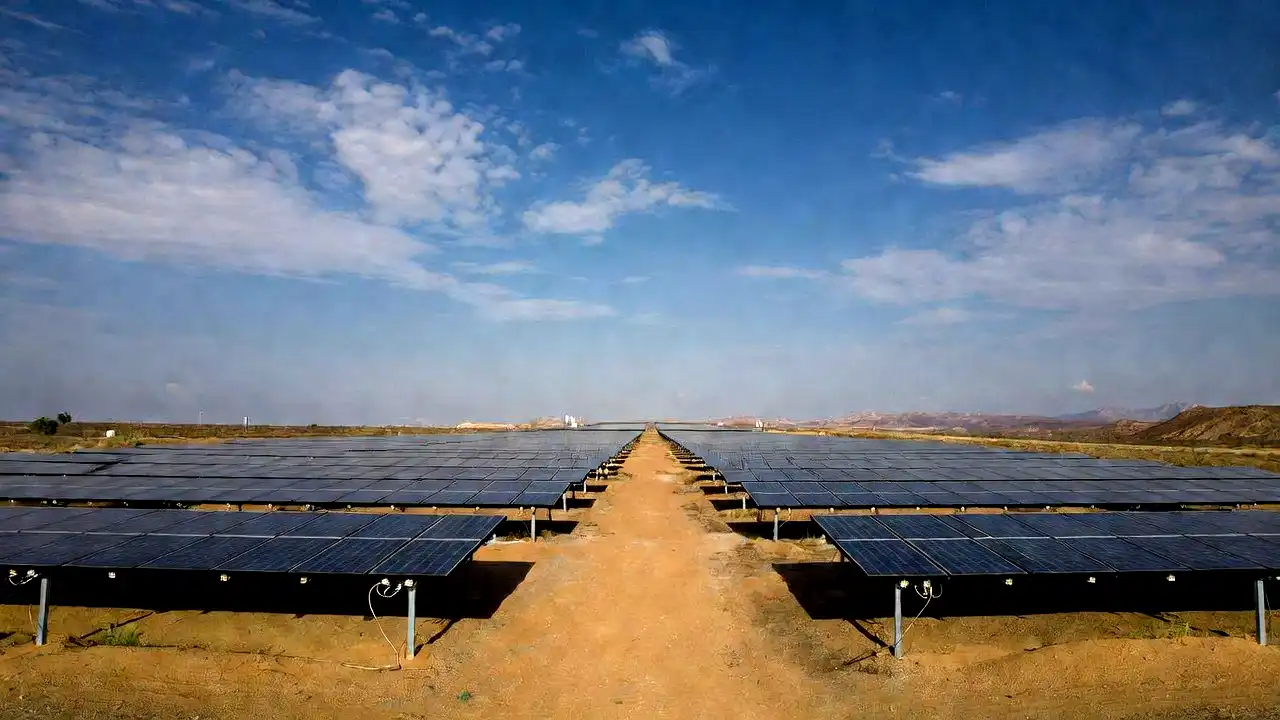
One of the largest corporate transactions in the South Asian renewable power market is nearing the finish line as a major domestic conglomerate edges out global rivals to secure a highly prized asset. Industrial giant Aditya Birla Group has emerged as the selected bidder to buy Pune-based Sprng Energy, the Indian clean energy unit of British oil and gas multinational Shell. According to people familiar with the development, the Indian multi-business conglomerate has entered into an exclusive negotiation phase to finalize the acquisition. The potential transaction, estimated to be worth upwards of $1.7 billion, marks a massive step forward for the region’s rapidly growing green energy market and underscores the shifting strategies of global energy giants.
The acquisition represents a massive win for the Kumar Mangalam Birla-led conglomerate, which is pursuing an aggressive expansion strategy to build a world-class renewable power platform. Operating through Aditya Birla Renewables, a subsidiary of the publicly listed group entity Grasim Industries, the group wants to rapidly scale its clean energy capacity beyond the 10 GW mark in the coming years. Securing Sprng Energy’s massive portfolio allows the conglomerate to instantly establish itself as a heavyweight player in the sector, bypassing the long and risky process of building solar arrays and wind installations from scratch.
While the deal represents a major milestone for the Indian buyer, it signals a complete strategic recalibration for the seller. Shell acquired Sprng Energy from investment firm Actis in 2022 for $1.55 billion, marking what was then a high-profile pivot toward low-carbon assets. However, under the leadership of Chief Executive Officer Wael Sawan, the company has pivoted back toward high-margin core fossil fuel businesses, including liquefied natural gas trading and deep-water oil exploration. As part of this capital reallocation program, the company has reviewed its global low-carbon investments and decided to divest lower-margin green utility businesses where it cannot establish a clear competitive edge.
The asset up for sale is widely regarded as one of the highest-quality clean energy platforms in South Asia. Sprng Energy currently boasts a total portfolio of approximately 2.9 GWp, which includes 2.1 GWp of fully operational solar and wind installations and another 0.8 GWp of contracted assets. Additionally, the company has a massive pipeline of under-development projects totaling roughly 7.5 GWp across several Indian states. This substantial under-construction capacity will directly support the Indian government’s highly ambitious national target of establishing 500 GW of non-fossil fuel electricity generation capacity by the end of 2030.
Securing the exclusivity period was no easy feat, as the asset attracted intense interest from some of the world’s most powerful investment houses. Global private equity giant KKR emerged as the other finalist in the race, submitting a highly competitive binding bid that pushed the valuation close to the $1.7 billion mark. Earlier stages of the bidding war also drew interest from Actis, the original founder of the platform, as well as a powerful consortium led by India’s National Investment and Infrastructure Fund and Singapore’s sovereign wealth fund Temasek. By outmaneuvering these deep-pocketed institutional bidders, the Indian conglomerate has demonstrated its determination to dominate its domestic utility market.
With the initial selection complete, the transaction has officially entered a crucial and highly sensitive phase. According to people close to the negotiations, the Indian conglomerate has secured a three-to-four-week exclusivity window to perform exhaustive due diligence on the Pune-based firm. During this period, teams of corporate lawyers, accountants, and engineers will inspect Sprng Energy’s financial records, verify the operational efficiency of the existing solar and wind farms, and review the legal stability of its long-term power purchase agreements with state-owned utility distribution companies. Only after this rigorous review is complete will both parties proceed to sign a definitive share purchase agreement.
Despite the strong commercial interest, the path to finalizing the deal has not been entirely smooth, and both parties had to adjust their original financial expectations. Initially, investment bank Barclays, acting as the sell-side financial advisor for the British seller, had targeted a valuation closer to the $2 billion mark. However, potential buyers pushed back during the initial screening rounds due to concerns over project delays and rising material costs on under-construction pipelines. In some cases, historical power purchase agreements may require renegotiation with local grid operators, prompting bidders to submit cautious, performance-linked valuations that settled the final price around the current $1.7 billion range.
This mega-deal is unfolding against the backdrop of a massive, state-sponsored green transition that is drawing hundreds of billions of dollars of foreign and domestic investment into India. With a rapidly growing population and a booming industrial sector, the country faces a dramatic surge in national grid capacity demands over the coming decade. To prevent severe power shortages while meeting its international carbon reduction targets, the government has introduced highly supportive policies, including massive tax incentives and guaranteed grid access for green energy producers. This positive regulatory environment has triggered a wave of consolidation, as domestic giants buy up smaller developers to gain scale.
Ultimately, the $1.7 billion transaction represents a major success for both companies as they adjust to a highly complex global economic environment. For the British seller, the divestment successfully frees up valuable capital to strengthen its balance sheet and fund high-yield fossil fuel projects, satisfying shareholders who demand immediate cash returns. For the Indian buyer, the acquisition provides a robust, pre-built green engine that will power its industrial operations and accelerate its corporate sustainability goals. As the final due diligence process gets underway in Pune, the global energy industry is watching closely, knowing that the outcome of this deal will set the pace for future green utility transactions across emerging markets.















