
A historic wave of optimism is currently sweeping through global financial centers as the trading week begins. In early morning trading, U.S. stock futures rocketed higher, signaling a massive relief rally across all major indexes. After navigating months of intense geopolitical tension, sticky inflation, and volatile energy costs, investors are finally seeing a confluence of positive milestones that could permanently reshape the trajectory of the market.
This is shaping up to be one of the most decisive weeks for global equities and financial assets in the first half of the year. The complete resolution of the war in the Middle East, a highly anticipated central bank meeting, a historic corporate listing, and a crucial currency battle in Asia are all occurring simultaneously, creating a highly dynamic environment for trading desks.
This article explores the five critical forces that investors must understand as the stock market opens, analyzing the hard numbers, corporate moves, and macroeconomic calendars that will dictate market movements over the coming days.
The Iran Peace Deal: Reopening the Global Energy Artery
The primary driver behind Monday’s massive pre-market surge is a historic diplomatic breakthrough that has brought a sudden, peaceful end to one of the most dangerous military conflicts of the decade.
Trump’s Late-Night Announcement
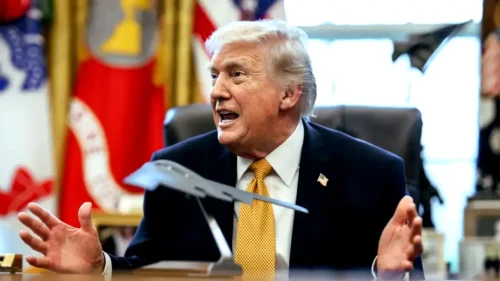
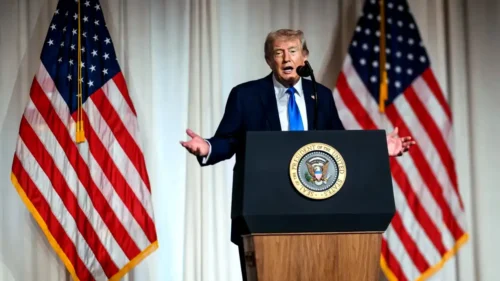
The global energy and financial markets received a powerful boost late on Sunday evening. President Donald Trump announced on social media that the peace agreement with Iran is now complete, bringing an end to the destructive three-month war that began in late February.
“Ships of the World, start your engines. Let the oil flow!” the president posted, signaling a rapid return to normal maritime commerce in the Gulf.
According to international diplomatic trackers, Pakistan Prime Minister Shehbaz Sharif confirmed that the official signing ceremony will take place on Friday in Switzerland.
The agreement establishes a 60-day window for technical negotiations regarding Iran’s nuclear and ballistic missile programs, while ordering an immediate halt to all hostile actions at sea.
The Immediate Slide in Oil Prices
This major geopolitical breakthrough has had an immediate, stabilizing impact on global energy markets. International Brent crude oil prices, which had climbed past $120 a barrel at the height of the war, fell sharply to a two-month low.
As energy traders priced out the immediate risk of war, wholesale fuel and commodity prices began to slide, providing an immediate boost to equity futures.
The expected reopening of the Strait of Hormuz is the key operational catalyst. The narrow waterway, through which approximately 20% of the world’s daily oil supply passes, has been closed to commercial shipping for roughly 100 days.
The complete resolution of the blockade is expected to release millions of barrels of stranded Gulf crude, immediately easing global energy supply pressures, lowering fuel costs for consumers, and lifting market sentiment as systemic inflation fears subside.
Kevin Warsh’s First FOMC: The Dot Plot Dilemma
While the end of the Middle East war is a massive positive for long-term inflation, investors are focusing their attention on Washington, where the Federal Reserve is preparing to host a highly anticipated policy meeting.
Holding the Fed Rate at Three Point Five Percent
The Federal Open Market Committee will begin its two-day policy meeting on Tuesday. This represents the first interest rate decision under the leadership of newly appointed Fed Chair Kevin Warsh, making it a critical test of the central bank’s communication strategy.
Financial markets have priced in a near 99% probability that the Federal Reserve will hold the federal funds rate steady in its current range of 3.50% to 3.75%.
Because a rate hold is virtually certain, investors are looking past the immediate decision and focusing entirely on the Fed’s forward-looking guidance, specifically the “dot plot” and the Summary of Economic Projections.
The Hawkish Inflation Threat
The Fed faces a difficult balancing act. While the end of the war in the Gulf will eventually lower energy costs, the current U.S. inflation rate remains sticky at 4.2%, and the domestic labor market remains tight.
If Chair Kevin Warsh shifts the central bank’s tone away from an easing bias toward a neutral or hawkish stance to combat persistent service-sector inflation, it could trigger massive volatility in bond and equity markets.
Investors will closely analyze the Fed’s fresh dot plot on Wednesday afternoon, looking for clues on whether policymakers still expect to cut interest rates later in the year, or if they plan to keep borrowing costs elevated well into the future.
SpaceX Historic Debut and the AI Momentum
The technology and semiconductor sectors are also experiencing a major surge in momentum, driven by a historic public listing and strong credit upgrades for the world’s most valuable technology companies.
Elon Musk Becomes the First Trillionaire
The financial community is still processing the massive trading volume generated by the public debut of SpaceX.
The rocket and satellite communications giant went public under the ticker symbol SPCX, raising a record-breaking $75 billion at a fixed price of $135 per share.
This massive transaction valued the company at a historic $1.75 trillion, making it the largest initial public offering in global history.
The successful listing has had a profound impact on the global wealth rankings.
By retaining a dominant equity stake in the newly public aerospace giant, Elon Musk has officially become the world’s first trillionaire.
The successful debut has also triggered a massive wave of retail and institutional interest, as investors scramble to secure a piece of the historic offering, further boosting trading volumes across all major exchanges.
S&P Upgrades Nvidia Amid Insatiable Demand
At the same time, the artificial intelligence and semiconductor sectors are trading significantly higher on Monday morning.
Shares of major AI chip manufacturers—including Nvidia, AMD, Intel, Micron, and Broadcom—registered strong gains in pre-market trading, driven by positive regulatory and credit updates.
Most notably, S&P Global Ratings upgraded Nvidia’s credit rating, citing the insatiable demand for its advanced graphics processors and AI hardware.
The credit agency noted that Nvidia’s dominant position in the AI hardware market has given the company exceptional cash-flow generation and financial stability, reassuring investors that the massive global buildout of artificial intelligence infrastructure is continuing at a rapid pace.
The Bank of Japan’s Historic Fight to Defend the Yen
As Western markets open, a major financial and currency battle is already underway in Asia, where the Bank of Japan is hosting a highly anticipated policy meeting.
Yen Weakness Reaches a Multi-Decade Low
The Japanese yen has faced intense, persistent pressure in foreign exchange markets, driven by the massive interest rate differential between Japan’s near-zero rates and the high borrowing costs in the United States.
The U.S. dollar recently surged to a multi-decade high of 160.57 yen, prompting Japanese authorities to intervene directly in the currency markets to defend their currency from further devaluation.
On Monday, the U.S. dollar was trading at a highly elevated 160.09 yen.
With the Bank of Japan’s policy meeting currently underway and a rate decision due on Tuesday, the currency markets are bracing for a historic shift in Japanese monetary policy.
A Rate Hike Not Seen Since 1995
The pressure on the Bank of Japan to take decisive action is immense.
A survey of 70 prominent economists revealed that 94% expect the central bank to hike its benchmark interest rate by 25 basis points, pushing the policy rate to 1.00%.
This represents an extraordinary milestone for the Japanese economy, which has not seen an interest rate of 1.00% since 1995, as the central bank emerged from its long era of negative interest rates.
By raising rates, the BOJ hopes to narrow the yield differential with the United States, support the yen, and combat domestic inflation driven by expensive imports.
However, because the Fed is also deciding on interest rates on Wednesday, any mismatch in the messaging of the two central banks could trigger massive, erratic movements in the foreign exchange market, making the USD/JPY pair a central focus of global trading desks this week.
Marvell Technology’s CFO Transition and the Shortened Week
In the corporate world, a major executive transition at one of the world’s largest semiconductor designers is drawing significant attention from analysts on Monday morning.
Dan Durn Takes the Reins as CFO
Effective Monday, Dan Durn officially assumes the role of Chief Financial Officer at Marvell Technology.
Durn, who previously served as the highly respected finance chief and Executive Vice President of Adobe, resigned from Marvell’s board of directors to take up the executive post.
The transition is being viewed by Wall Street analysts as a major win for Marvell and a significant loss for Adobe.
To reassure the market, Marvell’s leadership issued a statement reaffirming its strong financial outlook for the second quarter, indicating that the transition will be seamless.
Analysts at B. Riley responded to the news by raising their price target on Marvell stock to $345 from $240, keeping a strong buy rating on the shares and driving the stock higher in pre-market trading.
Planning for the Juneteenth Shortened Week
As investors navigate these major corporate and central bank milestones, they must also adjust their trading strategies to accommodate a shortened business calendar.
U.S. stock markets will be completely closed on Friday, June 19, in observance of the Juneteenth federal holiday.
This holiday closure compresses the entire week’s heavy economic agenda into just four trading sessions.
Investors must digest the Empire State Manufacturing Index, Housing Starts, May Retail Sales, and a wave of corporate earnings reports—including highly anticipated releases from FedEx, Kroger, and Lennar—within a highly compressed timeframe, increasing the potential for sharp, end-of-week volatility.
Conclusion: Navigating a Week of Historic Milestones
The opening of the stock market on Monday morning represents a historic and highly encouraging moment for global financial markets. By bringing a peaceful end to the war in the Middle East, launching the largest public debut in history, and preparing for decisive central bank meetings in Washington and Tokyo, the global economy is entering a period of significant rebalancing.
While the shortened trading week will undoubtedly bring heightened volatility as investors digest a compressed economic agenda, the underlying momentum of the market remains strong.
As the trading bell rings and the first transactions go through, the performance of major indexes will serve as a vital case study in the resilience of modern capitalism, proving that when geopolitical conflicts are resolved and innovation is rewarded, global markets remain fully capable of reaching historic heights.