

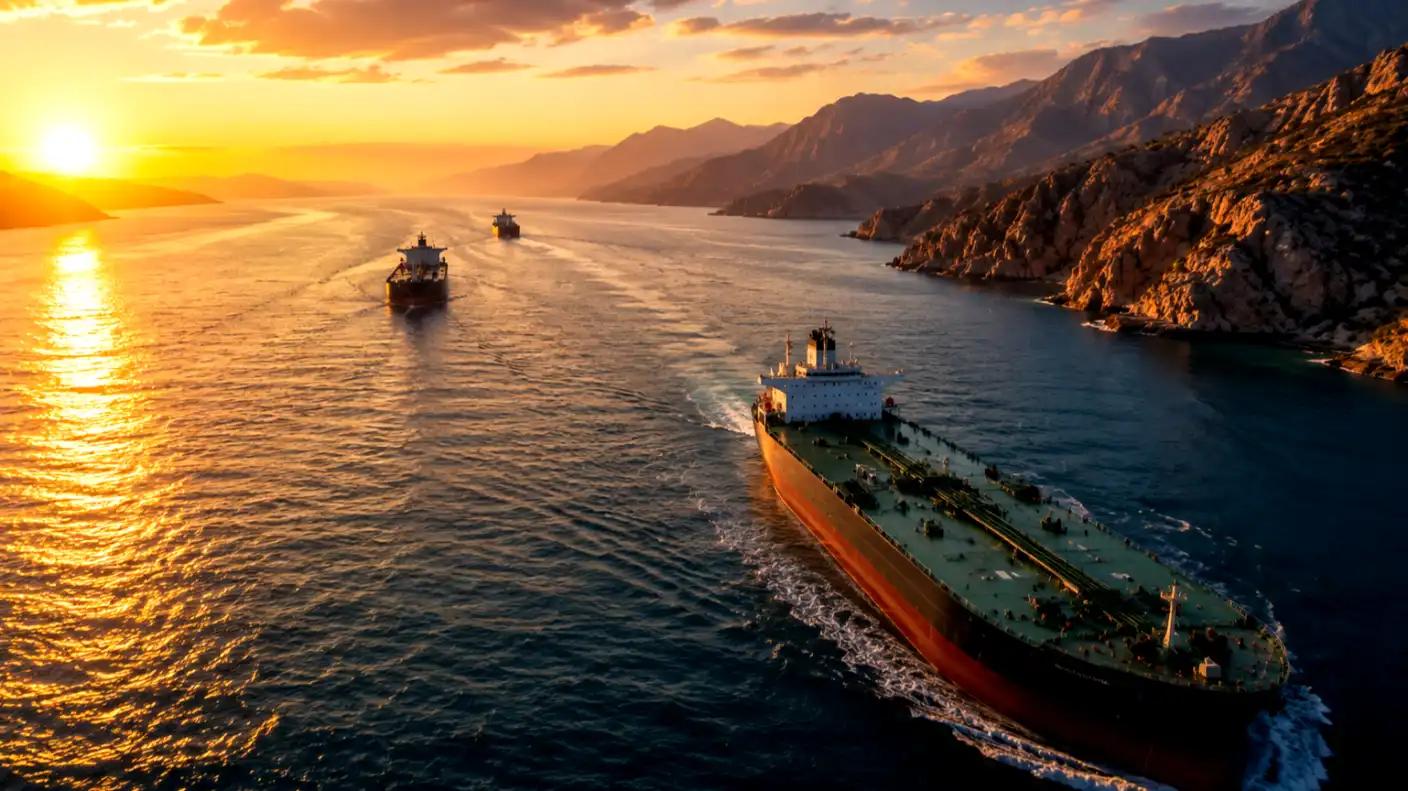
The United States and Iran have reached a critical diplomatic breakthrough, agreeing to a preliminary memorandum of understanding that will temporarily halt their four-month military conflict and immediately reopen the world’s most vital energy shipping lane. Under the negotiated terms of the deal, the strategic Strait of Hormuz will operate completely toll-free for an initial 60-day period. While the agreement has brought immediate relief to a volatile global economy, the long-term future of the waterway remains highly uncertain. Officials from Washington and Tehran are already expressing sharply divergent views on what happens after the initial 60-day window expires, setting the stage for intense and potentially combative technical negotiations.
The initial news of the breakthrough emerged over the weekend and gained rapid momentum as the American president arrived in Evian, France, for the annual G7 leaders’ summit. Speaking to a group of international reporters alongside the French presidency on Monday, the president claimed that the Strait of Hormuz is already partially open and that commercial cargo ships are beginning to transit the passage under close monitoring. He declared that the vital trade corridor will fully reopen on Friday, June 19, immediately following a formal, in-person signing ceremony between top negotiators in Switzerland. Pakistani diplomats, who served as the primary mediators for the high-stakes peace talks, confirmed that the official text of the memorandum will become public shortly after the signing.
To get the deal across the finish line, both nations agreed to a temporary compromise regarding transit charges through the narrow waterway, which normally carries nearly a fifth of the world’s petroleum and liquefied natural gas exports. Under the terms of the memorandum of understanding, Iran has agreed to allow completely free, toll-free passage for all commercial vessels during the initial 60-day negotiation period. In return, the United States has pledged to lift its heavy naval blockade on Iranian ports, allowing the Persian Gulf nation to resume its domestic exports. This temporary calm aims to provide enough stability to allow shipping firms to re-establish their transit lanes and resume normal operations.
Despite the temporary agreement, the long-term status of the Strait is already becoming a major point of political contention. In a national television interview on Monday morning, U.S. Vice President JD Vance emphasized that Washington expects the waterway to remain permanently open without any transit charges. He asserted that a permanently toll-free passage represents a non-negotiable term for the long-term stabilization of global energy flows, stating that this expectation would guide the upcoming technical negotiations. The vice president added that any attempt to charge commercial vessels to transit international waters would violate maritime law and undermine the foundation of the peace pact.
In sharp contrast to Washington’s long-term expectations, official statements from Tehran suggest that Iran plans to assert significant control over the waterway once the initial 60-day window closes. A spokesperson for the Iranian foreign ministry stated on Monday that the country does not view its future transit policies as standard commercial tolls. Instead, the ministry argued that the final peace deal must recognize Iran’s legal right to collect “maritime service fees” and environmental transit charges from commercial ships navigating its territorial waters. Furthermore, state-aligned media outlets close to the Islamic Revolutionary Guard Corps reported that while passage will remain free during the initial 60-day period, permanent fees could be applied to non-allied vessels once the technical talks conclude.
The dispute over maritime fees links directly to deeper, unresolved conflicts over financial reparations and economic sanctions. Iranian officials are demanding full sanctions relief and direct access to a massive “reconstruction fund” worth up to $300 billion to repair the severe physical damage caused by recent U.S. and Israeli airstrikes. Additionally, Tehran is seeking the immediate release of up to $24 billion in frozen central bank assets currently held in foreign accounts. However, the American vice president strongly pushed back against these demands, emphasizing that the U.S. has built a strict “two-step verification process” into the deal. He clarified that Iran will receive no sanctions relief or access to frozen assets until it demonstrates full compliance with its non-proliferation obligations.
The most difficult challenge facing negotiators during the upcoming 60-day window is the future of Iran’s controversial nuclear program. The temporary peace agreement gives the two nations exactly 60 days to negotiate a permanent settlement regarding Tehran’s massive stockpile of highly enriched uranium. This core issue has remained a primary source of geopolitical friction since the United States unilaterally withdrew from a previous 2015 nuclear accord, setting the stage for the current conflict. The American president has already issued a stern warning, telling reporters that his military will immediately resume strikes on Iranian facilities if negotiators fail to reach a verifiable nuclear agreement before the 60-day ceasefire expires.
The mere prospect of a reopened shipping corridor has already triggered a dramatic drop in global commodity markets, providing much-needed relief to inflation-weary consumers. On Monday, global oil prices plunged to their lowest levels since early March, with Brent crude futures falling 4.2% to settle at $83.68 per barrel, and U.S. West Texas Intermediate dropping 4.9% to close at $80.75 per barrel. Market analysts noted that the rapid sell-off represents the aggressive unwinding of the geopolitical risk premium that traders had built into energy prices over the past four months. However, experts warn that the drop may be premature, as it will take weeks of mine clearing and shipping coordination before oil starts flowing through the channel at pre-war volumes.
Despite the high-profile announcements, global shipping firms are approaching the reopening with extreme caution. During the three months of active warfare, both military forces deployed numerous sea mines and conducted frequent drone attacks throughout the shallow waters of the Strait. Under the draft agreement, Iranian naval forces will be responsible for clearing these hazards during the first 30 days of the ceasefire, potentially with G7 technical assistance. Shipping data editors note that major fleet captains and marine insurance underwriters are refusing to rush back into the region. Until professional demining teams can guarantee that the internationally recognized transit lanes are completely clear of explosives, cargo traffic is expected to resume very slowly.
Ultimately, the tentative agreement to keep the Strait of Hormuz toll-free for 60 days has successfully prevented a full-scale global depression, but it has not secured a permanent peace. The profound differences between Washington’s demand for a permanently open international waterway and Tehran’s insistence on charging maritime service fees represent a major geopolitical fault line. As the two sides prepare to sign the official memorandum of understanding in Switzerland on Friday, the countdown to the 60-day deadline begins. Until negotiators can reconcile these economic and nuclear disputes, the global energy supply chain will remain vulnerable to sudden shocks, keeping the international trade order on a knife-edge of uncertainty.















