

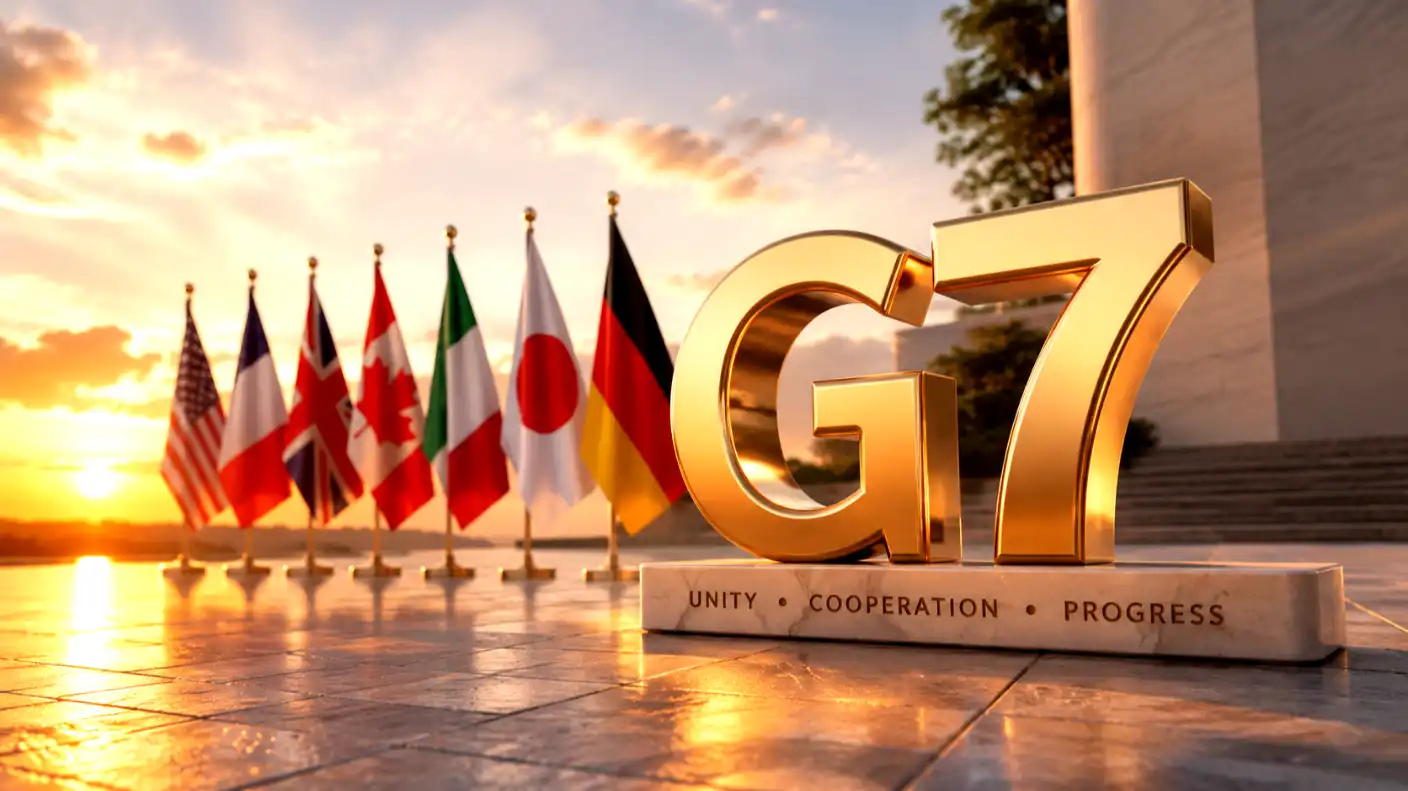
The picturesque resort town of Evian-les-Bains, situated on the peaceful shores of Lake Geneva in France, is currently hosting one of the most tense and politically charged gatherings of the decade. As heads of state from the Group of Seven nations meet for their annual summit, the atmosphere is far from celebratory. While U.S. President Donald Trump arrived buoyed by his recent announcement of a preliminary agreement to halt the war with Iran, European leaders are preparing a highly coordinated challenge to his unilateral diplomacy.
During the critical sessions, European leaders will directly warn Trump that his newly negotiated interim Iran deal is a superficial compromise that carries severe, long-term risks. They argue that by rushing to sign a temporary truce to lower domestic gasoline prices, the United States is leaving the core of Iran’s nuclear and ballistic missile programs completely intact.
At the same time, the European allies plan to use the three-day summit to press the U.S. president to completely rethink his strategy on Ukraine, warning that previous American proposals to freeze that conflict have been too favorable to Moscow.
The resulting discussions are turning the summit into a historic test of the Western alliance, exposing a deep and volatile division between Trump’s transaction-based bilateralism and Europe’s commitment to collective, long-term security.
The Battle Over the Interim Iran Deal: Superficial Success vs. Real Security
The primary source of friction at the summit is the starkly different way in which Washington and its European allies evaluate the newly announced ceasefire with Tehran.
Trump’s Unilateral Triumph
President Trump arrived in France on Monday evening in high spirits, eager to promote the preliminary agreement as a major personal success on his 80th birthday.
The deal, which negotiators plan to formally sign on Friday in Switzerland, aims to end the three-and-a-half-month-old war in the Gulf, which had severely disrupted global energy markets and blocked the Strait of Hormuz.
“The Iran deal will bring a lot of success,” Trump told reporters shortly after his helicopter landed at the summit venue.
Before going into his scheduled bilateral meeting with French President Emmanuel Macron, Trump took a direct swipe at the historic 2015 nuclear agreement negotiated under Barack Obama, declaring that his new framework is entirely different.
“It’s not like the Obama document, that was a terrible document,” Trump asserted, signaling his belief that his direct, transactional approach has succeeded where traditional multilateral diplomacy failed.
The European Warning: Entrenching the Nuclear Program
European leaders view Trump’s optimistic declarations with extreme caution.
Led by French President Emmanuel Macron, British Prime Minister Keir Starmer, and German Chancellor Friedrich Merz, the European members of the G7 plan to deliver a stern warning to the U.S. president.
They argue that a superficial, interim deal risks entrenching, rather than dismantling, Tehran’s nuclear and ballistic missile programs.
The E3 nations—France, Britain, and Germany—fear that an inexperienced and hasty U.S. negotiating team will fail to secure a robust, long-term nuclear agreement during the upcoming technical phase.
The interim deal is expected to open a 60-day window for complex technical negotiations in Switzerland to determine the fate of Iran’s highly enriched uranium and the lifting of international sanctions.
However, European diplomats point out that the temporary framework completely ignores the two main issues that Trump and Israeli Prime Minister Benjamin Netanyahu originally used to justify the war:
First, the deal contains no provisions to dismantle or restrict Iran’s ballistic missile program.
Second, the text is completely silent on curbing Iran’s support for regional armed proxy networks, such as Hezbollah in Lebanon and the Houthis in Yemen.
By leaving these critical security issues off the table, European leaders warn, the interim agreement simply buys temporary peace at the cost of allowing Iran to preserve and rebuild its military capabilities, risking a far more dangerous and prolonged standoff in the future.
The Strait of Hormuz: Safe Reopening and Shipping Skepticism
A central focus of the summit’s economic discussions is the immediate and safe reopening of the Strait of Hormuz, the critical energy artery that has been blocked for over 100 days.
The Reopening Promise and Shipowner Caution
President Trump has confidently declared that the Strait of Hormuz will be completely open on Friday, confirming that he has already ordered the U.S. Navy to end its defensive blockade of Iranian ports as part of the ceasefire agreement.
The news has already had a significant impact on global energy markets, driving benchmark Brent crude oil prices down by more than 4% as traders anticipate the return of Middle Eastern crude.
However, the maritime shipping industry is reacting to the news with deep skepticism.
The chief executive of Japan’s Mitsui O.S.K. Lines, one of the world’s largest tanker operators, told reporters that shipowners will not resume transit through the Strait of Hormuz for several weeks.
He explained that after months of active hostilities and naval mining, shipping companies must have absolute, verifiable proof that the U.S.-Iran deal is material and that the shipping lanes are physically safe before they will risk sending their multi-million-dollar vessels back into the volatile waterway.
The Franco-British Maritime Mission
To address these shipping fears and accelerate the flow of oil, French President Emmanuel Macron has organized a special Tuesday lunch session dedicated to the safe reopening of the strait.
During the session, France and Britain plan to propose a joint, Franco-British-led maritime demining and escort mission to physically clear the shipping lanes of explosives and guide commercial tankers safely through the chokepoint.
The leaders of the United Arab Emirates, Qatar, and Egypt will also participate in the session to outline their expectations for Gulf security.
While these regional partners welcome the end of the active war, they are highly concerned about potential transit fees and shipping tolls that Tehran has threatened to impose on vessels passing through the strait.
The G7 leaders plan to use the session to identify alternative, land-based energy routes that bypass the Strait of Hormuz entirely, reducing the global economy’s vulnerability to future military conflicts in the Gulf.
Demanding a Seat at the Table: The E3’s Re-emergence
The intense debate over the interim Iran deal also reflects a deeper, long-standing struggle over which nations should dictate the future of Middle Eastern security.
Dismantling the Sidelining of Europe
The leaders of France, Britain, and Germany are deeply frustrated at being completely sidelined by Trump’s backchannel, unilateral negotiations with Tehran.
They point out that they have a long and successful history of managing the nuclear file, having first engaged Iran on its nuclear program in 2003 and later working closely with Barack Obama to secure the 2015 Joint Comprehensive Plan of Action.
By bypassing these established diplomatic channels, Trump has ignored decades of European expertise and undermined the unity of the Western alliance.
During the summit, the E3 leaders plan to demand a direct, influential role in shaping the upcoming 60-day technical negotiations in Switzerland, ensuring that any final treaty is solid, serious, and addresses Europe’s core security concerns.
Pressing for a Ukraine Rethink: Opposing Favorable Terms for Moscow
Beyond the Middle East, European leaders are also launching a coordinated effort to challenge Trump’s transactional approach to the war in Ukraine, which is now grinding through its fifth year.
Opposing the Freezing of the Conflict
European diplomats see the G7 summit as a critical opportunity to convince the U.S. president that past American proposals to freeze the war in Ukraine have been too favorable to Moscow.
The administration in Washington has consistently pushed to bring Kyiv and Moscow to the negotiating table quickly, suggesting that Ukraine should cede occupied territories to Russia in exchange for a ceasefire.
The European allies strongly oppose this strategy.
They plan to present Trump with fresh intelligence and economic data proving that Ukraine’s strategic position has actually strengthened.
They will point out that Russian forces are making almost no progress on the ground at the cost of mounting losses, while the Russian economy is showing severe signs of inflation and fiscal strain despite temporary oil windfalls.
They argue that forcing Ukraine to accept a hasty, unilateral peace deal now would represent a historic strategic mistake, allowing Vladimir Putin to claim a victory he could not achieve on the battlefield.
Europe Shouldering the Burden
To strengthen their argument, European leaders will emphasize that they are now shouldering the main financial, military, and political burden of Ukraine’s war effort.
They want to convince Trump that the G7 must remain united in maintaining tight economic sanctions on Russia and boosting military support for Kyiv.
By showing that Europe is fully prepared to take financial responsibility for its own regional defense, they hope to appeal to Trump’s desire to reduce American commitments abroad.
They will argue that the Western alliance should only support a peace process that is negotiated on Ukraine’s terms, ensuring that any final settlement protects the country’s sovereignty and prevents future Russian aggression.
Ukrainian President Volodymyr Zelenskyy is scheduled to arrive in Evian-les-Bains on Tuesday to participate in these discussions, providing a powerful, personal reinforcement to the unified European stance.
Views: Transactional Bilateralism versus Collective Security
The profound divisions on display at the G7 summit have sparked an intense debate among international relations specialists, defense analysts, and political commentators regarding the future of the global security architecture.
The Critique of Short-Term Transactions
Many diplomatic realists and traditional foreign policy experts argue that Trump’s transactional approach to international relations is creating a highly fractured and dangerous world.
By cutting quick, superficial interim deals to lower energy prices at home, Trump is ignoring the complex, long-term security threats that affect his allies, leaving both the Middle East and Europe highly vulnerable to future aggression.
Critics argue that by sidelining European partners on Iran and pushing Ukraine to cede territory, the United States is actively undermining the unity of the Western alliance.
They warn that this unilateralism will encourage authoritarian powers in Moscow, Beijing, and Tehran to launch future aggressions, knowing that they can easily exploit the fractures between Washington and its allies to secure favorable terms, ultimately leading to a dangerous fragmentation of the post-World War II global order.
The Defense of Pragmatic “America First” Realism
In contrast, supporters of the administration’s policies argue that Trump’s decisive, direct action has successfully brought an end to an expensive and dangerous war, prevented a catastrophic global oil crisis, and restored economic stability without dragging the United States into another endless Middle Eastern conflict.
Proponents of this view argue that traditional, multilateral diplomacy has spent decades producing nothing but endless talk and bloated agreements that fail to protect American interests.
They contend that by bypassing the slow-moving European bureaucracies, Trump has achieved a major strategic victory, forcing America’s allies to take real financial and military responsibility for their own regional security.
From this pragmatic perspective, the interim Iran deal is a triumph of realistic, results-oriented diplomacy, and the European leaders should focus on supporting the implementation of the peace deal rather than complaining about being left out of the negotiations.
Conclusion: The Real Test of the Western Alliance
The Group of Seven summit in Evian-les-Bains represents a historic turning point for the future of global security and transatlantic relations.
By arriving in France with a major, preliminary peace agreement with Iran in his pocket, President Trump has successfully demonstrated his unique ability to close high-stakes, unilateral deals, but he has also exposed the deep and volatile fractures that now divide the United States from its traditional partners.
As the world leaders debate the terms of the interim Iran deal, the demining of the Strait of Hormuz, and the future of military aid to Ukraine, the fundamental question hanging over the summit is whether the Western alliance can survive.
In an era defined by unilateral transactions, shifting alliances, and regional wars, the success of the G7 will depend not on the signatures on the communique but on whether the Western powers can successfully find a way to reconcile Trump’s transaction-based bilateralism with the necessity of collective, long-term security, preventing a dangerous fragmentation of the global order in an increasingly complex and hostile world.















