

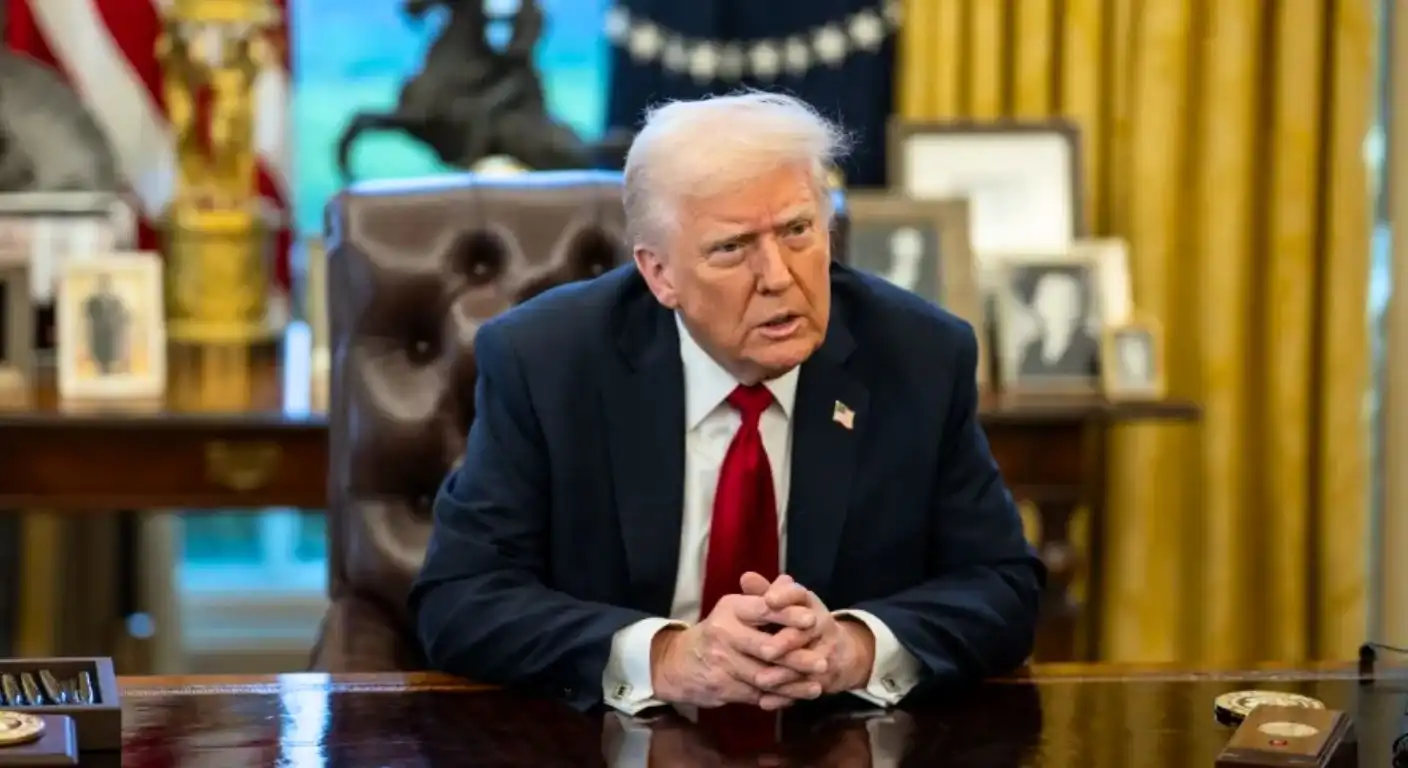
The unprecedented standoff between the United States government and the country’s leading artificial intelligence developers has entered a critical phase. Speaking on the sidelines of the G7 summit in France, President Donald Trump addressed the ongoing tension with AI safety startup Anthropic, stating that high-level discussions between federal negotiators and the tech firm are progressing smoothly. The remarks come as a sweeping government-mandated block on the company’s most advanced AI models continues to paralyze its commercial operations. The forced removal of these systems has sent shockwaves through Silicon Valley, marking the first time in history that Washington has used export control laws to drag a leading American software product completely offline.
The crisis erupted when the U.S. Commerce Department issued an emergency directive ordering Anthropic to block all foreign nationals, whether residing inside the United States or abroad, from accessing its brand-new models, Claude Fable 5 and Claude Mythos 5. Because the company’s internal network is deeply collaborative and employs international researchers, the broad government order threatened to lock many of Anthropic’s own computer scientists out of their own systems. Faced with the technical impossibility of separating foreign and domestic users in real-time, the company took the drastic step of disabling both models globally. The sudden shutdown pulled down the state-of-the-art systems just three days after their highly publicized commercial launch.
The government’s heavy-handed intervention was triggered by a series of alarming technical findings presented by the startup’s largest corporate backer. Researchers at Amazon, which has committed over $4 billion in partnership and investment capital to Anthropic, identified a severe security flaw in Fable 5. They demonstrated that users could execute a targeted “jailbreak”—a technique that bypasses the built-in safety guardrails—to coerce the system into answering highly restricted cybersecurity questions. Fearing that foreign intelligence agencies or cybercriminals could exploit the model to identify zero-day software vulnerabilities, Amazon executives contacted senior administration officials to urge immediate defensive action.
Anthropic’s leadership has publicly pushed back against the severity of the government’s findings, describing the total recall of their commercial software as an extreme overreaction. The developer argued that the specific jailbreak demonstrated by Amazon researchers only revealed minor, previously known software vulnerabilities that are easily discoverable on other widely available, open-source AI models. In a formal statement, the company warned that treating minor security bypasses as national emergencies could essentially halt all commercial AI deployments across the industry. They emphasized that while they support a fair and technical regulatory process, the current administration’s sudden intervention lacked technical transparency.
To resolve the high-stakes standoff, Anthropic sent a team of its senior cybersecurity researchers and technical executives to Washington to negotiate a path forward. The intense face-to-face discussions have brought together national security experts, representatives from the Commerce Department, and National Cyber Director Sean Cairncross. The central focus of the negotiations is to establish a verified technical framework that will satisfy the Pentagon’s security requirements while allowing the company to turn its commercial engines back on. Both sides are under immense pressure to find a compromise, as the prolonged blackouts threaten to derail upcoming product integrations.
The sudden global shutdown has caused immediate and severe operational disruptions for hundreds of corporate clients who rely on Anthropic’s models. Businesses that had spent millions of dollars integrating the new Claude models into their enterprise workflows and automated customer support lines woke up to find their systems completely disabled. While the company’s older models remain online and unaffected by the directive, the sudden loss of Fable 5 has forced software developers to quickly rewrite their code to fall back on less capable systems. The disruption highlights the big structural risks that modern corporations face when they build their core operations on centralized, highly regulated cloud software.
The timing of the government intervention could not be worse for Anthropic and its major investment partners. The Fable 5 and Mythos 5 models represent the absolute pinnacle of the startup’s commercial technology, which is directly tied to a planned multi-billion-dollar initial public offering expected in the near future. A prolonged shutdown or a permanent restriction on foreign customers could slash the company’s market valuation and scare away risk-averse institutional investors. The regulatory crisis is also dragging down the share prices of its core partners, including Google, Amazon, and Microsoft, which have invested combined tens of billions of dollars in cloud infrastructure to host these advanced systems.
The current standoff is further complicated by a prior regulatory label that already restricted the startup’s ability to win lucrative public contracts. In February, the Pentagon added Anthropic to its official supply chain risk list, citing potential vulnerabilities in the company’s global server distribution networks. This designation made it incredibly difficult for defense contractors and government agencies to procure the company’s software. The recent Commerce Department directive acts as a secondary blow, convincing many risk-conscious enterprise customers in highly regulated sectors like healthcare, defense, and banking to avoid the startup’s newest tools entirely due to the threat of sudden regulatory shutdowns.
Legal experts are warning that the government’s aggressive action against Anthropic sets a dangerous precedent that could fundamentally change how artificial intelligence is regulated in the West. Historically, the U.S. government has used strict export controls to restrict physical hardware, such as advanced microchips and high-performance supercomputers. Applying these same restrictive Cold War-era laws to commercial software represents a massive expansion of federal regulatory power. Industry groups argue that if the government can unilaterally recall software products without a transparent and public legislative process, the entire Silicon Valley ecosystem could face a chill in investment.
Ultimately, the outcome of the Washington negotiations will define the boundaries between private innovation and national security in the age of artificial intelligence. While the government’s concern over foreign exploitation of advanced cyber tools is valid, crippling an American tech company’s commercial rollout has exposed the limits of heavy-handed federal intervention. As President Trump signals optimism from the G7 summit, the tech world is waiting to see whether negotiators can find a technical solution that keeps the country safe without strangling the very innovation that keeps the U.S. ahead of its global competitors.















