

A historic and highly profound transition is currently taking place at the core of the global security architecture, signaling a major rebalancing of international power. In a major mid-June development, negotiators from the United States and Iran are preparing to gather in Geneva, Switzerland, to formally sign a comprehensive ceasefire agreement designed to bring a permanent end to their three-month-old war. The conflict, which began in late February, had severely disrupted global energy markets, pushed domestic gasoline prices past $4.00 per gallon, and shut down the world’s most critical maritime corridors.
While the administration in Washington is attempting to promote the preliminary agreement as a major personal victory, national security analysts, military strategists, and foreign policy experts are reaching a far more sober conclusion. They argue that the lopsided terms of the Geneva accord represent a historic strategic defeat for the United States. By allowing Iran to preserve its nuclear and proxy infrastructure while granting massive financial and economic concessions upfront, the deal has exposed the limits of American military power, accelerated the global transition toward a multipolar financial system, and set in motion a profound unraveling of global geopolitics.
The February Twenty-Eight Spark: The Blueprint of Operation Epic Fury
The military conflict that has led to this geopolitical rebalancing began with an aggressive and highly coordinated attempt to neutralize Iran’s strategic capabilities.
The Aims of the US-Israel Offensive
On February 28, the United States and Israel launched a massive, coordinated military campaign, codenamed Operation Epic Fury. The initial offensive aimed to dismantle Iran’s nuclear enrichment facilities, destroy its advanced ballistic missile sites, and cripple its drone manufacturing plants.
The administration argued that these aggressive strikes were necessary to prevent Iran from ever obtaining a nuclear weapon, secure free navigation through the Strait of Hormuz, and end Tehran’s support for regional proxy forces like Hezbollah in Lebanon and the Houthis in Yemen.
The Grinding War of Attrition
While the initial strikes damaged some physical facilities and military installations, the operation failed to achieve its core strategic objectives.
Iran’s primary nuclear chambers, buried deep inside reinforced underground bunkers, remained largely protected from the bombardment.
Furthermore, instead of capitulating under the pressure, the Iranian leadership launched a highly coordinated, asymmetric war of attrition.
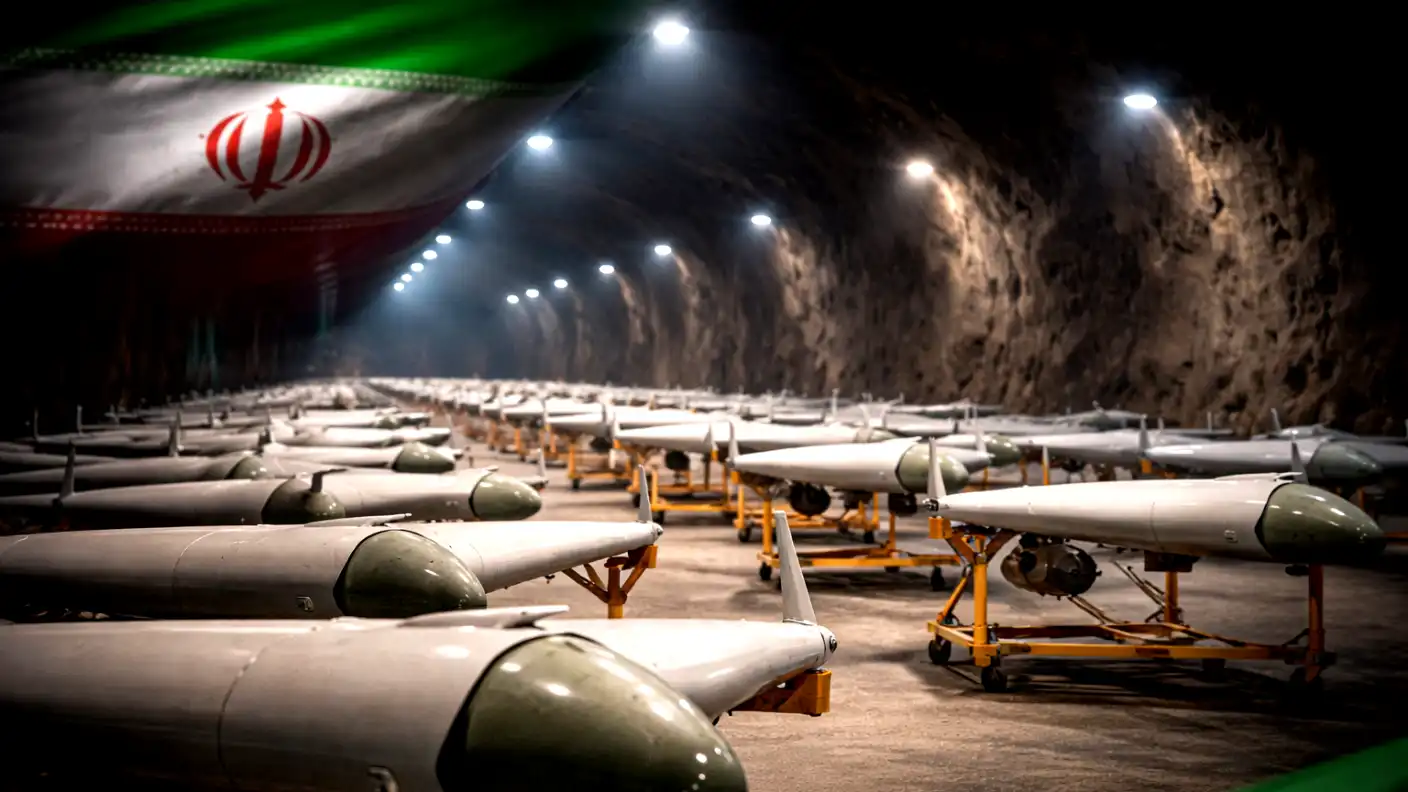
Utilizing its vast arsenal of low-cost drones and ballistic missiles, Iran and its regional proxy forces launched a relentless series of targeted attacks against commercial shipping lanes, oil installations, and military bases across the Gulf, dragging the U.S. and its allies into a highly expensive and dangerous conflict.
The Depleted Interceptors: How America Ran Out of Defensive Shield
The primary physical constraint that forced Washington to seek an immediate diplomatic exit was a critical shortage of advanced air defense munitions.
The Two Thousand Four Hundred Interceptor Drain
To protect major oil fields, shipping ports, and cities in Saudi Arabia, the United Arab Emirates, and Kuwait from relentless Iranian missile salvos, the U.S.-led coalition had to deploy its most advanced air defense systems, including Patriot and THAAD interceptors.
However, the sheer volume of Iran’s missile attacks quickly overwhelmed the coalition’s defensive capacity.
A newly released report by Bloomberg recently highlighted that the intense conflict consumed at least 2,400 interceptor missiles out of the 2,800 available in the Gulf region before the war.
This rapid depletion left the air defense networks of the Gulf states dangerously close to complete exhaustion, exposing their critical infrastructure and cities to potential catastrophic damage if the conflict continued.
The Industrial Capacity Gap
The crisis was further compounded by a significant disparity in industrial manufacturing capacity.
While the United States and its allies struggled to manufacture and ship replacement interceptors—a process that typically takes several months per missile—Iran’s primary backers, China and Russia, leveraged their massive domestic industrial bases to continuously resupply Iran with advanced drone components and missile parts.
Confronted with the prospect of its regional allies running completely out of defensive missiles while the Strait of Hormuz remained blocked, Washington faced a stark choice.
The administration could either escalate the conflict into a full-scale, devastating land war that would require hundreds of thousands of American troops or find an immediate, face-saving diplomatic exit, proving that the physical limits of military production had successfully dictated the boundaries of geopolitical ambition.
The Geneva Accord: A Highly Unbalanced Treaty
The terms of the preliminary agreement scheduled for signing on Friday in Switzerland reveal the extent of the concessions that Washington was forced to make to secure the ceasefire.
Massive Concessions Upfront
According to leaked copies of the interim agreement, the United States has agreed to several major concessions that go far beyond the terms of any previous international accord with Tehran:
- Unrestricted Oil Sales: The U.S. will immediately allow Iran to sell its crude oil freely on global markets, ending the shipping blockade and restoring Tehran’s primary source of national revenue.
- Sanctions Relief: The U.S. has pledged to work with the United Nations to systematically lift all international and unilateral sanctions imposed on Tehran, provided a final agreement is reached.
- The $300 Billion Fund: Under the “Reconstruction and Development Fund,” the U.S. and regional partners will facilitate at least $300 billion in private and international financing to help Iran rebuild its war-damaged industrial infrastructure.
The Omission of Critical Security Issues
In exchange for these massive upfront benefits, Iran is required to yield very little. The agreement establishes a 60-day window for technical nuclear talks in Switzerland, but it does not require Tehran to dismantle its existing nuclear material or destroy its centrifuges.
Even more concerning, the two main issues that the U.S. and Israel used to justify the war—ending Iran’s support for regional proxy forces like Hezbollah and the Houthis, and curbing its ballistic missile program—are completely excluded from the upcoming 60-day technical negotiations.
By leaving these critical security issues off the table, the interim agreement simply buys temporary peace at the cost of allowing Iran to preserve and rebuild its military capabilities, a concession that has outraged defense officials in Israel and Washington.
Views: The Imperial Decline and the Rise of “Bread and Circuses”
The lopsided terms of the Geneva agreement have triggered a fierce and polarizing debate among political strategists, foreign policy analysts, and historians regarding the future of American power.
The Neoconservative Critique: A Sovereign Capitulation
Many prominent domestic critics and traditional foreign policy experts view the agreement as a historic, humiliating capitulation that marks the beginning of a rapid decline in American global leadership.
They compare the current political moment to the late Roman Empire, arguing that the administration is using a hasty, lopsided peace deal to temporarily lower domestic gasoline prices and pacify voters ahead of the crucial November midterm elections.
Critics argue that by leaving Iran’s nuclear infrastructure intact and allowing its regional proxy networks to remain unchallenged, the U.S. has demonstrated that it no longer possesses the political will or military capacity to enforce its red lines.
They warn that this strategic defeat will encourage other authoritarian powers—including Russia, China, and North Korea—to launch future aggressions, knowing that they can easily exploit the fractures between Washington and its allies to secure favorable terms, ultimately leading to a dangerous fragmentation of the post-World War II global order.
The Realist Defense: Preventing a Global Meltdown
In contrast, supporters of the administration’s policies and realistic foreign policy analysts argue that the ceasefire was a necessary, pragmatic act of crisis management.
They contend that continuing a high-cost, stalemated war that kept the Strait of Hormuz closed would have pushed global oil prices past $150 a barrel, triggered severe global inflation, and caused a massive domestic recession.
Proponents of this view argue that national security must be balanced against economic reality.
They believe that the president acted responsibly to protect American families from extreme financial pain and prevent a devastating global economic collapse.
By bringing a peaceful end to the war, reopening the shipping lanes, and stabilizing global energy markets, the administration has successfully prioritized domestic economic health, proving that the preservation of national wealth is the ultimate safeguard of national security.
The Macroeconomic Fallout: Accelerating the Multipolar Transition
Beyond the immediate political debates, the lopsided terms of the Geneva agreement are set to accelerate a profound, long-term shift in the global financial architecture.
De-Dollarization and the Rise of Alternative Currencies
For decades, the global dominance of the U.S. dollar has served as the primary foundation of American global power, allowing Washington to enforce its foreign policy through unilateral financial sanctions and control over the SWIFT international banking system.
However, the war on Iran has demonstrated the limits of this financial leverage.
By forcing a global superpower to accept an unequal treaty, the conflict has shattered the illusion of U.S. financial hegemony.
Emerging economies across Asia, Latin America, and the Middle East are accelerating their transition away from the U.S. dollar, utilizing other currencies—such as the Chinese yuan—to settle their international trade, and constructing alternative, non-Western payment networks that operate entirely outside of Washington’s oversight.
Gold as the New Neutral Reserve Asset
The extensive use of financial sanctions during the war has also triggered a massive, global rebalancing of central bank reserves.
Having witnessed the freezing of Russian and Iranian assets, sovereign governments around the world are increasingly reluctant to store their national wealth in Western treasury bonds or fiat currencies.
Instead, central banks are aggressively diversifying their reserves into physical gold.
This massive, global rush for gold has driven prices to historic heights, establishing gold as the premier, neutral reserve asset in a highly fragmented, multipolar global economy.
By pushing the world toward a multipolar monetary system where the dollar is no longer the undisputed king, the U.S. strategic defeat in Iran has set in motion an irreversible decline in American financial power.
Conclusion: Re-Engineering the Global Chessboard
The tentative ceasefire agreement between the United States and Iran represents a historic turning point that will permanently redefine the coordinates of global geopolitics.
By halting the military conflict before securing its core strategic objectives, Washington has demonstrated that even the world’s most powerful military can no longer enforce its will unilaterally in a highly complex and multipolar world.
As negotiators prepare for the formal signing ceremony on Friday, the lessons of the conflict are clear.
The next era of international relations will be defined not by the unilateral diktats of a single superpower, but by the complex, multipolar balance of economic and military power.
While the road to a full regional recovery will undoubtedly face temporary volatility as negotiators finalize the technical details of the accord, the structural trends supporting the transition toward a multipolar world remain exceptionally strong.
For the United States and its allies, navigating this new reality will require a profound, realistic re-evaluation of their foreign policy, ensuring that they can protect both their security and their prosperity in an increasingly complex and divided world.















