
A highly intense and coordinated war of words is currently unfolding across the capitals of East Asia, setting the stage for a major diplomatic and strategic clash in the Western Pacific. While regional powers continue to expand their physical military budgets, purchase advanced missile systems, and deploy naval fleets, a parallel rhetorical conflict is taking place in the pages of state-controlled newspapers and at high-level diplomatic summits.
Earlier this year, China and North Korea launched a synchronized media and diplomatic campaign targeting the defense policies of Japan. By utilizing the specific, politically charged term “neo-militarism,” Beijing and Pyongyang are attempting to build an international consensus against Tokyo’s ambitious new security reforms.
The coordinated campaign represents a significant escalation in the regional struggle for strategic dominance.
By labeling Japan’s defense buildup as a revival of its aggressive imperial past, China is seeking to rally its regional allies and isolate Tokyo on the global stage.
However, the Japanese government has firmly rejected these accusations, pointing out the deep hypocrisy of being labeled a militarist state by nations that possess massive nuclear arsenals and strategic bombers.
As Japan prepares to finalize a major overhaul of its national security documents, this battle over historical labels is exposing the deep structural fractures that are currently splitting East Asia.
The Coordinated Campaign: Chronology of the “Neo-Militarism” Rhetoric
The systematic effort to label Japan’s defense reforms as a dangerous return to its imperial past began with a highly coordinated series of media publications in early January.
The Zhong Sheng Pen Name and the People’s Daily
The rhetorical offensive began on January 9, when the People’s Daily, the flagship newspaper of China’s ruling Communist Party, published a highly prominent commentary on global affairs.
The article appeared under the blunt headline: “‘Neo-militarism’ will once again lead Japan toward abyss.”
For experts tracking Chinese political communication, the most significant aspect of the publication was its authorship. The commentary was published under the prestigious pen name “Zhong Sheng,” which translates literally to “Voice of China.”
In the highly structured world of Chinese state media, the “Zhong Sheng” pen name is reserved exclusively for high-level commentaries that reflect the direct, official thinking of the Communist Party leadership.
Analysts believe this marked the very first time that this authoritative voice officially deployed the term “neo-militarism” to describe Japan’s security policies.
By utilizing this specific terminology, Beijing signaled that it was launching a formal, state-backed campaign to frame Japan’s defense modernization as a direct threat to international peace.
The Rodong Sinmun Echoes the Phrasing
The coordination between Beijing and its regional allies became clear only two days later. On January 11, the Rodong Sinmun, the official mouthpiece of North Korea’s ruling Workers’ Party, published its own fiery commentary.
The North Korean publication echoed the exact same “neo-militarism” terminology to launch a fierce attack on Tokyo’s security agenda.
The North Korean commentary focused specifically on Japan’s plans to revise its three key national security documents, including its National Security Strategy, later this year.
Pyongyang argued that Tokyo’s defense reforms are a thin cover designed to bypass its pacifist constitution and build an offensive military capability.
Since that initial publication, North Korea’s state media has repeatedly and systematically deployed the “neo-militarism” label in its daily broadcasts, demonstrating a highly synchronized rhetorical alignment with Beijing.
The Trigger: Prime Minister Sanae Takaichi’s Taiwan Stance
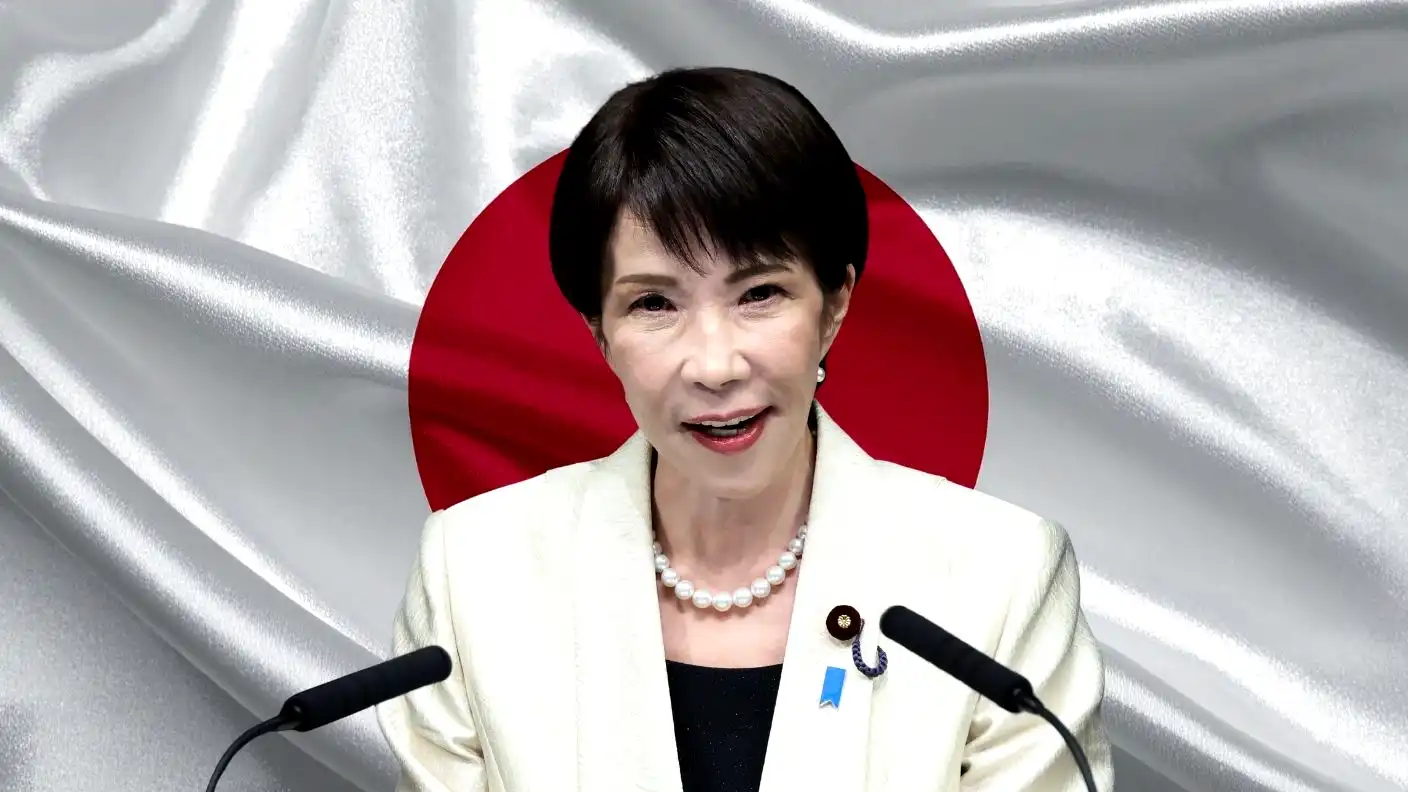
The primary catalyst driving this sudden, aggressive media campaign is the decisive shift in Japan’s defense policy under the leadership of Prime Minister Sanae Takaichi.
The Bold Declaration on Taiwan
The diplomatic relationship between Tokyo and Beijing deteriorated significantly following a series of bold comments made by Prime Minister Takaichi during a parliamentary debate.
Addressing lawmakers, Takaichi declared that a potential military attack by mainland China on the self-ruled, democratic island of Taiwan would pose an immediate, existential threat to Japan’s own national security.
Takaichi went on to state that such an attack could prompt a direct, defensive response by the Japan Self-Defense Forces in coordination with the United States military.
By explicitly linking Japan’s national security to the defense of Taiwan, the prime minister crossed one of Beijing’s most sensitive diplomatic red lines.
China views Taiwan as a rebellious province and has repeatedly warned that any foreign intervention in the Taiwan Strait represents an unacceptable violation of its sovereign territory.
The Ambitious Defense Buildup
To back up this bolder diplomatic posture, the Takaichi administration has launched the most ambitious military modernization program in Japan’s post-war history.
The government has committed to increasing its defense spending to a record-high target of 2.0% of its Gross Domestic Product, representing a massive departure from the informal 1.0% GDP spending limit that has governed the nation’s military budget for nearly five decades.
This expanded defense budget, which is expected to approach or exceed $100 billion annually, will fund the acquisition of long-range standoff missiles, advanced stealth fighters, and upgraded Aegis destroyers.
The government’s plans to acquire these offensive, long-range capabilities have infuriated Beijing and Pyongyang.
They argue that these acquisitions prove that Japan is abandoning its strictly defensive, pacifist military posture and is actively preparing to project its military power across the Western Pacific.
The Coalition of the Aligned: Beijing’s Diplomatic Outreach
To maximize the impact of its media campaign, China has actively worked to build a broad, international coalition of friendly nations to support its anti-militarism rhetoric.
Xi’s Welcome Banquet in Pyongyang
The deep coordination between the two communist neighbors was highlighted during a high-profile state visit by Chinese President Xi Jinping to Pyongyang.
During a lavish welcome banquet hosted by North Korean leader Kim Jong Un, Xi delivered a major speech focusing heavily on regional security.
In his remarks, which were clearly directed at Tokyo, Xi expressed his firm opposition to any attempts to revive militarism in the region, pledging that China and North Korea would stand together to defend regional stability.
Kim Jong Un echoed these sentiments, confirming that the two nations would coordinate their security and diplomatic policies to counter what they termed the rising threat of Japanese rearmament.
Mobilizing Friendly Nations
Beyond North Korea, Beijing has successfully integrated its anti-militarism language into its diplomatic engagements with several other friendly nations across Asia and Europe:
- Russia: During recent high-level bilateral summits, Russian officials have joined China in criticizing Japan’s defense reforms, warning that Tokyo’s military expansion threatens the stability of the entire Asia-Pacific region.
- Pakistan: Following talks in late May between President Xi and Pakistani Prime Minister Shehbaz Sharif, the two nations issued a joint statement declaring their firm opposition to any attempts by fascism or militarism to make a comeback.
- Mongolia and Myanmar: High-level diplomatic delegations from both countries have recently signed joint communiques with Beijing, expressing their shared concern over the resurgence of regional militarism.
The joint statement with Pakistan triggered an immediate, defensive response from Tokyo.
Concerned that its peaceful reputation was being tarnished, the Japanese government dispatched senior diplomats to Islamabad to explain its defense policies, reassuring Pakistani officials that Japan remains a peace-loving nation and that its military modernization is strictly defensive in nature.
Japan’s Firm Rejection: Shinjiro Koizumi at the Shangri-La Dialogue
The Japanese government has not allowed these accusations to go unchallenged, launching a fierce defensive counter-offensive on the international stage.
Rejecting the “New Militarism” Label in Singapore
The primary venue for Japan’s defense of its policies was the Shangri-La Dialogue, a major regional security forum held in Singapore.
Addressing a large audience of defense ministers, military commanders, and international relations specialists, Japanese Defense Minister Shinjiro Koizumi firmly rejected China’s accusations, calling them completely false.
Koizumi argued that Japan’s reputation as a peaceful, democratic nation, built through decades of international cooperation and developmental assistance since the end of World War II, cannot be undermined by what he called manufactured and misleading claims.
He reassured the regional audience that Japan remains fully committed to its constitutional pacifism and will never again become a threat to its neighbors.
Exposing the Strategic Imbalance
To dismantle Beijing’s arguments, Koizumi pointed directly to the massive, structural military imbalance that exists in East Asia, accusing China of profound hypocrisy:
“There is a country that has a huge arsenal of nuclear weapons and strategic bombers. Japan has neither of these weapons. And yet, Japan is labeled ‘new militarism.’ Isn’t it strange?” Koizumi stated in an apparent reference to China.
The defense minister pointed out that while China possesses over 500 active nuclear warheads, a fleet of advanced strategic bombers, and is rapidly expanding its naval forces, Japan does not possess a single nuclear weapon or long-range strategic bomber.
By highlighting this physical disparity, Koizumi argued that the “neo-militarism” label is a highly misleading political tool designed to distract the international community from China’s own massive, aggressive military expansion in the South China Sea and the Taiwan Strait.
Views: Deterrent Realism versus Historical Traumas
The fierce battle over the “neo-militarism” label has divided opinions among defense planners, international relations scholars, and regional political commentators regarding the future of East Asian security.
The Case for Realist Deterrence and Autonomy
Proponents of Japan’s new, more assertive defense posture argue that the military buildup is a highly realistic and necessary response to a highly dangerous regional environment.
They point out that Japan is surrounded by three nuclear-armed states—China, Russia, and North Korea—that have steadily increased their military coordination and launched ballistic missiles into Japan’s exclusive economic zone.
From this perspective, relying entirely on the United States’ security umbrella is no longer a sufficient defense strategy in a highly volatile, multipolar world.
By increasing its defense budget to 2.0% of GDP and acquiring long-range standoff missiles, Japan is building a credible, independent deterrent that can protect its territory and prevent a unilateral invasion of Taiwan.
They argue that a strong, self-reliant Japan is essential to maintain the balance of power in the Western Pacific, and that China’s “neo-militarism” accusations are simply an attempt to keep Japan weak and vulnerable to economic and military coercion.
The Case for Caution and Historical Sensitivity
In contrast, regional critics and some domestic pacifist groups warn that Tokyo’s rapid departure from its post-war pacifist tradition is a dangerous and destabilizing trend.
They argue that the memory of Japan’s brutal military aggression during World War II remains a deeply painful, unresolved trauma for millions of people across China, Korea, and Southeast Asia.
Critics contend that by increasing its military budget and planning to intervene in a potential conflict over Taiwan, the Takaichi administration is reviving these historical fears and fueling a self-reinforcing regional arms race.
They warn that as Japan builds up its offensive capabilities, China and North Korea will feel forced to expand their own nuclear and conventional arsenals to maintain their security, increasing the overall risk of a catastrophic military conflict in the region.
They urge Tokyo to maintain its strict pacifist limits and focus on diplomatic dialogue rather than military rearmament, warning that reviving the ghost of militarism will only lead the region back toward the abyss.
Conclusion: The New Security Architecture of East Asia
The intense diplomatic and media battle over the “neo-militarism” label represents a historic turning point for the security architecture of East Asia.
By coordinating their rhetorical attacks and building a broad international coalition of friendly nations, China and North Korea have demonstrated their determination to challenge Japan’s defense modernization and prevent the Western alliance from consolidating its influence in the region.
As Japan prepares to finalize its national security document revisions, the lessons of this rhetorical conflict are clear.
The struggle for dominance in the Western Pacific is no longer just about the number of ships or missiles each nation possesses.
In a highly connected and politically sensitive region, the ability to control the historical narrative and define the legitimacy of military power has become a critical strategic weapon.
Ultimately, the future of peace in East Asia will depend on whether regional powers can successfully find a way to reconcile their modern security needs with the historical traumas of the past, ensuring that the Western Pacific remains a stable, cooperative corridor rather than degenerating into an unpredictable arena of catastrophic conflict.