

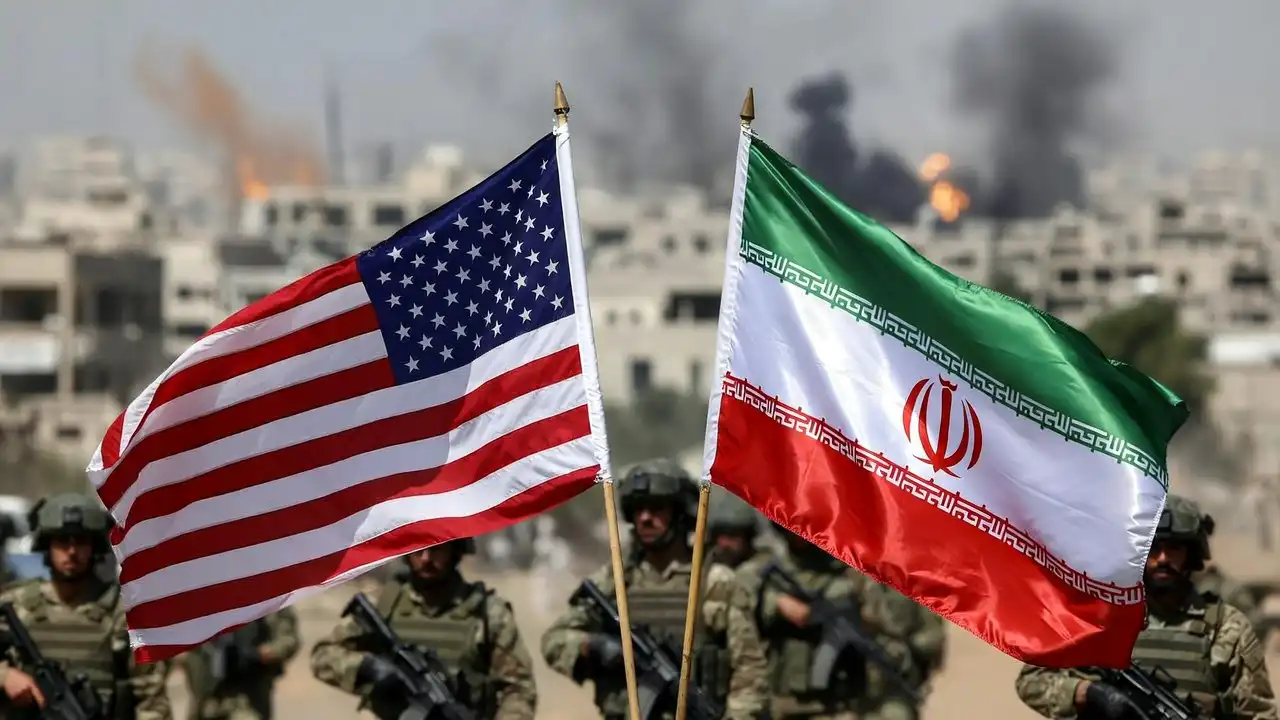
A historic and highly profound transition is currently taking place at the core of global diplomacy, permanently altering the balance of power across the Middle East. In a major mid-June development, U.S. President Donald Trump and Iranian President Masoud Pezeshkian signed an interim ceasefire agreement, bringing a sudden end to a highly destructive three-month war. The conflict, which began on February 28, had severely disrupted global energy markets, pushed domestic gasoline prices past $4.00 per gallon, and shut down some of the world’s most critical maritime corridors.
The signing of the 14-point agreement represents an extraordinary milestone. It is the first signed accord between an American and an Iranian president since the 1979 Islamic Revolution. Trump chose to formalize the historic deal on the sidelines of the G7 summit in France, signing the document at the Palace of Versailles—a setting highly symbolic of the remaking of international order after conflict.
According to a newly released analysis, the Versailles Treaty is redrawing the Middle East map. While backers of the agreement are hailing it as the “deal of the century,” for Tehran’s adversaries across the region—from Israel to the Gulf states and Lebanese factions—it looks more like the “curse of the century.” Critics warn that instead of toppling the clerical establishment, dismantling Iran’s nuclear program, or curbing its regional reach, the war has ended with Washington effectively giving legitimacy and strengthening the same regime. This leaves Iran more secure, more legitimate, and ultimately more influential, while deeply isolating and alarming its regional rivals.
The Roots of the Conflict: A War that Failed to Secure Its Aims
The massive rebalancing of power currently taking place is a direct consequence of a military campaign that failed to achieve its core strategic objectives.
The Spark of February Twenty-Eight
The military conflict began with an aggressive and highly coordinated attempt to destroy Iran’s strategic capabilities. On February 28, the United States and Israel launched a massive, coordinated military campaign aimed at weakening or toppling the Islamic Republic.
During the initial days of the offensive, U.S. and Israeli forces executed high-profile operations that assassinated the 86-year-old Supreme Leader Ayatollah Ali Khamenei and several other senior military and political figures, aiming to trigger a rapid collapse of the regime.
The Catastrophic Cost of Attrition
However, the rapid collapse that planners in Washington and Tel Aviv anticipated never materialized. Instead, the clerical establishment remained intact, and Tehran launched a highly coordinated, asymmetric war of attrition that dragged on for more than three months.
The conflict carried a catastrophic human and economic cost, killing more than 7,000 people, mostly in Iran and Lebanon, while driving up global energy prices and raising fears of a widespread food crisis in developing states.
Despite the massive deployment of Western firepower, the physical limits of military operations became clear.
Iran’s deep-underground nuclear chambers remained largely protected, and its regional proxy forces successfully maintained their rocket and drone launching capabilities.
Faced with a prolonged, highly expensive stalemate that kept the Strait of Hormuz closed and drained its own advanced air defense interceptor stockpiles, Washington concluded that it had to find an immediate diplomatic exit, setting the stage for the lopsided truce signed at Versailles.
Israel’s Strategic Catastrophe: The Unraveling of Netanyahu’s Narrative
The signing of the Versailles treaty has triggered profound alarm and anger inside Israel, where military and political analysts are describing the agreement as a devastating strategic failure.
Washington Effectively Legitimizes Tehran
The public reaction in Israel has been swift and uncompromising. Israeli analyst Danny Citrinowicz, a senior Iran researcher at Israel’s Institute for National Security Studies, characterized the agreement as a strategic catastrophe.
He pointed out that what was originally framed as a joint U.S.-Israeli campaign to weaken or topple the Islamic Republic has ended with Washington effectively giving legitimacy and strengthening the same regime.
“We went to topple the regime with U.S. backing and ended with Washington effectively giving legitimacy and strengthening the same regime we wanted to bring down,” Citrinowicz stated bluntly.
He argued that by signing a formal treaty with Masoud Pezeshkian, President Trump has effectively recognized the political system of the Islamic Republic, transforming Tehran from an international pariah into a legitimate diplomatic partner of the United States.
None of Israel’s Core Demands Met
The primary source of anger in Israel is that the 14-point interim agreement delivers none of Israel’s core security demands.
The ceasefire framework, which extends the current pause in fighting for 60 days to allow for technical negotiations in Switzerland, contains no provisions to dismantle or restrict Iran’s ballistic missile program.
Furthermore, the treaty is completely silent on curbing Iran’s support for regional proxy networks like Hezbollah and the Houthis.
This critical omission has completely dismantled the political narrative of Israeli Prime Minister Benjamin Netanyahu.
For years, Netanyahu has maintained that absolute military force and diplomatic isolation were the only ways to contain Iran’s regional ambitions.
The Versailles treaty has exposed the severe limits of his leverage with a U.S. president once seen as closely aligned with Israel, leaving the country deeply isolated on the global stage as Washington prioritizes its own domestic economic and political interests over Tel Aviv’s security concerns.
Lebanon and Hezbollah: Shifting the Balance of Power
The political fallout of the Versailles treaty is also reshaping the internal politics of Lebanon, where the agreement is seen as a major victory for the country’s pro-Iranian factions.
Folding Lebanon into the U.S.-Iran Framework
The 14-point agreement binds Lebanon directly into the 60-day ceasefire, committing all sides—including Israel and Hezbollah—to halt their military operations across all fronts.
This regional framework has triggered intense political friction in Beirut, where sovereign political figures are expressing concern over the loss of national autonomy.
Lebanese President Joseph Aoun publicly warned that the central government in Beirut remains the only legitimate authority in the country, and that Iran has no legal right to negotiate on Lebanon’s behalf on issues like the ceasefire or the withdrawal of Israeli forces from southern territory.
However, because the Lebanese state lacks the military capacity to enforce its own sovereignty, the central government has been completely sidelined, leaving the future of the country’s borders to be decided by negotiators in Washington and Tehran.
Hezbollah’s Position Strengthened
Conversely, representatives and supporters of Hezbollah view the Versailles Treaty as a historic victory.
They argue that by forcing the United States and Israel to accept a ceasefire that includes Lebanon, the U.S.-Iran track has successfully elevated Lebanon’s security into a higher-level, global negotiation.
In their view, Tehran’s unwavering support has proved that the alliance is a reliable and powerful shield against foreign aggression.
A prominent Iranian official confirmed this perspective, stating that the clerical establishment had successfully achieved all of its primary diplomatic goals.
“Iran got what it wanted… We did not abandon our friends, such as Hezbollah; rather, we were even prepared to go to the extent of walking away from the table and returning to war because of them,” the official stated.
By proving that it was willing to risk its own security to protect its Lebanese ally, Tehran has successfully strengthened its influence over Beirut, ensuring that Hezbollah remains the dominant political and military force in the country.
The Alarm in the Gulf: A New Reality for the GCC
The strategic realignment triggered by the Versailles Treaty has caused profound alarm across the Gulf Cooperation Council states, forcing them to re-evaluate their long-standing security relationships.
Spectators to Their Own Security
The major oil-producing nations of the Gulf, including Saudi Arabia, the United Arab Emirates, and Kuwait, feel like the primary losers of the three-month war.
During the conflict, their shipping lanes were blocked, their critical oil installations were targeted by drone and missile attacks, and their national economies faced massive disruptions.
Yet, when the time came to negotiate an end to the fighting, the Gulf states were relegated to mere spectators.
The decisions that reshaped their immediate security landscape were made entirely by negotiators in Washington, Tehran, and Versailles, without their direct participation or consent.
This exclusion has left Gulf leaders feeling deeply vulnerable, forcing them to realize that their economic and physical security remains subject to the changing political interests of foreign powers.
Eroding Confidence in U.S. Protection
This realization is already driving a profound, long-term shift in the Gulf’s strategic thinking.
For decades, the GCC states relied on the United States as their primary security guarantor, assuming that the U.S. military would always intervene to protect them from Iranian aggression.
The lopsided terms of the Versailles treaty have severely eroded this confidence.
As a result, Gulf governments are increasingly moving away from confrontation and heading toward diplomatic accommodation with Tehran.
Recognizing that Iran is an enduring, powerful regional force that cannot be defeated militarily, countries like Saudi Arabia and the UAE are expanding their own bilateral diplomatic channels with Tehran, seeking to build their own regional security arrangements rather than relying exclusively on a declining American security shield.
The Least Bad Outcome: The Realist Assessment of the Versailles Treaty
While regional rivals view the agreement with alarm, foreign policy realists and international relations experts argue that the ceasefire represents a necessary and responsible act of damage control.
Preventing a Global Economic Meltdown
Alex Vatanka, a senior fellow at the Middle East Institute in Washington, defended the administration’s decision to sign the treaty, arguing that the agreement represents the least bad outcome after years of failed coercion.
He pointed out that the U.S. and Israel tried to take Iran down militarily and failed, and that the alternative would have been a catastrophic, full-scale regional war.
“They tried to take Iran down militarily. They couldn’t. The alternative would have been catastrophic — a wider war could have devastated the Gulf for decades,” Vatanka explained.
He argued that continuing a stalemated war that kept the Strait of Hormuz closed would have pushed global oil prices past $150 a barrel, triggered severe global inflation, and caused a massive domestic recession, making peace the only realistic option to protect global economic stability.
The Volatile Path Ahead
However, Vatanka warned that the signing of the interim agreement is not the end of the struggle, but merely the beginning of a highly volatile new chapter.
The real test of the peace process will take place over the next 60 days, as negotiators in Switzerland attempt to resolve the highly complex, technical details of Iran’s nuclear program and sanctions relief.
With Israel remaining a significant wildcard and regional tensions still running high, any breakdown in the upcoming technical negotiations could quickly shatter the fragile ceasefire, dragging the region back into active combat and proving that signing a peace treaty is often far easier than physically executing its terms.
Conclusion: The Re-Engineering of the Middle East
The signing of the Versailles treaty between U.S. President Donald Trump and Iranian President Masoud Pezeshkian represents a historic and irreversible milestone that is completely redrawing the Middle East map.
By halting the military conflict before securing its core strategic objectives, Washington has demonstrated that even the world’s most powerful military can no longer enforce its will unilaterally in a highly complex and multipolar world.
As the 60-day ceasefire begins and the demining operations in the Strait of Hormuz get underway, the traditional security alliances that have defined the Middle East for decades are dissolving.
The ultimate success of the peace process will depend on whether regional powers can successfully adapt to this new, multipolar reality.
In an increasingly complex and divided world, securing long-term stability will require both disciplined diplomacy and an honest, constructive dialogue that includes all regional partners, ensuring that the new Middle East map is built on a foundation of shared security and mutual respect rather than automated conflict.















