

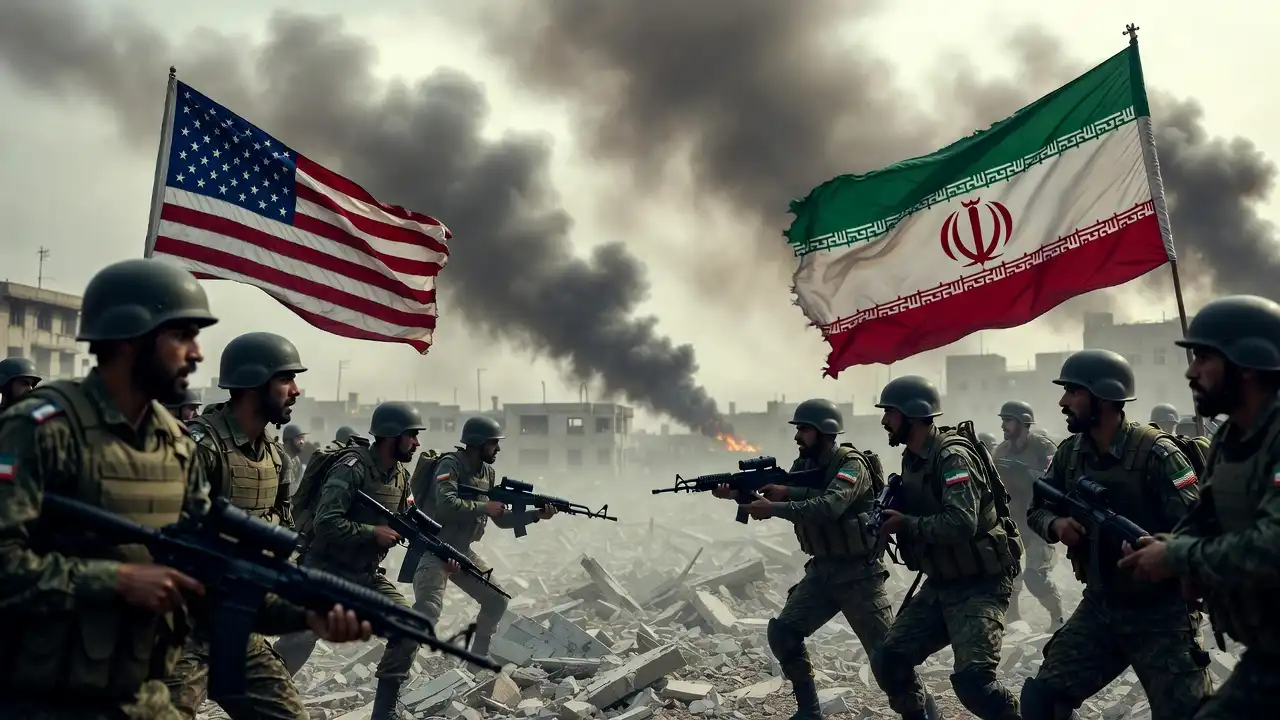
The fragile roadmap to end the military conflict in the Middle East has suffered a major setback. On Friday, Swiss authorities confirmed that the highly anticipated peace negotiations between the United States and Iran have been abruptly called off, throwing the future of the newly signed ceasefire into deep uncertainty. The last-minute cancellation occurred shortly after U.S. Vice President JD Vance scrapped his planned trip to Switzerland, where he was scheduled to lead a high-level delegation. The collapse of the diplomatic summit follows a dramatic escalation of violence in southern Lebanon and growing reluctance from Iranian negotiators, raising serious doubts about whether a lasting truce can be achieved.
The cancellation was so sudden that it caught U.S. officials and journalists completely by surprise. On Thursday evening, Vance’s staff and a small group of national reporters had already gathered at Joint Base Andrews outside Washington, preparing to board an official flight to Switzerland, before the White House abruptly called off the trip. A spokesperson for the administration attempted to downplay the collapse, stating that the logistics of these high-stakes negotiations have never been simple or predictable. However, the decision to ground the Vice President’s plane signals a severe breakdown in diplomatic communication just hours before the technical talks were scheduled to begin at the Bürgenstock mountaintop resort near Lucerne.
The primary driver behind the diplomatic collapse is a sudden, violent flare-up of hostilities along the border between Israel and Lebanon. Early on Friday, Israeli forces launched a massive wave of airstrikes and heavy artillery fire across southern Lebanon, killing at least 16 people. Israel, which was entirely excluded from the secret U.S.-Iran negotiations and has distanced itself from the peace deal, accused Hezbollah of repeatedly violating the temporary ceasefire. In response, Hezbollah fighters launched a series of drone and anti-tank missile attacks, claiming to have destroyed three Israeli tanks during ongoing clashes in the country’s south.
This intense military escalation prompted a swift reaction from Tehran, which chose to delay sending its diplomatic delegation to Switzerland. Pro-Hezbollah media networks in Lebanon reported that Iranian leaders refused to proceed with the Bürgenstock summit while Israeli forces continued their active bombardment of southern towns. Because Israel is not a signatory to the U.S.-Iran memorandum of understanding, its government has repeatedly asserted its right to use military force against hostile proxies. This independent military stance has effectively decoupled the border fighting from the broader peace process, creating a major loophole that threatens to drag both sides back into a wider regional war.
In addition to the border clashes, Iranian officials have expressed deep skepticism regarding Washington’s willingness to fulfill its side of the bargain. Before the scheduled Friday meeting, Iran’s semi-official press agencies reported that Tehran’s negotiators would not travel to Switzerland until they saw concrete, physical evidence that the United States is actively implementing the terms of the interim agreement. Specifically, Iranian leaders are demanding immediate sanctions relief, the unfreezing of tens of billions of dollars in blocked financial assets, and the formal issuance of shipping waivers to allow unrestricted oil exports. Without these tangible economic steps, Tehran refuses to participate in technical-level discussions.
While Iran demands immediate financial relief, the U.S. administration is facing a major domestic rebellion over the extensive concessions granted in the 14-point memorandum. Hardline Republican lawmakers in Congress are publicly questioning whether the President conceded too much to secure a quick end to an unpopular war ahead of the high-stakes mid-term elections in November. Critics point out that the current agreement allows the theocratic government in Tehran to remain in power, keeps its advanced ballistic missile program intact, and fails to force the immediate surrender of its enriched uranium stockpile. This outcome sharply contradicts Trump’s campaign pledge to accept nothing less than Iran’s unconditional surrender.
These domestic political divisions have been gleefully exploited by Iran’s leadership to project strength to its domestic audience. In a public address, Iran’s Supreme Leader Ayatollah Mojtaba Khamenei claimed that the United States signed the ceasefire deal out of sheer desperation, arguing that Washington’s leverage has been completely exhausted by the resilient defense of the Islamic Republic. Khamenei warned his own negotiators that the upcoming technical talks over the country’s nuclear program will not be easy, signaling that Tehran plans to adopt an extremely rigid posture during the 60-day negotiation window.
Despite the collapse of the Friday summit, the economic stakes surrounding the peace process remain incredibly high. The 14-point accord, signed digitally by both presidents on Wednesday, aims to permanently reopen the Strait of Hormuz, a critical global shipping lane that handles roughly 20% of the world’s oil and liquefied gas. The blockade, which began during joint U.S.-Israeli strikes in late February, caused global oil prices to spike and severely disrupted international supply chains. While the prospect of a ceasefire recently pushed Brent crude futures below $80 per barrel, energy traders warn that prices will remain highly volatile until a verified, permanent agreement is officially implemented.
As the diplomatic impasse drags on, the Swiss government is working actively behind the scenes to get both sides back to the negotiating table. The Swiss Foreign Ministry issued a formal statement confirming that the planned technical talks at the Bürgenstock resort have been postponed, but emphasized that the country remains fully prepared to facilitate future negotiations. Swiss diplomats are currently maintaining close contact with representatives from the United States, Iran, Qatar, and Pakistan to resolve the logistical and political disputes that derailed Friday’s meeting. However, they have declined to provide a new date for the summit, acknowledging that the preparatory work is ongoing but highly complex.
Ultimately, the abrupt collapse of the Geneva summit serves as a stark reminder of the immense challenges facing international diplomacy in a highly fractured world. While the digital signing of the 14-point memorandum of understanding represented a major milestone, the reality of implementing a peace agreement amid active proxy warfare and intense domestic political opposition is proving incredibly difficult. Until the United States and Iran can find a way to silence the guns in southern Lebanon and establish a verified process for sanctions relief, the dream of a lasting truce will remain out of reach. As the 60-day ceasefire clock continues to tick, the global community can only watch and hope that both sides will choose compromise over a return to total war.















