

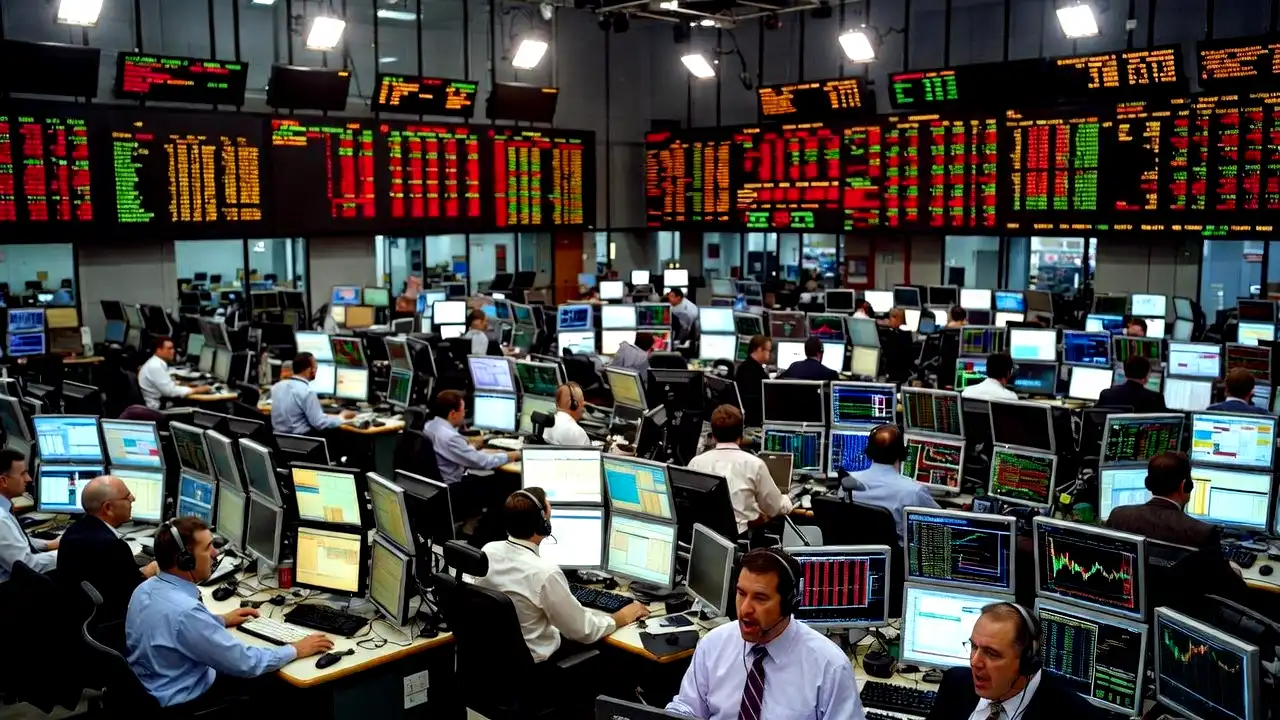
European financial markets experienced a distinct loss of momentum at the end of the trading week as competing geopolitical and macroeconomic pressures kept investors on edge. The pan-European STOXX 600 opened flat on Friday, caught between a shaky Middle East truce and lingering anxiety over a hawkish Federal Reserve outlook. While the index managed to secure its second consecutive winning week, the trading session was defined by a cautious, wait-and-see attitude that capped the market’s gains and left many of the region’s key indexes locked in tight ranges.
The primary source of immediate geopolitical uncertainty came from Switzerland, where scheduled high-level peace negotiations between the United States and Iran were abruptly called off. U.S. Vice President JD Vance canceled his planned trip to Bürgenstock, where he was set to meet with Iranian negotiators to begin talks on implementing the recently signed 14-point preliminary peace agreement. The sudden cancellation, which occurred after Iranian officials demanded more concrete signs of American sanctions relief, raised serious doubts among market participants about whether a lasting regional truce can be achieved. This diplomatic friction immediately injected fresh volatility into global trading boards, dampening the optimism that had driven equities to record highs earlier in the week.
Despite the last-minute diplomatic roadblock, European stock markets are still on track to wrap up the weekly session with modest gains. The pan-European STOXX 600 recorded a 0.6% weekly increase, riding the wave of a landmark peace deal that reopened the Strait of Hormuz. Reopening this vital shipping route sent global crude prices falling, giving a massive sigh of relief to European manufacturing and retail sectors that had previously been choked by fears of a long-term energy inflation shock. However, Europe’s modest weekly progress looked sluggish next to the over 1% rallies in Asia, where major indexes posted robust gains.
While geopolitical headlines caused short-term volatility, a surprisingly hawkish mid-week shift by the Federal Reserve is presenting a far more formidable barrier to long-term market growth. Under the leadership of its newly appointed chairman, Kevin Warsh, the U.S. central bank signaled that it remains deeply concerned about persistent global inflation. Most policymakers have indicated that they now favor raising interest rates at least once more before the year ends, completely catching market participants off guard. Financial analysts scramble to rewrite their investment playbooks, with traders now pricing in a staggering 80% chance of a federal interest rate hike by October.
A fundamental shift in how the Federal Reserve plans to communicate its monetary policy going forward heavily compounds the market’s anxiety. During his post-meeting press conference, Chairman Warsh indicated that the central bank will move away from the traditional practice of providing explicit, long-term forward guidance. Market strategists at a major London-based brokerage noted that this reduction in policy direction has thoroughly spooked institutional investors, who have grown accustomed to highly predictable rate trajectories. By returning to a more traditional, data-dependent model on a meeting-by-meeting basis, the central bank is introducing a level of market uncertainty that investors typically detest.
This combination of central bank anxiety and diplomatic setbacks resulted in highly mixed performances across individual European trading floors. Germany’s export-heavy DAX led the modest gains with a 0.4% rise in early trading, while France’s CAC 40 added 0.3%. However, London’s FTSE 100 bucked the positive regional trend, heading toward a 0.9% weekly loss. The British index was heavily dragged down by its dominant energy sector, as domestic oil giants BP and Shell faced persistent selling pressure on the back of falling global crude prices, despite posting minor daily gains of 2.07% and 1.45% respectively.
Local electoral shifts also pulled British equities into intense focus as political updates began to alter the country’s legislative landscape. Market participants closely monitored local parliamentary updates following a high-profile victory by Labour politician Andy Burnham, who successfully secured a new seat in the House of Commons. Political commentators noted that the high-profile win clears a direct path for Burnham to challenge the leadership of Prime Minister Keir Starmer, introducing a fresh layer of political uncertainty just as the country attempts to navigate a complex post-conflict economic recovery.
Conversely, the sharp drop in global energy costs triggered a massive, high-performing rally across the European transportation sector. Major airline groups, including German carrier Lufthansa, Air France-KLM, and British Airways owner International Consolidated Airlines Group, all popped significantly over the course of the week. Because fuel costs typically account for roughly 30% of a commercial airline’s total operating expenses, the collapse in crude prices driven by the initial Hormuz peace deal is expected to deliver an immediate, multi-billion-dollar boost to the sector’s bottom line, helping to offset broader economic cooling.
While the airline sector celebrates the temporary relief, commodities strategists warn that the long-term outlook for energy and materials remains highly vulnerable to supply shocks. Government data released earlier in the week revealed that total U.S. crude oil stockpiles have plummeted to their lowest levels since 1985, leaving the physical market with almost no reserve buffer during peak seasonal demand. This physical tightness means that any sudden re-escalation of the conflict in southern Lebanon or a permanent collapse of the peace talks could instantly send energy prices skyrocketing once again, reigniting the very inflation fears that have kept central bankers on high alert.
Ultimately, the sluggish pause across European stock markets highlights the delicate balancing act facing global investors as they navigate a highly complex economic landscape. While the initial diplomatic breakthrough in the Middle East provided a welcome boost to market sentiment and cooled over-inflated energy costs, the sudden collapse of the Switzerland negotiations has served as a sobering reminder of the fragile nature of peace. Coupled with a newly aggressive Federal Reserve under Kevin Warsh, the financial world is learning that the era of highly predictable, cheap credit is officially over. As the market prepares for a volatile autumn, the path to a sustainable recovery will require patience, caution, and a deep respect for the realities of traditional risk management.















