

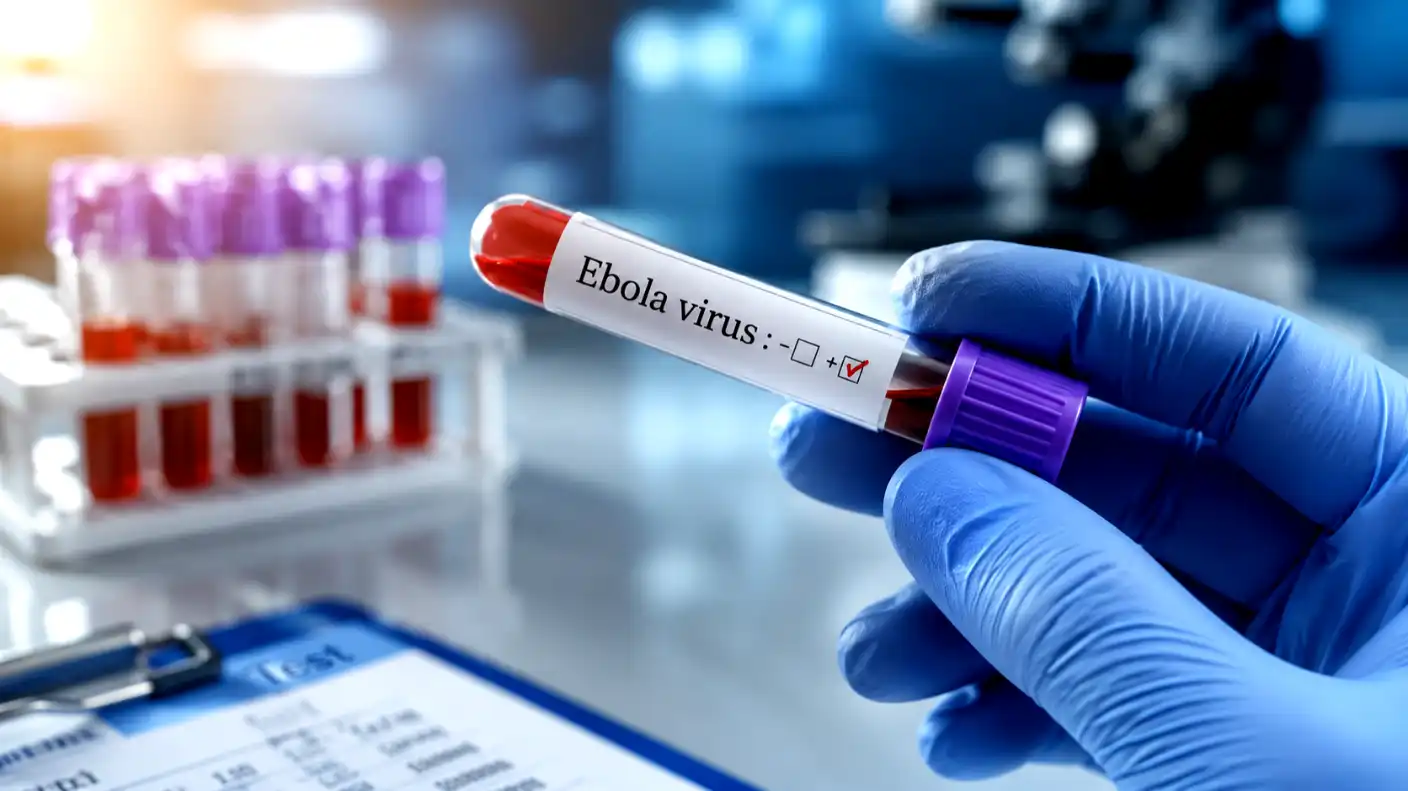
On the dusty, unpaved streets of Bunia, a remote commercial hub in the northeastern corner of the Democratic Republic of the Congo, a quiet but critical battle is currently taking place. Small groups of local volunteers and community health workers are walking from house to house under the intense summer sun. They sit on wooden benches with families, answer difficult questions, and explain a painful, hard-to-believe truth: a deadly, invisible virus is actively spreading through their neighborhoods.
This grassroots educational campaign is the central pillar of the response to the newest global health emergency. The World Health Organization officially declared the current Ebola outbreak in the Democratic Republic of the Congo and neighboring Uganda a Public Health Emergency of International Concern.
However, unlike previous outbreaks, this medical crisis is being heavily compounded by a massive, parallel war of information.
The current epidemic is caused by the rare Bundibugyo ebolavirus strain, for which there is currently no approved vaccine or specific medical treatment. Without these modern pharmaceutical tools, public health officials must rely entirely on traditional containment methods—such as rapid contact tracing, strict isolation, and safe burials—to halt the spread.
Yet, deep-seated community mistrust, fueled by viral social media rumors that dismiss the virus as a financial hoax, is actively endangering health workers. To save lives, responders have no choice but to go door-to-door, building trust from scratch on one doorstep at a time.
The Bundibugyo Challenge: Fighting an Outbreak Without a Vaccine
The physical and medical characteristics of the current outbreak make it one of the most challenging health emergencies the region has faced in years.
The Rarity of the Strain
The primary reason this outbreak has triggered the highest level of alert from the World Health Organization is the specific pathogen involved. The epidemic is caused by the Bundibugyo ebolavirus, a rarer and less commonly detected species of the virus.
This strain presents a massive challenge for healthcare workers. During the devastating West African outbreak of 2014 and subsequent epidemics in the DRC, scientists successfully developed and deployed highly effective vaccines, such as Ervebo, alongside advanced monoclonal antibody treatments.
However, these medical tools were engineered specifically to target the more common Zaire ebolavirus strain.
They provide absolutely no protection against the Bundibugyo strain, leaving doctors on the front lines with no approved vaccines or targeted therapies to protect vulnerable populations or treat infected patients.
The Rising Toll and Underestimated Figures
The lack of preventative tools has allowed the virus to spread rapidly through the densely populated, conflict-ravaged borderlands. The Democratic Republic of the Congo has officially reported more than 896 confirmed cases of the virus, alongside 232 confirmed deaths.
At the same time, the virus has crossed the international border into neighboring Uganda, where health authorities have confirmed several cases and two deaths in the capital city of Kampala, as well as the border towns of Bwera and Arua.
However, epidemiological experts warn that these official figures heavily underestimate the real scale of the disaster.
Because many communities are located in remote, mountainous areas with virtually no modern healthcare infrastructure, many patients are dying at home without ever being tested.
Furthermore, dozens of unexplained deaths that occurred before the official outbreak declaration on May 15 remain under investigation, suggesting that the actual death toll could easily be double the official count.
The Shadow of Rumors: Why Communities are Resisting the Response
While the lack of a vaccine is a major medical obstacle, public health officials find that the single greatest barrier to containing the virus is not the biology of the pathogen, but the psychological wall of community denial.
The Hoax Narrative and Corporate Conspiracy
In many of the hardest-hit health zones in Ituri Province, residents refuse to believe that the virus is a real medical threat.
Instead, a variety of highly destructive rumors have spread across local social media channels and word-of-mouth networks.
A common narrative claims that the outbreak is a complete fabrication—a highly lucrative corporate “business” invented by local politicians and international aid organizations to secure hundreds of millions of dollars in foreign humanitarian funding.
Other, more dangerous rumors accuse the health workers themselves of spreading the virus.
When locals see response teams arriving in full-body personal protective equipment, carrying disinfectants and spraying chemical solutions, they often assume that these teams are actively introducing the pathogen into their homes to justify their ongoing, high-paying jobs, creating a climate of intense hostility toward responders.
The Fear of Treatment Centers
This widespread mistrust has led to catastrophic failures in patient isolation.
Because Ebola carries a high mortality rate, local populations frequently perceive the specialized treatment centers operated by humanitarian groups as places where people are sent to die.
Consequently, when a family member begins to show classic symptoms of the virus—such as high fever, severe muscle pain, vomiting, and internal bleeding—their relatives frequently choose to hide them from medical teams.
They keep the sick individual at home, caring for them without any protective equipment and using traditional herbal remedies or spiritual healers.
This domestic care leads to rapid, household-level transmission, turning single infections into massive family clusters before the health system even becomes aware of the case.
The Battle over Burials: Traditional Honor versus Undersea Contagion
The struggle to contain the virus reaches its most volatile and dangerous point during the management of deceased patients, where public health protocols run directly into sacred cultural traditions.
The Extreme Contagion of the Deceased
The biology of the Ebola virus makes the handling of deceased bodies an exceptionally high-risk activity.
Unlike many other viral pathogens, the concentration of the Ebola virus in bodily fluids actually increases significantly after a patient dies, making the corpse highly contagious.
Traditional Congolese and Ugandan mourning customs require family members to wash, dress, and touch the body of their deceased relative before burial, and in some communities, mourners kiss the face of the deceased as a final sign of respect.
When a person dies of Ebola, these traditional practices serve as massive super-spreader events, infecting dozens of relatives and neighbors during a single funeral.
Violent Backlash Against Burial Teams
To stop this chain of transmission, humanitarian agencies deploy specialized teams to conduct Safe and Dignified Burials, wrapping the body in secure, leak-proof bags and disinfecting the grave site.
However, because these protocols prevent families from performing their traditional farewell rituals, the deployments frequently trigger intense grief, anger, and violent resistance.
In one tragic incident in Ituri Province, an angry mob of relatives set fire to a local hospital after administrators refused to release the body of a deceased family member, fearing contamination.
Field workers, including those from local Red Cross societies, report that they are routinely stoned, verbally abused, and physically chased away by communities when they attempt to take charge of a body.
This violent resistance forces teams to abandon their work, allowing families to conduct unsafe traditional burials that inevitably trigger fresh waves of infection across the community.
The Door-to-Door Campaign: Rebuilding Trust One Household at a Time
Confronted with this wall of resistance, public health agencies are realizing that high-tech interventions are useless without local cooperation, forcing a complete shift in their containment strategy.
The One Thousand Community Relay Workers
To bridge the trust gap, the Democratic Republic of the Congo’s Ministry of Health has launched a massive, localized mobilization campaign.
The ministry has deployed approximately 1,000 trained community relay workers to go door-to-door across the affected health zones.
Unlike foreign medical staff, these relay workers are recruited directly from the local communities where they work.
They speak the local languages, understand the regional customs, and are trusted by their neighbors.
Instead of arriving in intimidating protective gear, they walk the streets in ordinary clothes, sitting down with families on their doorsteps to listen to their fears, answer their questions, and calmly explain how the virus spreads and how families can protect themselves.
Mobilizing Pastors, Healers, and Local Radio
At the same time, international organizations like the Red Cross and UNICEF are focusing heavily on risk communication and community engagement.
They are actively training local pastors, traditional healers, teachers, and community leaders to use their influence to promote safety.
By utilizing local community radio stations, these trusted figures are broadcasting reliable information to counter the viral rumors on social media.
They explain the necessity of early detection and safe burials before doubt can further fuel the spread, proving that patient, two-way communication is the most powerful tool available to dismantle conspiracy theories and save lives.
The Strained Global Response: War Zones and Funding Shortfalls
The effort to contain the epidemic is taking place under some of the most difficult operational conditions in the world, stretching international humanitarian resources to their absolute limits.
Operating in an Active Conflict Zone
The epicenter of the outbreak, Ituri Province, has been locked in an active, multi-front armed conflict for decades.
The presence of various rebel groups and militias has caused massive internal displacement, leaving hundreds of thousands of people living in overcrowded, unsanitary temporary camps with virtually no access to clean water or basic healthcare.
This insecurity makes traditional disease containment exceptionally difficult.
When fighting erupts, entire communities must flee, making it virtually impossible for health teams to trace contacts or monitor suspected cases.
Furthermore, the remote, forested terrain and poor road infrastructure mean that transporting medical supplies, personal protective equipment, and diagnostic tools to local clinics can take several days, leaving frontline facilities chronically undersupplied.
The Urgent Need for Resources
To support the strained local response, international donors are beginning to commit significant financial resources.
The United States Department of State announced nearly $38 million in additional funding, bringing its total direct contribution to the Ebola response to more than $200 million.
This funding exists alongside a massive $60 million allocation from the United Nations Central Emergency Response Fund.
However, organizations like Doctors Without Borders warn that major gaps remain in the response.
Frontline teams are facing critical shortages of personal protective equipment, laboratory testing kits, and qualified medical personnel.
Experts like Professor Salim Abdool Karim, who advises the Africa Centres for Disease Control and Prevention, warn that if the international community fails to deliver these essential supplies quickly, the fast-moving outbreak could easily outpace the response, threatening to turn a regional crisis into a major international health threat.
Conclusion: The Indispensable Lesson of Ebola
The ongoing Ebola epidemic in the Democratic Republic of the Congo and Uganda serves as a stark and urgent reminder that advanced medical technology is entirely useless without community trust.
By unleashing a rare virus strain for which there is no approved vaccine, nature has forced the global health community to return to the absolute fundamentals of disease control: contact tracing, quarantine, and safe burials.
The success of these traditional containment methods depends entirely on the willingness of ordinary people to cooperate with public health authorities.
As long as communities remain fearful, suspicious, and fueled by rumors of financial hoaxes, they will continue to hide their sick and resist safe burials, allowing the virus to spread silently.
The ultimate victory over the virus will not be decided by researchers in laboratories in Europe or America, but by the patient, the unglamorous work of the 1,000 community volunteers walking the dusty roads of Ituri.
By knocking on doors, listening to their neighbors, and proving that the truth is real, these local heroes are building the foundation of trust that is the only real shield against the virus, proving that in the face of a global health crisis, human empathy and personal connection remain our most powerful weapons.















